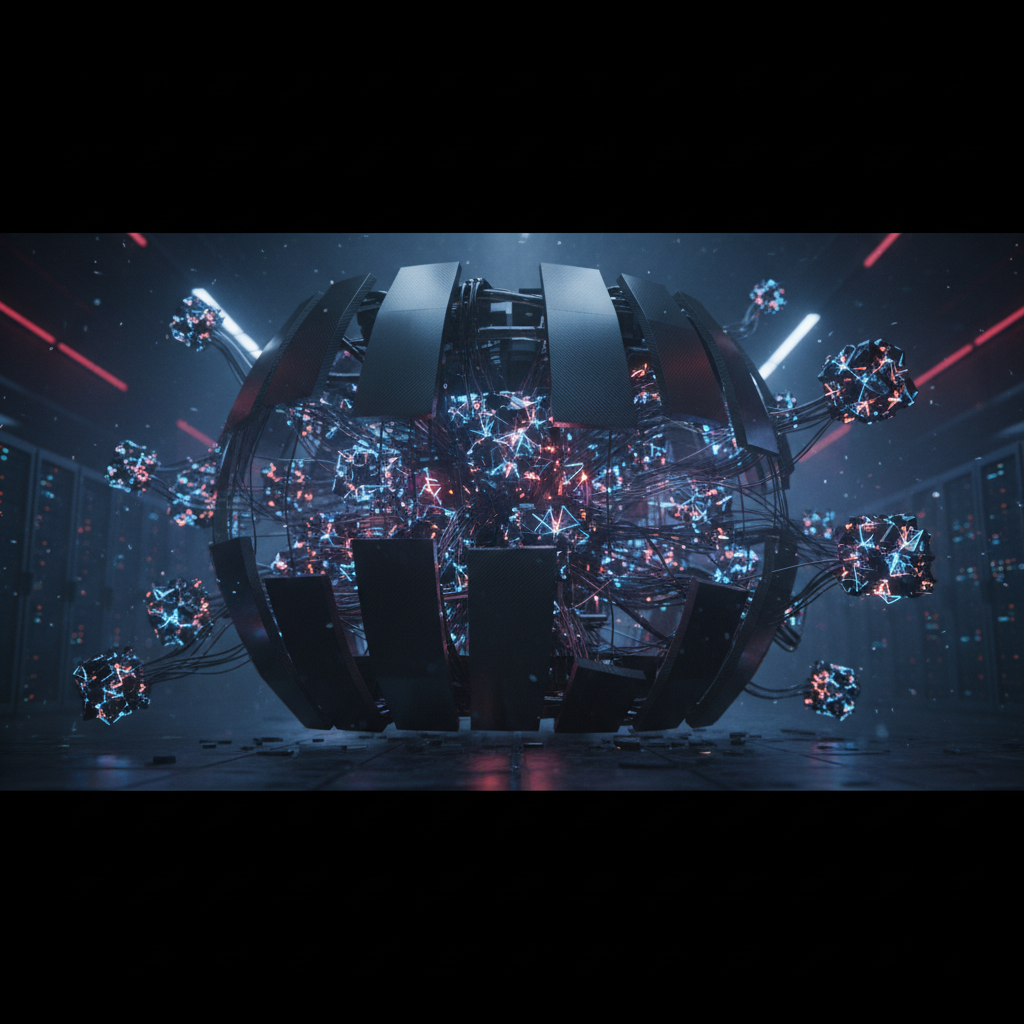
Bringing artificial intelligence from a fascinating prototype to a reliable, production-ready system presents unique challenges. This journey often involves refactoring complex, initially monolithic codebases into more flexible and robust architectures, especially when dealing with intelligent AI agents. We’ve distilled five critical lessons learned from such a transformation, offering insights for anyone building AI agents for real-world deployment.
Moving beyond a proof-of-concept demands a strategic approach to software design and engineering. These insights are not just theoretical; they are hard-won wisdom from the trenches of making AI agents perform consistently, reliably, and at scale. Let’s dive into the core takeaways that pave the way for successful AI agent deployment.
The Monolith Dilemma: Why Refactor AI Agents?
Initially, a monolithic design might seem expedient for rapid prototyping of AI agents, bundling all functionalities like perception, reasoning, and action into a single unit. However, as agent complexity grows and deployment needs expand, this structure quickly becomes a bottleneck. It hinders collaboration, complicates debugging, and makes scaling incredibly difficult.
Refactoring an AI agent monolith is about breaking free from these constraints, allowing for independent development, deployment, and scaling of distinct agent capabilities. This process is crucial for transitioning an experimental AI into a service that can handle real-world loads and diverse operational conditions. The lessons below highlight the most impactful changes we implemented.
- Embrace Modularity from the Start: Breaking down a monolithic AI agent into smaller, independent services is perhaps the most fundamental step. This involves separating core components like sensor processing, decision-making, memory management, and action execution into distinct modules. Such an approach significantly improves maintainability, allows teams to work in parallel, and simplifies testing.
- Prioritize Robustness and Error Recovery: Production AI agents will inevitably encounter unexpected inputs, API failures, or network issues. Building a robust agent means implementing comprehensive error handling, retry mechanisms, and graceful degradation strategies. Your agent must be able to recover autonomously or, at the very least, fail predictably and informatively, minimizing disruption to end-users.
Key Learnings for Production-Ready AI
As we continued to mature our AI agents, it became clear that foundational engineering principles were just as vital as the cutting-edge AI algorithms themselves. These next three lessons underscore the importance of operational excellence and thoughtful design, ensuring our agents could not only perform intelligently but also operate reliably within complex systems.
These practices move AI development beyond mere experimentation, embedding it within a framework of stability and continuous improvement. Adopting these lessons early can save countless hours of debugging and re-engineering down the line, fostering a truly production-grade AI ecosystem. They are the bedrock upon which reliable autonomous systems are built.
- Build Observability into Every Component: You can’t fix what you can’t see. Implementing comprehensive logging, tracing, and metrics collection for each agent component is non-negotiable for production. This provides deep insights into the agent’s internal state, decision-making process, and performance, crucial for debugging, performance optimization, and understanding emergent behaviors.
- Optimize for Scalability and Efficiency: A monolithic agent often struggles with scale and resource efficiency. Refactoring allows for independent scaling of compute-intensive modules and optimizing resource utilization. Employing asynchronous processing, stateless components where possible, and efficient data serialization helps ensure your AI agents can handle increasing loads without spiraling costs or performance degradation.
- Implement Comprehensive Testing and Validation Strategies: For AI agents, unit tests and integration tests are only part of the story. You need a robust suite of end-to-end tests, simulation environments, and even adversarial testing to truly validate agent behavior in diverse scenarios. Continuous validation against real-world data and expected outcomes is essential to ensure reliability and prevent regressions as the agent evolves.
The journey from a monolithic AI prototype to a fully production-ready agent is demanding but incredibly rewarding. By embracing modularity, prioritizing robustness, building in observability, optimizing for scale, and implementing rigorous testing, you can transform experimental AI into a reliable, valuable asset. These lessons are not just about code; they’re about fostering an engineering culture that values stability, performance, and continuous improvement in the pursuit of intelligent systems.
Ultimately, building successful production-ready AI agents requires a holistic approach that blends advanced AI capabilities with sound software engineering principles. By applying these five key lessons, developers and organizations can confidently deploy AI agents that deliver consistent value and performance in real-world applications. The future of AI depends on our ability to make these complex systems robust and dependable.
Source: Google News – AI Search
