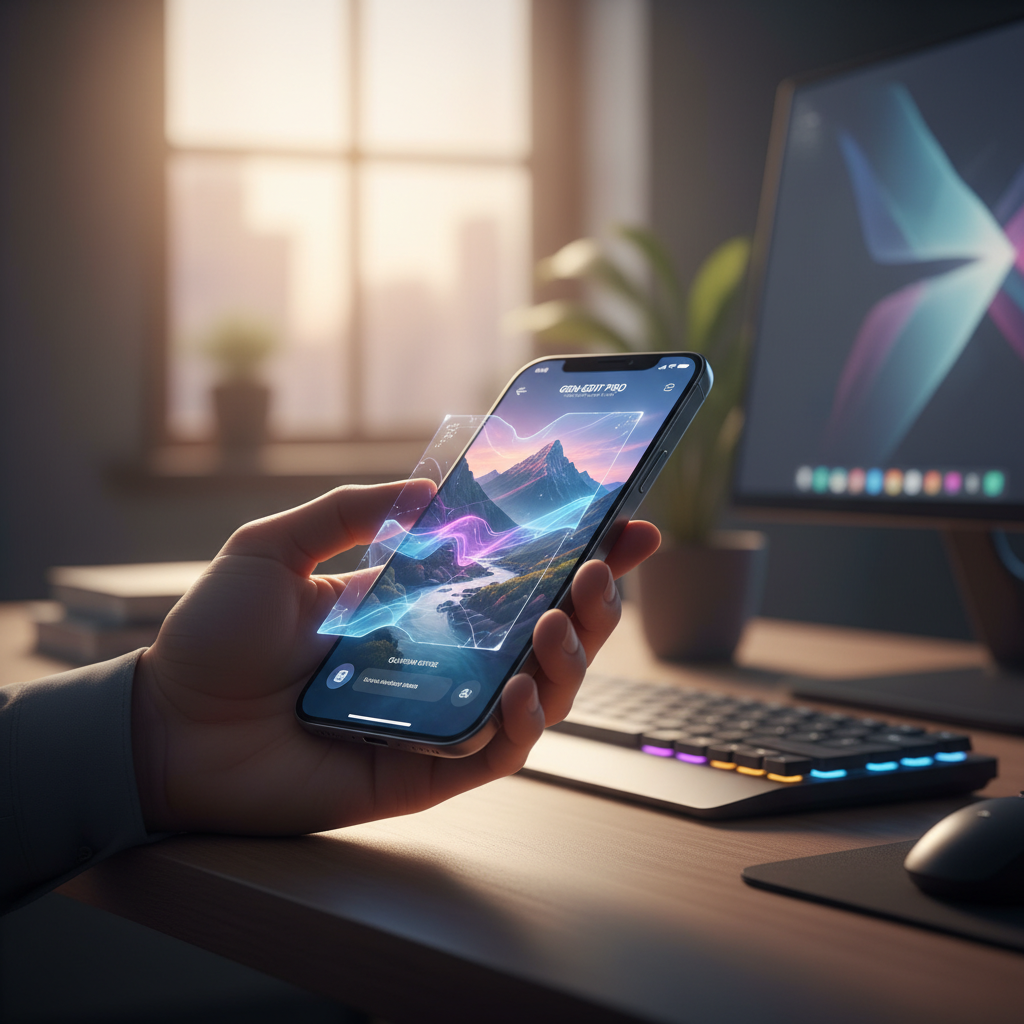
Apple is reportedly gearing up to introduce a significant overhaul of its software, with a major focus on artificial intelligence, particularly in the realm of photo editing. Expectations are soaring for this year’s Worldwide Developers Conference (WWDC 2024), where the tech giant is set to unveil its long-anticipated AI strategy, reportedly dubbed “Apple Intelligence.” This move positions the iPhone to directly challenge the formidable AI photo capabilities already present in Google Pixel devices.
For years, Google Pixel phones have set the benchmark for on-device AI photo manipulation, offering tools that seem almost magical. Now, it appears Apple is ready to bring its own sophisticated take to the iPhone, promising users new ways to enhance and transform their images. However, a crucial question lingers: in an age of digital authenticity, is there a genuine demand for extensive generative AI photo editing on our smartphones?
Apple’s Generative AI Vision for iPhone
Anticipation is at an all-time high for Apple’s WWDC, where the company is expected to detail its ambitious generative AI features across its ecosystem. Reports suggest that a significant portion of this innovation will be processed directly on the device, leveraging Apple’s powerful custom silicon for enhanced privacy and speed. This on-device processing will be a cornerstone of Apple’s differentiated AI approach.
While specific features remain under wraps, photo editing is a natural fit for AI integration, promising both subtle improvements and more transformative alterations. Imagine effortlessly removing unwanted objects, intelligently enhancing lighting, or even reimagining entire elements within a snapshot. Apple’s reputation for refining existing concepts suggests these tools will be polished, intuitive, and deeply integrated into the native Photos app experience.
This “Apple Intelligence” initiative represents a pivotal moment, signaling Apple’s move beyond traditional voice assistants to a more proactive, contextually aware smartphone experience. The goal is to make the iPhone an even smarter, more personalized companion, with mobile photography at the heart of many of these intelligent advancements.
The Pixel’s Pioneering AI Photo Features
To understand what Apple might be chasing, one only needs to look at Google Pixel’s impressive array of AI-powered photo editing tools. Features like Magic Eraser, which can seamlessly remove photobombers or distracting elements from images, have already revolutionized casual smartphone photography. Pixel’s Photo Unblur tool can salvage blurry shots, bringing forgotten moments back into focus.
Perhaps the most advanced of these is Pixel’s Magic Editor, a generative AI tool that allows users to reposition subjects, change backgrounds, or even introduce entirely new elements into a photo. These capabilities provide a glimpse into the kind of creative freedom and sophisticated manipulation that Apple might soon offer iPhone users. Google has consistently pushed the boundaries of what’s possible directly on a phone.
The challenge for Apple won’t just be to replicate these functions but to innovate beyond them, delivering a uniquely “Apple” experience. This could involve unparalleled ease of use, deeper integration with the iPhone’s hardware and software, or new features that prioritize photo authenticity and user control. Striking the right balance between powerful editing and preserving the original memory will be key.
Do Users Truly Want AI-Enhanced Memories?
This brings us to the core question: does the average iPhone user truly desire extensive generative AI capabilities for their personal photographs? While the technology is undeniably impressive and captivating, the practical demand for daily, transformative photo editing remains a subject of debate. Many users cherish their photos as authentic records of moments, preferring minimal alteration.
Subtle, intelligent enhancements are often welcomed; think automatic noise reduction, intelligent lighting adjustments, or even smart cropping that improves composition without altering content. However, the line between helpful enhancement and artificial manipulation is a fine one. Overly artificial results or a steep learning curve could deter casual users, making these powerful tools feel more like a novelty than a necessity.
There’s also the growing conversation around digital authenticity. If AI can effortlessly create or alter scenes, it raises questions about the trustworthiness of our photographic memories and shared images. Apple, with its strong emphasis on privacy and user control, will need to carefully navigate these ethical considerations, ensuring users always have agency over their content and its perceived reality.
For specific scenarios, such as removing an unexpected obstacle from an otherwise perfect shot or enhancing a photo for a special occasion, these AI tools could be incredibly valuable. Yet, for the vast majority of everyday snaps, users might prioritize quick sharing and genuine representation over deep, generative editing. The success of Apple’s AI photo editing will depend heavily on its ability to offer genuine utility without compromising user trust or experience.
Apple’s impending entry into the world of advanced AI photo editing is undoubtedly one of the most exciting developments for the iPhone in years. It promises to unlock new creative possibilities and streamline photo management for millions of users. As WWDC 2024 approaches, the tech world eagerly awaits to see how “Apple Intelligence” will redefine mobile photography.
Ultimately, the success of these new features will hinge on their real-world application, how intuitive they are to use, and how well Apple addresses concerns around authenticity and user privacy. If executed with Apple’s characteristic blend of power and simplicity, the iPhone could once again set a new standard for what’s possible with smartphone photography.
Source: Google News – AI Search
