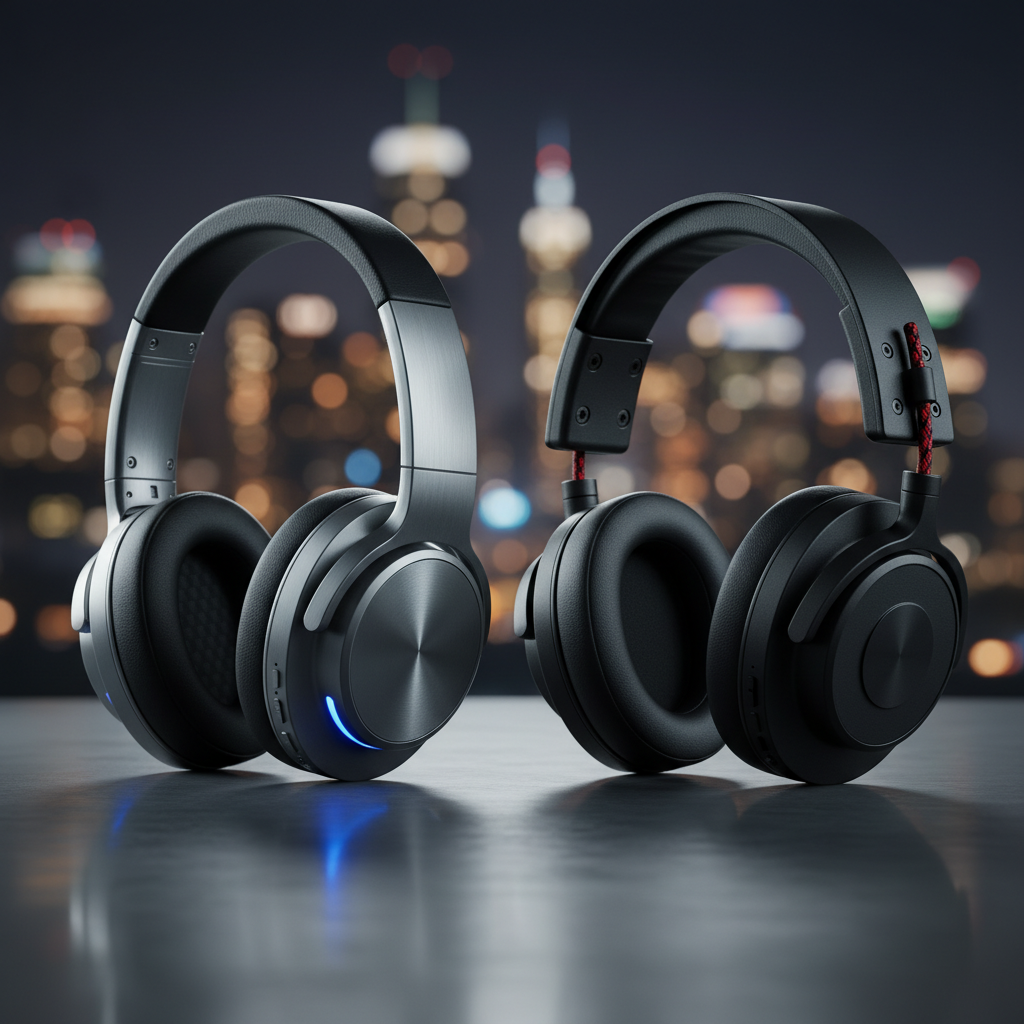
When it comes to premium noise-canceling headphones, the rivalry between Sony and Bose often leaves consumers wondering which model truly reigns supreme. We at ZDNET have spent countless hours putting the Sony WH-1000XM6 and the Bose QuietComfort Ultra (2nd Gen) through their paces, drawing on extensive testing, research, and real-world user feedback. Our rigorous process ensures unbiased recommendations, helping you make the smartest buying decisions based purely on performance and value.
Having personally tested both the Sony WH-1000XM6 and the Bose QuietComfort Ultra (2nd Gen) for months, I can confidently say there are distinct differences that cater to various preferences. If you crave headphones with granular audio customization, smart features, and performance that improves with your tweaks, the Sony WH-1000XM6 might be your perfect match. Conversely, if you desire a high-performing experience with minimal fuss and decision-making, the Bose QuietComfort Ultra (2nd Gen) will likely be more up your alley.
Comfort: Who Wears It Best?
The Bose QuietComfort Ultra (2nd Gen) truly lives up to its name, offering a more comfortable fit than its Sony counterpart. Its plush ear pads and spacious earcups create an overall relaxed sensation, ideal for extended listening sessions. While I found the first-generation QuietComfort Ultra slightly more comfortable, both iterations of Bose headphones surpass Sony in this crucial aspect.
Conversely, Sony’s WH-1000XM6 features thinner ear pads and a noticeably tighter clamping force. This pressure can be particularly noticeable on the jaw and may push glasses uncomfortably against the head. Therefore, the WH-1000XM6 performs best for users wearing their headphones for specific tasks, such as intense focus during work, a long flight, or a dedicated workout session.
Sound Quality: A Sonic Showdown
The Sony WH-1000XM6 stays true to Sony’s commitment to delivering incredibly detailed sound, appealing to audiophiles with its support for higher-quality codecs like LDAC and LC3. These codecs ensure improved audio fidelity over wireless connections, translating into a more balanced tuning with tighter bass, clearer mids, and sparkling highs compared to Bose. If you value consumer headphones that prioritize sound clarity and a tone geared toward critical listening, Sony’s offering is a clear winner.
On the other hand, Bose offers a distinctly different sonic profile with the QuietComfort Ultra (2nd Gen). Its sound signature is notably mellow and easy on the ears, making it exceptionally well-suited for long-term listening. This relaxed tuning is perfect for podcasts, movies, or simply enjoying music during travel without auditory fatigue.
Features & Customization: Power User vs. Plug-and-Play
The Sony Sound Connect app is the command center for the WH-1000XM6, housing a wealth of granular customization options. Here, you’ll find an elaborate equalizer, a noise-canceling optimizer, and the ability to adjust noise cancellation levels based on your location and behaviors. Additionally, Sony includes advanced features like Auracast and DSEE Extreme, which aim to restore lost audio quality in compressed files.
Unlocking the full potential of the Sony WH-1000XM6 requires engaging with these features and customizing them to your personal taste. While this offers unparalleled control for headphone enthusiasts, the sheer number of options can feel overwhelming for newcomers. If you consider yourself a power user who enjoys tailoring every aspect of your audio experience, Sony provides ample opportunities to make these headphones truly yours.
However, if the thought of deep-diving into settings and making numerous decisions to optimize your headphones sounds exhausting, the Bose QuietComfort Ultra (2nd Gen) offers a refreshing alternative. These headphones deliver an outstanding experience right out of the box, requiring minimal interaction with the companion app. For users who simply want to put on their headphones, forget about tweaking, and still be highly pleased with the performance, Bose offers an effortlessly premium experience.
Noise Cancellation: Quiet in Different Ways
It’s important to acknowledge that both the Sony WH-1000XM6 and the Bose QuietComfort Ultra (2nd Gen) boast exceptional noise cancellation. If superior ANC is your absolute highest priority, you will undoubtedly be happy with either option. However, their approaches to noise cancellation differ subtly, catering to various user scenarios.
Sony’s noise cancellation is strong, dynamic, and intelligently adaptive. Its algorithm responds swiftly to sudden noises and excels at canceling low frequencies, making it ideal for environments like busy coffee shops, airplane cabins, or bustling train stations. While powerful, this dynamic adaptation can sometimes feel aggressive and potentially fatiguing after an hour or so of continuous use.
In contrast, Bose’s noise cancellation is smooth and consistently effective, proving superior to Sony’s at dampening human voices. This makes it incredibly useful in shared office spaces or public areas where conversations are a primary distraction. The Bose adaptive noise-canceling algorithm is also intelligent, yet it responds with a gentler, less intrusive touch than Sony’s, contributing to a more comfortable, sustained quiet.
Ultimately, your choice between these two headphone titans depends on your priorities. If you value future-forward headphones packed with extensive features, offering top-end performance before reaching the $600+ price range, the Sony WH-1000XM6 is an excellent investment. For those who prefer a more relaxed, albeit less customizable, vibe across every category, delivering a fantastic experience without constant adjustments, the Bose QuietComfort Ultra (2nd Gen) is the perfect choice.
Source: ZDNet – AI
