When you’re investing in new tech, getting reliable, unbiased advice is paramount. At ZDNET, our commitment is to provide you with expert, thoroughly researched recommendations. We delve deep into products, putting them through their paces to ensure you make the most informed purchasing decisions.
Our comprehensive review process is designed to cut through the noise, delivering clear and actionable insights. This dedication forms the foundation of our trusted “ZDNET Recommends” badge, signifying countless hours of diligent testing and meticulous comparison shopping.
Trusting ZDNET’s Recommendations
Our recommendations aren’t just opinions; they’re the result of extensive data gathering from a multitude of reliable sources. We meticulously analyze vendor and retailer specifications, cross-reference with other independent review sites, and most importantly, scrutinize countless customer reviews. This holistic approach helps us understand what truly matters to real users who interact with these products daily.
It’s important to understand how we sustain this independent research. When you click our links and make a purchase, we may earn an affiliate commission. This financial support enables us to continue our work, but rest assured, it never influences our editorial content, product coverage, or the price you pay.
Our team adheres to stringent guidelines to guarantee that advertiser relationships have absolutely no bearing on our reviews or recommendations. We write for you, our reader, striving to deliver the most accurate information and knowledgeable advice available. Every article undergoes thorough editorial review and fact-checking to uphold the highest standards of journalistic integrity.
Should you ever encounter an inaccuracy or misleading information, we are committed to promptly correcting or clarifying the content. Your trust is our top priority, and we encourage you to report any perceived mistakes via our dedicated form. This continuous feedback loop helps us maintain the quality and reliability you expect from ZDNET.
First Impressions: The Tuxedo InfinityBook Max 15
Tuxedo Computers, a German company with over two decades of experience crafting Linux-preinstalled machines, recently offered us a chance to review their latest offering, the InfinityBook Max 15. As a seasoned Linux user and reviewer, I couldn’t pass up the opportunity to test this intriguing laptop, which starts at approximately $1,800.
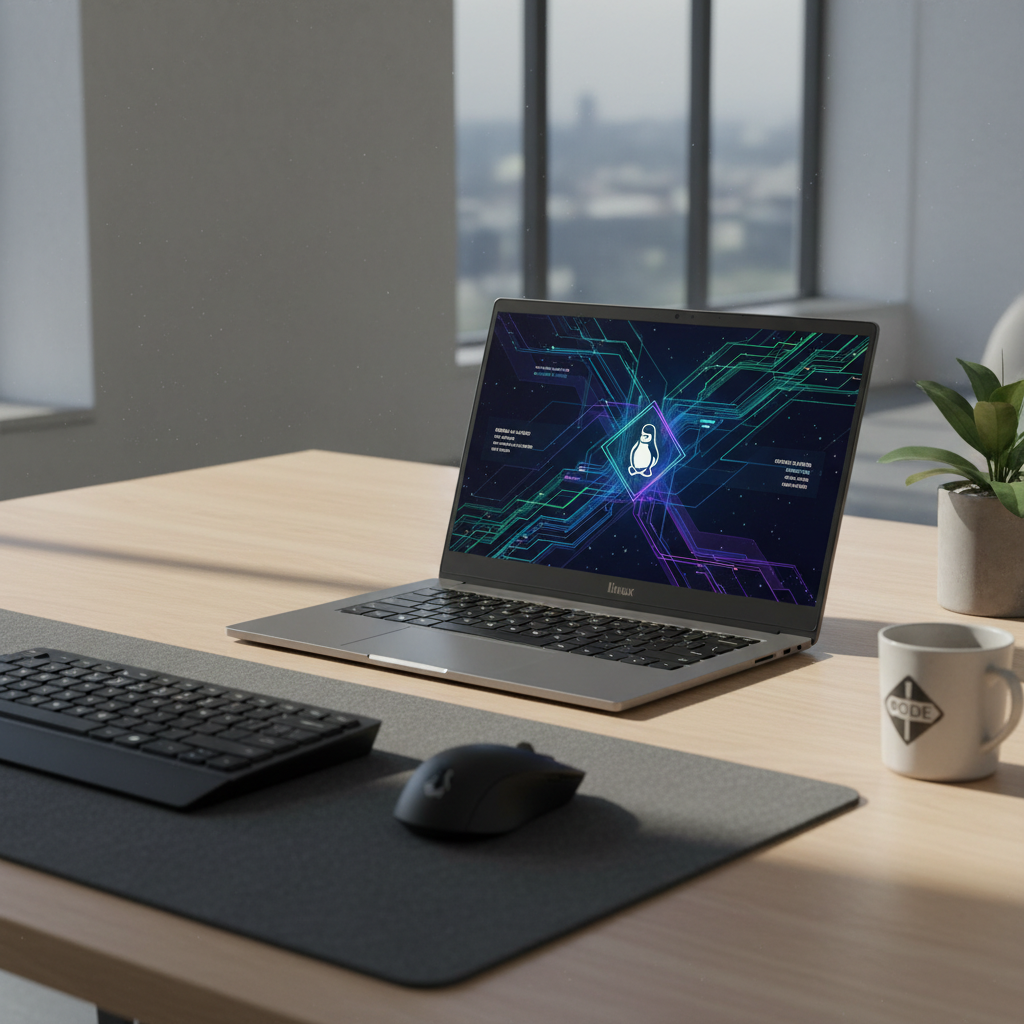
From the moment I unboxed it, the InfinityBook Max 15 made a strong impression. Its robust build, a hallmark of Tuxedo’s design, immediately stood out. The brilliant display and the distinctive Tux icon replacing the traditional Windows logo on the Super key truly reinforced its Linux-first identity.
The chassis, crafted from matte black aluminum, feels exceptionally solid and premium in hand. The hinge operates with satisfying firmness yet allows for smooth, easy opening. Weighing in at 4.1 pounds, it offers a sturdy feel without being overly cumbersome, striking a nice balance for portability.
The visual experience is equally impressive, thanks to its 15.5-inch screen boasting 500 nits of brightness and a super-smooth 300Hz refresh rate. This display rivals the quality of my MacBook Pro, particularly at full brightness, and notably features less glare, making it a joy to work with in various lighting conditions.
Performance and Power Management
While the InfinityBook Max 15 didn’t shatter speed records in every benchmark, its performance was far from sluggish. When tackling demanding AI tasks, for example, its midrange GPU showed some limitations, leading to a somewhat lukewarm initial reaction from me. It’s certainly usable for AI, but it doesn’t match the raw power of machines equipped with high-end GPUs.
However, the laptop truly shone when it came to everyday productivity tasks. Running DaVinci Resolve 20, a professional video editing suite, the InfinityBook Max 15 performed like a champion, even outperforming my MacBook Pro in certain scenarios. While it couldn’t quite keep pace with my iMac M3 Ultra with 96GB of RAM, it held its own admirably for shorter video clips, proving itself a very capable workstation.
One critical area that initially caused concern was battery life, which proved highly variable depending on the power profile selected. On the “Default” (full performance) setting, I was fortunate to achieve six hours of usage. Switching to “Cool and Breezy” extended this to a more respectable ten hours, indicating significant efficiency gains.
The real game-changer was the “Powersave extreme” profile, where the laptop practically outlasted my own focus, delivering nearly 12 hours of battery life. This demonstrates that while the default settings might be power-hungry, users have excellent control to optimize battery longevity according to their needs.
User Experience: Keyboard, Trackpad, and Sound
The keyboard on the InfinityBook Max 15 is a particular highlight, offering a fantastic key action that feels sturdy and responsive with every press. In fact, I found its typing experience to be superior to that of my MacBook Pro. My only minor quibble was the non-US keyboard layout, which, while understandable given Tuxedo’s German roots, required a brief adjustment period to locate certain characters.
The trackpad, though not as silky-smooth as a MacBook Pro’s, proved to be highly functional and responsive. Tuxedo has thoughtfully integrated gestures, which are a welcome addition and enhance the overall navigation experience. It complements the excellent keyboard for a solid input experience.
Audio performance was an area where the InfinityBook Max 15 was adequate but not exceptional. While it avoided the tinny sound sometimes found in laptops, it lacked the punch and depth for a truly immersive music listening experience. For casual video watching in a quiet environment, however, the sound quality was perfectly acceptable.
Is the Tuxedo InfinityBook Max 15 Right for You?
Deciding if the Tuxedo InfinityBook Max 15 is the ideal laptop hinges entirely on your specific requirements. For everyday Linux users seeking a beautifully crafted, robust machine for productivity, development, or general computing, this laptop is an excellent contender. Its solid build, stunning display, and flexible power management make it a compelling choice.
However, if your primary goal is hardcore gaming or intensive local AI model training, you’ll want to consider upgrading key components. Maximizing the RAM and opting for the best available GPU, like the Nvidia GeForce RTX 5070, would transform it into a formidable machine capable of handling most anything you throw at it. Be mindful that fully speccing out the InfinityBook Max 15 can bring the price up to around $3,605 USD, placing it in the premium laptop category.
Overall, my time with the InfinityBook Max 15 was very enjoyable, showcasing a laptop that beautifully blends form and function for the Linux enthusiast. While I personally lean towards the smaller form factor of my 13-inch MacBook Pro, the Tuxedo InfinityBook Max 15 is undeniably a high-quality device that deserves serious consideration for those in the market for a powerful and polished Linux laptop.
Source: ZDNet – AI
