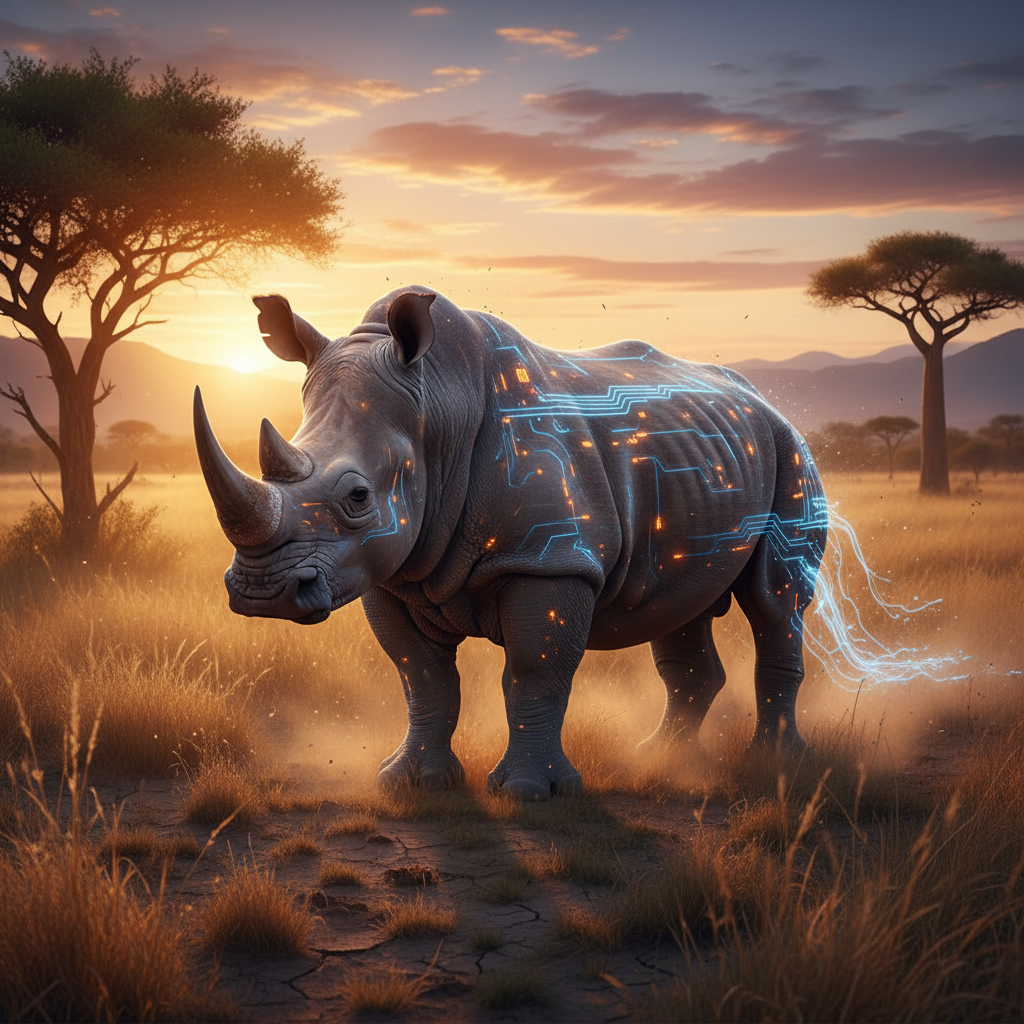
In a world where challenges often seem insurmountable, truly innovative partnerships emerge to redefine what’s possible. One such groundbreaking collaboration is unfolding, bringing together a legendary figure from the world of cricket, Kevin Pietersen, with the unparalleled technological might of Google. This unexpected pairing isn’t about setting new sporting records; it’s about pioneering a new era in wildlife conservation, specifically targeting the devastating crisis of rhino poaching.
Kevin Pietersen, known globally for his explosive batting and charismatic presence on the cricket pitch, has channeled his formidable drive into a deeply personal mission since retiring from the sport. His charity, SORAI (Save Our Rhinos Africa & India), is at the forefront of the battle to protect these magnificent creatures from extinction. Pietersen’s unwavering dedication to rhino conservation stems from a profound connection to the wildlife he grew up around in South Africa.
The rhino poaching crisis is a stark and brutal reality, pushing several rhino species to the brink. With sophisticated poaching syndicates employing advanced tactics, traditional anti-poaching methods often struggle to keep pace. This urgent situation demands a radical shift in strategy, calling for innovative tools and a data-driven approach that can outsmart the criminals.
A New Kind of Partnership: Batting for Wildlife
Enter Google, a global leader in technology, bringing its vast expertise in artificial intelligence, machine learning, cloud computing, and mapping to the conservation frontline. This isn’t just about financial support; it’s a deep, strategic partnership focused on empowering anti-poaching units with cutting-edge digital solutions. Together, Pietersen and Google are transforming the game, literally.
Google’s AI and machine learning capabilities are proving to be invaluable assets. Algorithms are being deployed to analyze vast datasets, including ranger patrol routes, historical poaching incidents, weather patterns, and even lunar cycles, to predict high-risk areas and potential poaching events. This predictive analysis allows conservation teams to deploy resources far more effectively and proactively.
Furthermore, Google’s advanced mapping technologies, coupled with powerful cloud infrastructure, enable real-time tracking and visualization of wildlife and patrol movements. This provides park managers and rangers with unprecedented situational awareness, turning complex raw data into actionable intelligence. The ability to process and interpret massive amounts of information quickly is a game-changer for protecting endangered species across vast, challenging terrains.
From the Pitch to the Bush: Kevin Pietersen’s Vision
Kevin Pietersen’s passion isn’t just a talking point; he’s actively involved in seeing these technological solutions implemented in the field. Through SORAI, he provides the crucial link between the tech developers and the brave men and women on the ground. His firsthand understanding of the challenges faced by rangers ensures that Google’s tools are practical, user-friendly, and highly effective in real-world scenarios.
The impact of this partnership is already being felt by anti-poaching units. Rangers can now use specialized applications on their devices to log sightings, report suspicious activities, and receive real-time alerts about potential threats. This immediate data flow significantly reduces response times and improves coordination among different teams, creating a more robust defense system.
By leveraging technology to enhance surveillance, intelligence gathering, and rapid response, conservationists are moving beyond reactive measures. They are gaining a significant edge over poachers, making their efforts more efficient, safer for rangers, and ultimately more successful in protecting rhinos. This blend of human dedication and technological prowess is a powerful deterrent.
Game-Changing Technology for Conservation
The beauty of the Google-Pietersen model lies in its inherent scalability and adaptability. While initially focused on rhino conservation, the frameworks and technologies being developed have the potential to be applied to protect other endangered species and ecosystems worldwide. This partnership sets a precedent for how technological innovation can be a cornerstone of global conservation efforts.
A truly data-driven approach allows for continuous improvement and refinement of strategies. Every piece of information gathered, from patrol paths to environmental conditions, feeds back into the system, making the AI models smarter and the predictions more accurate over time. This iterative process ensures that conservation efforts remain agile and responsive to evolving threats.
Ultimately, this collaboration highlights the power of diverse skill sets uniting for a common cause. It’s a testament to the idea that some of the most complex global problems can be tackled with ingenuity, determination, and the strategic application of advanced technology. This innovative partnership is inspiring other organizations to explore similar synergies.
What Does This Mean for the Future of Conservation?
The alliance between Kevin Pietersen and Google represents a beacon of hope in the fight for wildlife preservation. It demonstrates that when passion meets purpose and technology meets urgent need, extraordinary progress can be made. This partnership is not just about saving rhinos; it’s about forging a blueprint for the future of conservation itself.
By transforming how we monitor, protect, and analyze environmental threats, this collaboration is setting a new standard for effectiveness and innovation. It underscores that combining human expertise with cutting-edge tools is the most powerful way to secure a sustainable future for our planet’s precious biodiversity. The game is indeed changing, and for wildlife, it’s a change for the better.
Source: Google News – AI Search
