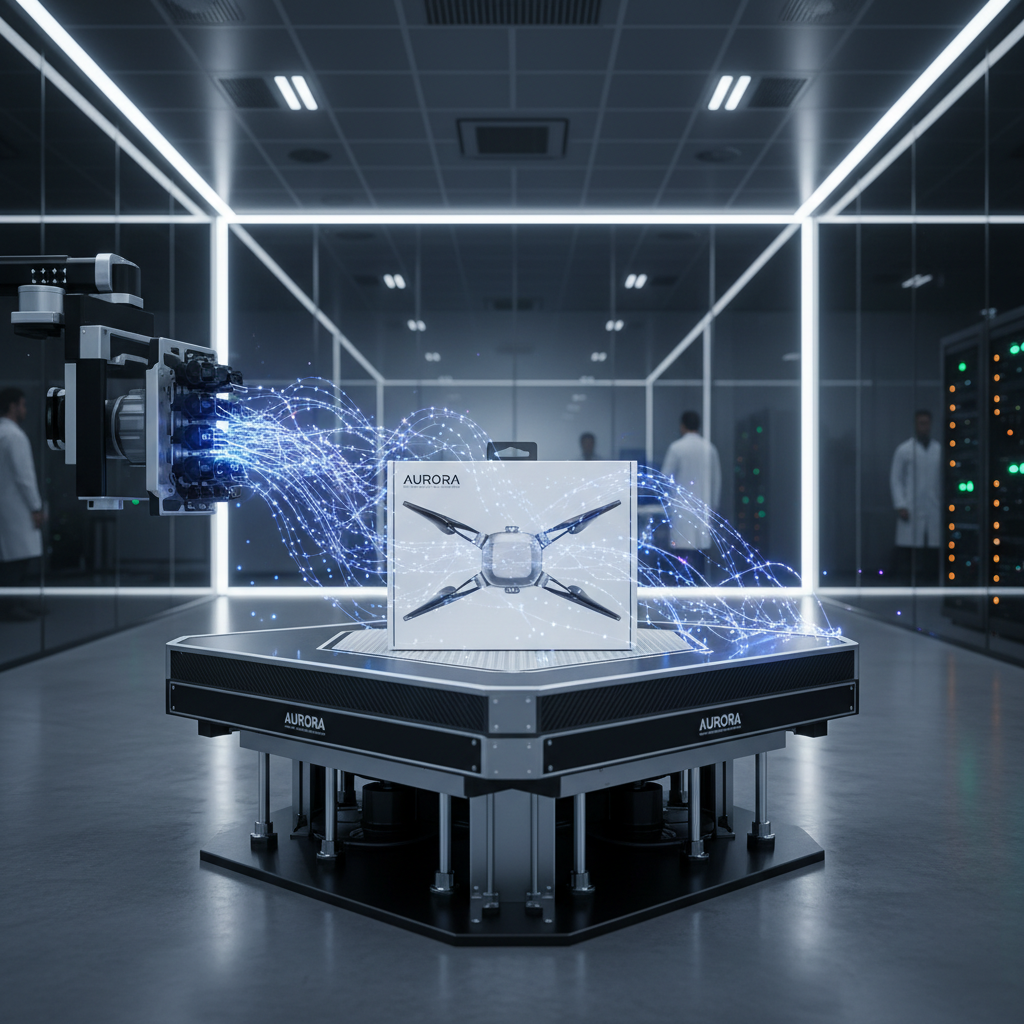
Ensuring products arrive at their destination safe and sound is a universal challenge for businesses worldwide. Traditional package testing methods, while foundational, often present limitations in truly mimicking the unpredictable journey through the supply chain. Now, Google is stepping into the arena, leveraging its cutting-edge AI vision technology to revolutionize how packages are tested for critical factors like shock and vibration.
For decades, companies have relied on a combination of physical simulations and human observation to validate packaging designs. This approach, though effective to a degree, can be time-consuming, expensive, and sometimes fails to capture the subtle nuances of real-world stresses. The demand for more precise, efficient, and data-driven testing solutions has never been higher, pushing innovators to explore new frontiers.
Google’s initiative marks a significant leap forward, moving beyond conventional methodologies to embrace advanced computational power and visual intelligence. By applying sophisticated artificial intelligence, the tech giant aims to gain an unprecedented understanding of how packaging performs under duress. This innovative approach promises to deliver stronger, more reliable, and even more sustainable packaging solutions across various industries.
Rethinking Traditional Package Testing
Conventional package testing typically involves subjecting packaged products to controlled drops, shakes, and impacts on specialized machinery. These tests are designed to simulate the harsh conditions encountered during shipping, from accidental falls to constant vibrations within transport vehicles. While indispensable, these simulations often provide a pass/fail verdict without offering deep, granular insights into *why* a package might fail or *how* its design could be optimally improved.
Furthermore, human inspectors analyzing post-test damage, no matter how experienced, can only perceive so much. Microscopic cracks, subtle material fatigue, or precise deformation points might go unnoticed, leading to suboptimal design iterations or, worse, product damage in transit. There’s a clear need for a testing methodology that can capture far more data, with greater precision and objectivity, than traditional methods currently allow.
The AI Vision Revolution in Packaging
Google’s groundbreaking system deploys an array of high-speed cameras integrated with powerful AI vision algorithms to observe packages during testing. These intelligent systems don’t just record the test; they actively analyze every millisecond of the event. They capture incredibly detailed footage of the packaging and product during simulated shocks and vibrations, creating a rich dataset far beyond human capacity to process manually.
What makes this technology truly transformative is its ability to identify incredibly subtle and rapid changes in the packaging materials. The AI can detect the exact moment and location of material deformation, analyze complex vibration patterns, and even pinpoint the genesis of a tear or structural failure. It essentially provides a real-time, high-definition “x-ray” of the package’s response to stress, revealing vulnerabilities invisible to the naked eye.
By correlating this visual data with the eventual outcomes, the AI learns to predict potential failure points and optimize material performance with remarkable accuracy. This predictive power allows designers to make informed, data-backed adjustments to packaging designs, iterating much faster than before. It transforms package testing from a reactive quality control step into a proactive, intelligent design accelerator.
Unlocking Smarter Package Design and Sustainability
The actionable insights derived from Google’s AI vision testing are invaluable for package designers and engineers. They can precisely determine where structural reinforcement is genuinely needed, eliminating guesswork and over-engineering. Conversely, the AI can identify areas where material can be safely reduced without compromising product protection, leading to more efficient and streamlined designs.
Better-designed packaging directly translates to fewer damaged goods, significantly reducing costly product returns, customer complaints, and warranty claims. This not only enhances customer satisfaction but also leads to substantial savings for businesses in logistics, repair, and replacement costs. It’s a clear win for both the company’s bottom line and its reputation.
Beyond cost efficiency, optimizing material usage has profound environmental implications. Reducing packaging material translates to less manufacturing energy consumed, lighter shipments that lower fuel consumption, and ultimately, less waste ending up in landfills. Google’s innovative approach thus directly contributes to a more sustainable and environmentally responsible global supply chain, aligning with crucial ecological goals.
The Future is Visually Driven
Google’s pioneering work in applying AI vision to package testing sets a new gold standard for the industry. As this technology matures and becomes more widely adopted, we can anticipate a future where packaging design is not just intuitive but deeply data-driven, predictive, and incredibly efficient. This innovation promises to elevate product protection standards across virtually every sector, from consumer electronics to pharmaceuticals.
The implications of this technology extend far beyond just shock and vibration testing, hinting at broader applications in quality control, material science, and even automated inventory management. It signifies a significant step towards fully automated, intelligent packaging solutions that are responsive, adaptive, and continuously learning. The logistics and packaging world is undoubtedly on the cusp of a visual intelligence revolution, spearheaded by the forward-thinking efforts of tech giants like Google.
Source: Google News – AI Search
