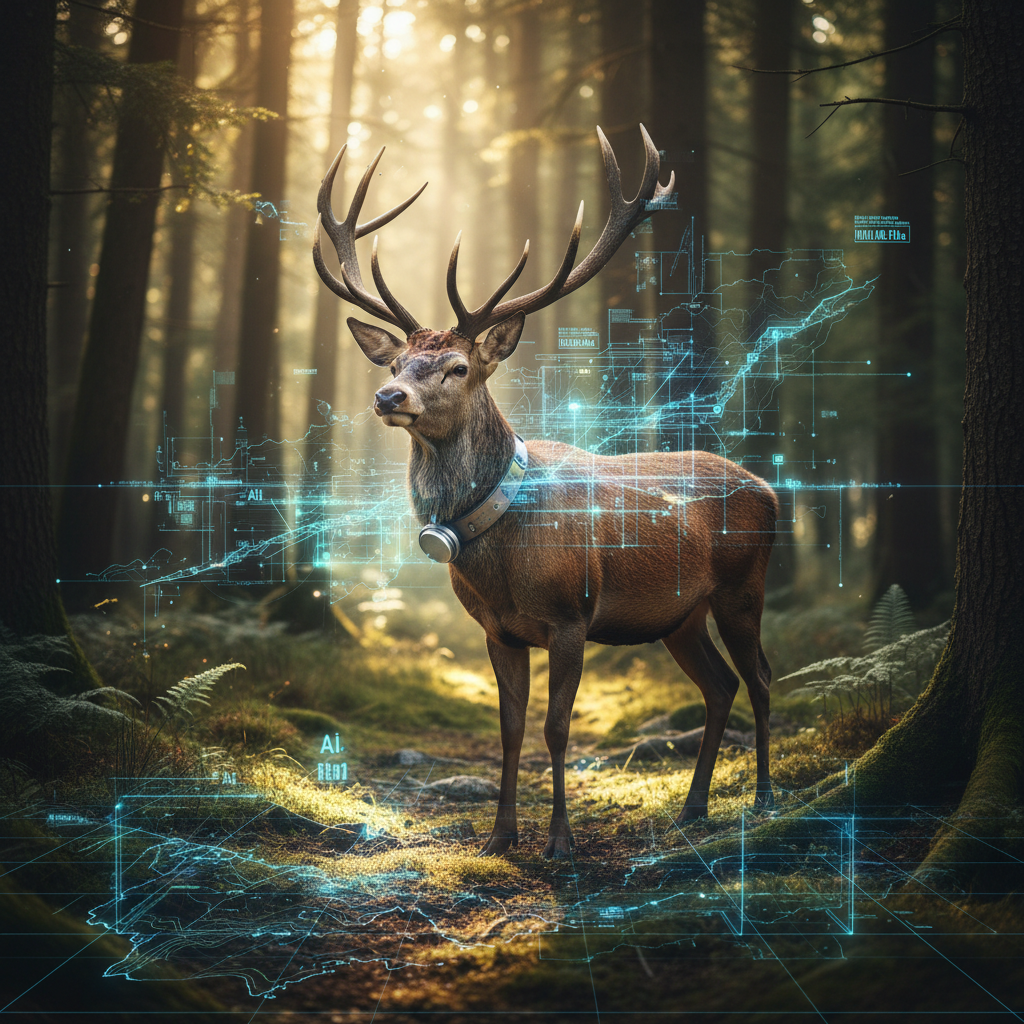
Imagine the painstaking effort required to track elusive wild animals across vast, remote landscapes. For years, conservationists and researchers have dedicated countless hours, often months, to manually process data, identify individual animals, and monitor their movements. This labor-intensive work, while vital, has always presented a significant bottleneck in wildlife conservation efforts, limiting the speed and scale of critical studies.
Now, groundbreaking research from scientists at Washington State University (WSU), in collaboration with engineers at Google, is poised to revolutionize this field. They’ve leveraged the power of artificial intelligence (AI) to dramatically streamline wildlife tracking, promising to cut data processing times from months down to mere days. This technological leap offers a beacon of hope for accelerating conservation actions globally.
The Challenge of Traditional Wildlife Monitoring
Traditionally, tracking wild animals involves deploying camera traps, conducting surveys, and then sifting through an overwhelming volume of visual data. Researchers meticulously examine thousands, sometimes millions, of images and videos to identify individual animals, often distinguished by unique patterns like spots, stripes, or ear notches. This manual process is not only incredibly time-consuming but also prone to human error and fatigue, making large-scale, long-term studies particularly challenging.
The sheer scale of data collected means that by the time analyses are complete, valuable real-time insights can be lost. This delay directly impacts the agility of conservation responses, hindering efforts to protect endangered species or manage populations effectively. A faster, more accurate method has been desperately needed to keep pace with the urgent demands of wildlife protection.
AI: A Game-Changer for Conservation
The WSU and Google research introduces a sophisticated AI framework designed to automate the most arduous aspects of wildlife tracking. At its core, this system employs advanced machine learning algorithms, particularly in computer vision, to rapidly identify and differentiate individual animals from vast datasets. By learning unique identifiers, the AI can reliably process images and video footage at speeds impossible for human analysts.
This innovative AI model acts like a tireless, highly accurate digital assistant, capable of processing weeks’ worth of images in a fraction of the time. It not only identifies specific animals but also records their presence and movements, providing rich, consistent data for ecological analysis. This paradigm shift in data processing allows conservationists to spend less time on manual review and more time on vital fieldwork and strategic planning.
Accelerating Research and Conservation Efforts
The practical implications of this AI-driven approach are profound. By dramatically reducing the time needed to process wildlife data, researchers can gain near-real-time insights into animal behavior, population dynamics, and habitat usage. This rapid feedback loop is crucial for understanding how environmental changes or human activities impact wildlife populations and for implementing timely interventions.
Consider the immediate benefits: endangered species monitoring can become more responsive, allowing for quicker identification of threats or population declines. Researchers can analyze migration patterns, assess the success of reintroduction programs, or track disease spread with unprecedented speed and accuracy. This efficiency translates directly into more effective and proactive conservation strategies, potentially saving critical time when species are most vulnerable.
- Faster Data Processing: Cutting analysis time from months to just days.
- Improved Accuracy: Reducing human error in identifying individual animals.
- Enhanced Monitoring: Enabling near real-time insights into animal movements and behaviors.
- Resource Optimization: Freeing up valuable human resources for fieldwork and strategic planning.
- Scalability: Making large-scale, long-term studies more feasible and robust.
The Future of Wildlife Tracking Technology
This collaborative success between academic research and technological innovation highlights the immense potential of interdisciplinary partnerships in addressing global challenges. The WSU and Google teams have not only demonstrated a powerful new tool but also laid the groundwork for future advancements in conservation technology. Their work showcases how cutting-edge AI can be a force multiplier for environmental protection, offering scalable solutions to complex ecological problems.
As AI continues to evolve, we can anticipate even more sophisticated tools for animal monitoring, potentially integrating with other technologies like satellite imagery or drone surveillance. This synergy of data collection and intelligent analysis promises to usher in a new era for wildlife conservation, where informed decisions can be made faster and with greater impact, ultimately safeguarding our planet’s invaluable biodiversity for generations to come.
Source: Google News – AI Search
