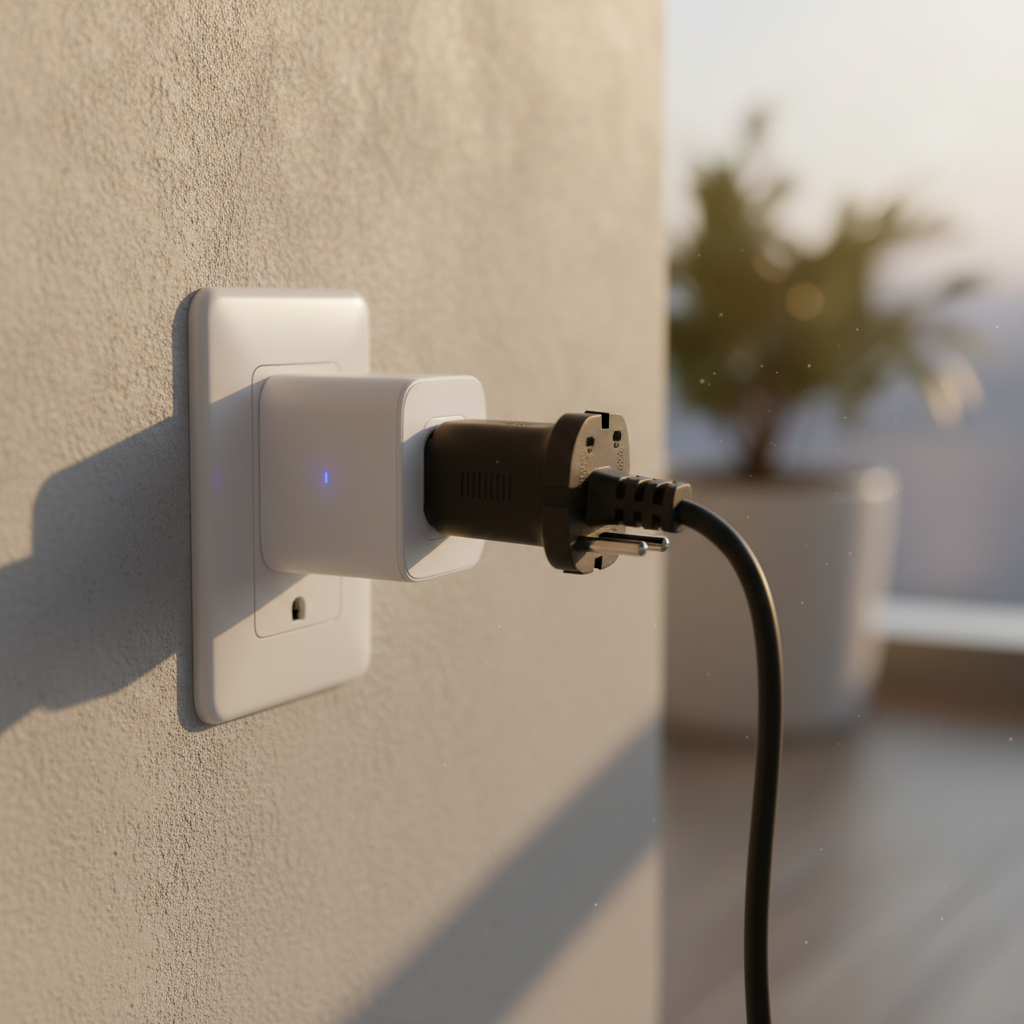
Smart plugs have become incredibly popular, transforming ordinary household items into smart devices with the tap of an app or a voice command. They offer unparalleled convenience, allowing us to automate lights, manage entertainment systems, and even power down devices from afar. However, despite their versatility, not every electrical device in your home is a suitable candidate for a smart plug.
Using a smart plug incorrectly can lead to a host of problems, ranging from nuisance tripped circuits to serious hazards like damaged plugs and even house fires. Understanding which devices are safe to connect and which are best left to traditional outlets is absolutely crucial. Let’s delve into the specifics and explore the five types of household devices you should never plug into a smart plug, according to expert advice.
Understanding Smart Plug Limitations and Risks
Most smart plugs available on the market are designed for a maximum power draw of 15 amps (A). This rating dictates the amount of electrical current the plug can safely handle without overheating or failing. Exceeding this limit is a primary reason for potential dangers and is why heavy-duty appliances should always be avoided.
Even if you connect a smart plug to a 20A wall receptacle, the smart plug itself will still be limited to its internal 15A capacity. Pushing a smart plug beyond its specified amperage can trigger its internal safety mechanisms, causing it to trip, or worse, lead to internal component degradation. Over time, excessive current can generate intense heat at connection points, and many budget-friendly smart plugs simply aren’t equipped to dissipate this heat effectively.
A clear warning sign that your smart plug is struggling is a burnt smell, visible warping, or scorch marks on its casing. If you notice any of these indicators, immediately disconnect the appliance and discontinue using that smart plug. Always check your smart plug’s specific technical documentation and follow the manufacturer’s guidance to ensure safe operation and prevent damage.
Heavy-Duty Appliances and High-Draw Devices
As mentioned, anything that draws more than 15 amps of power is a definite no-go for smart plugs. This category typically includes large household appliances that demand a significant amount of electricity to function. Plugging these items into a standard smart plug is a recipe for trouble.
- Full-Size Refrigerators: These essential kitchen appliances draw considerable power, especially when their compressors cycle on.
- Many Air Conditioning Units: Window or portable AC units often exceed the 15A threshold, particularly during startup.
- Electric Heaters: Space heaters are notorious for their high power consumption, making them incredibly risky for smart plug use.
- Washers and Dryers: Both conventional and smart laundry appliances require dedicated circuits and are far too powerful for smart plugs.
Attempting to power these heavy-duty devices with a smart plug not only risks tripping your home’s circuit breakers but can also lead to the smart plug itself overheating and failing. This puts your appliance at risk of damage and, more critically, elevates the chance of an electrical fire. Stick to direct wall outlets for these power-hungry machines.
Critical Medical Equipment and Power Strips
For any device that is essential for health and well-being, reliability and continuous operation are paramount. Introducing a smart plug into this equation adds an unnecessary point of failure. The last thing you want is a momentary power glitch or a smart plug malfunction to disrupt vital medical care.
Therefore, you should never connect critical medical devices to a smart plug. This includes items such as oxygen equipment, CPAP machines, life-support systems, or any other device that supports a patient’s health. Their uninterrupted function is literally a matter of life and death, making smart plug convenience entirely inappropriate in these scenarios.
While power strips themselves aren’t inherently high-draw devices, plugging one into a smart plug introduces the significant risk of inadvertent load stacking. This occurs when you connect multiple devices to a single power strip, and their combined electrical load quickly adds up. It’s easy to lose track of the individual wattage of each device, leading to a total load that far exceeds your smart plug’s safe limit.
Even if each individual device connected to the power strip seems low-powered, their sum can overwhelm the smart plug’s capacity. The smart plug processes the total current required by the entire power strip, not just its individual components. When the cumulative load becomes too high, heat builds up within the smart plug, potentially causing it to fail, melt, or even ignite. It’s always safest to plug power strips directly into a wall outlet.
Heat-Generating and Automatically Cycling Appliances
This category covers two distinct but equally important types of devices that should bypass smart plugs entirely. First, any appliance primarily designed to produce heat carries a unique set of risks. While it might seem convenient to remotely turn off a forgotten curling iron, the potential for malfunction and fire is too high.
Devices like coffee makers, toasters, hot plates, heating pads, electric kettles, and hair styling tools should be plugged directly into an outlet. The risk of these appliances accidentally activating, overheating, or suffering an internal fault while unattended, even if connected to a smart plug, is a serious concern. Always unplug them manually when not in use.
Secondly, appliances that operate on an automatic cycle throughout the day are also unsuitable for smart plugs. Devices such as certain AC units, refrigerators, and dehumidifiers rely on internal sensors and specific operational sequences to function correctly. Interrupting these cycles by cutting power via a smart plug can severely damage their internal components, especially compressors.
Compressors, in particular, need time to equalize their internal pressure after switching off. If power is restored too quickly by a smart plug, the compressor has to fight against built-up pressure, leading to overheating, difficulty starting, or even tripping its protective system. This can significantly shorten the lifespan of these expensive appliances, making smart plug integration a costly mistake.
Source: ZDNet – AI
