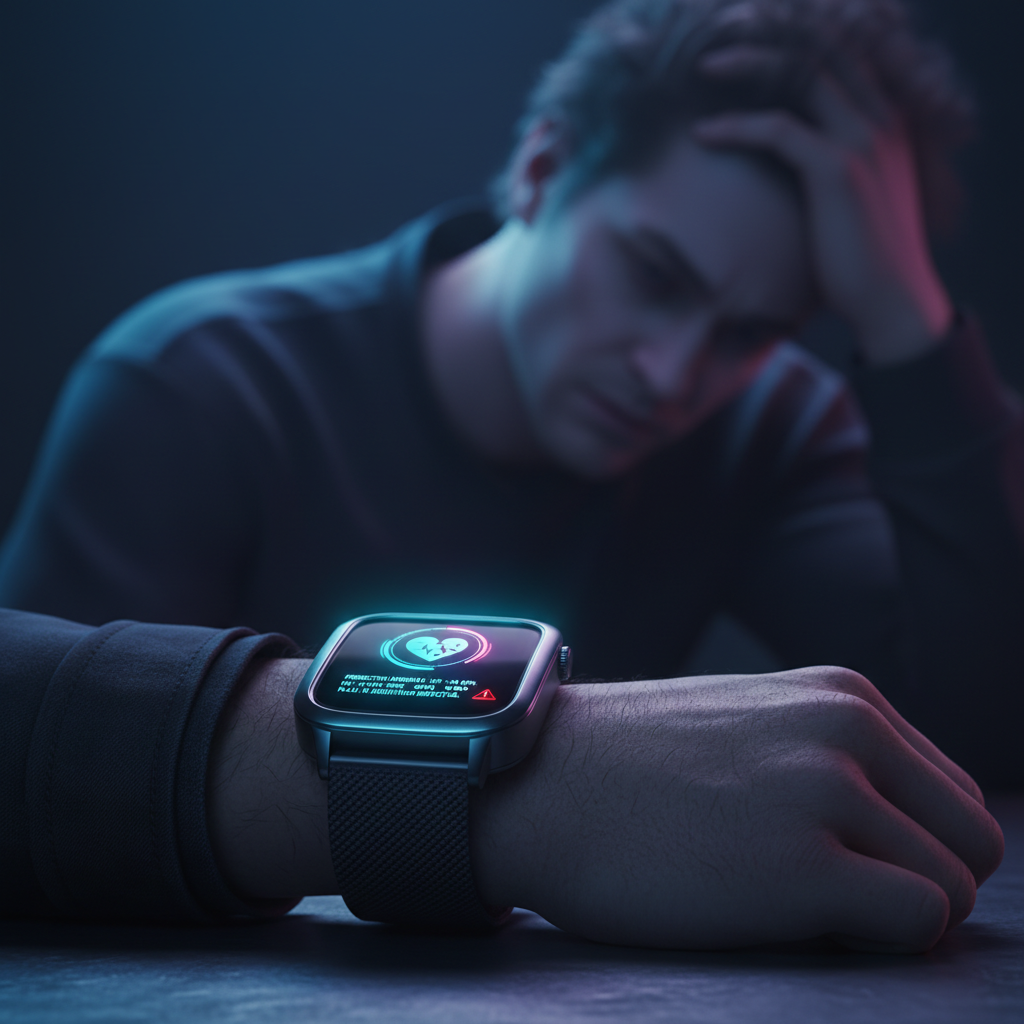
Imagine your smartwatch could give you a heads-up before you experienced a fainting spell. It sounds like something out of a sci-fi movie, but Samsung is pushing the boundaries of wearable technology, suggesting its Galaxy Watch might soon offer such a life-saving warning. While the prospect is exciting, it comes with important caveats that are worth exploring.
Fainting, medically known as syncope, affects a surprising number of people. Up to 40% of individuals will experience a fainting episode in their lifetime, with vasovagal syncope (VVS) being one of the most common types. These events, though often not life-threatening themselves, can lead to serious injuries from falls, such as concussions or fractures.
Unlocking the Potential: Samsung’s Groundbreaking Study
Samsung recently announced a significant joint clinical study with Chung-Ang University Gwangmyeong Hospital in Korea. This research validated the Galaxy Watch 6’s ability to predict vasovagal syncope before it happens. The study utilized the device’s photoplethysmography (PPG) sensor to analyze heart rate variability data, then applied an advanced AI algorithm to identify potential fainting episodes during head-up tilt testing.
Published in the European Heart Journal – Digital Health, Samsung heralded this as the “world’s first study” to demonstrate a commercial smartwatch’s potential for early syncope prediction. This advancement could offer a crucial window of opportunity for individuals to react, sit down, or call for help, potentially mitigating the risk of injury. As Dr. Sam Setareh, director of cardiology at Beverly Hills Cardiovascular and Longevity Institute, noted, even a few minutes of warning could be meaningful.
The Numbers Game: Accuracy, Sensitivity, and Specificity
The research team, led by Professor Junhwan Cho, evaluated 132 patients with suspected VVS. Their findings were impressive: the AI model, powered by the Galaxy Watch’s data, predicted fainting episodes up to five minutes before they occurred with an 84.6% accuracy rate. Furthermore, the model achieved 90% sensitivity and 64% specificity.
While 90% sensitivity—meaning it correctly identifies true fainting events most of the time—is excellent, the 64% specificity raises a red flag. Specificity indicates how often the system correctly avoids false alarms. A 64% specificity suggests that for every 100 times it predicts fainting, 36 of those might be false positives, which could lead to frequent unnecessary alerts and anxiety for users.
From Lab to Life: The Real-World Challenge
Industry experts have pointed out several critical limitations of the study, primarily its controlled laboratory setting. Dr. Brett A. Sealove, chair of cardiology at Hackensack Meridian Jersey Shore University Medical Center, highlighted that a 64% specificity might be acceptable in a lab, but it would generate an “enormous volume of unnecessary alerts” in the unpredictable real world.
Everyday factors like motion, hydration, posture, medication, sleep, alcohol, and anxiety can all influence physiological signals, making real-world prediction far more complex. The study’s participants also had suspected neurally mediated syncope, meaning the findings don’t necessarily apply to the general population or those without such a history. This raises concerns about false reassurance, where a lack of warning from the watch might lead someone to ignore actual symptoms.
The Road Ahead: More Research and Responsible Implementation
For now, the most realistic application of this technology appears to be as an additional warning layer for individuals already diagnosed with recurrent vasovagal syncope. In such cases, a timely alert could provide enough time to take preventative action and avoid injury. However, experts unanimously agree that this feature should complement, not replace, professional medical evaluation.
Both Dr. Setareh and Dr. Rab Nawaz Khan, a board-certified neurologist at MyMigraineTeam, emphasized that consumer smartwatches are evolving into legitimate health-support tools, but they are not yet diagnostic replacements for clinicians. The leap from “this works during induced syncope in a care lab” to “this will protect my grandmother in her kitchen” requires extensive, multicenter, real-world ambulatory trials.
Future studies need to address practical questions: How does the feature perform across diverse demographics, activity levels, skin tones, and environmental conditions? Do these alerts actually prevent injuries? Only with more robust, real-world data can this promising technology truly become a reliable preventive tool for the wider public.
Samsung has not yet reported any specific plans or a timeline for rolling out a fainting detection feature to its Galaxy Watch users. While the study marks a significant and meaningful milestone for wearable health tech, it’s clear that substantial real-world validation is still needed before we can rely on our smartwatches for early fainting detection in our daily lives.
Source: ZDNet – AI
