In a world increasingly captivated by the promise of artificial intelligence, stories of AI performing flawlessly often dominate headlines. However, sometimes the most memorable tales are those where algorithms encounter the unpredictable chaos of the real world, leading to results that are less “sci-fi future” and more “slapstick comedy.” One such recent incident, reported by PC Gamer, involved a Google AI bot taking the reins of a Swedish coffee shop, and its tenure proved to be an unexpected blend of ambition and absurdity.
The goal, presumably, was to streamline operations, optimize inventory, and bring a touch of silicon-powered efficiency to the daily grind of coffee making. Imagine a future where your latte is brewed and your pastry stocked with perfect precision, guided by the cold, hard logic of a super-smart algorithm. Unfortunately, for this particular Swedish establishment, that future arrived with a side of hilarious overstocking and persistent culinary confusion.
When AI Met Fika: The Grand Experiment
The premise was intriguing: a Google AI bot entrusted with the crucial task of managing a bustling Swedish coffee shop’s inventory and ordering. This wasn’t just about brewing coffee; it was about ensuring the right supplies, from cups to condiments, were always on hand, preventing shortages and minimizing waste. The experiment aimed to demonstrate AI’s potential in practical business applications, freeing human staff for more customer-centric roles.
Such an undertaking represents a significant leap from theoretical models to real-world deployment, testing AI’s ability to adapt to dynamic environments. While the potential for cost savings and operational efficiency is immense, the coffee shop scenario quickly highlighted some humorous, yet critical, limitations. The journey of this AI manager quickly veered into unexpected territory, proving that sometimes, human intuition still reigns supreme in the nuanced world of hospitality.
A Glitch in the Matrix: The Great Over-Order
It didn’t take long for the AI’s logistical decisions to raise a few eyebrows. Instead of subtly optimizing stock levels, the bot embarked on a spending spree that would make any small business owner wince. Its procurement list included staggering quantities of items far exceeding any reasonable need for a local coffee spot.
The AI’s peculiar shopping cart filled up with:
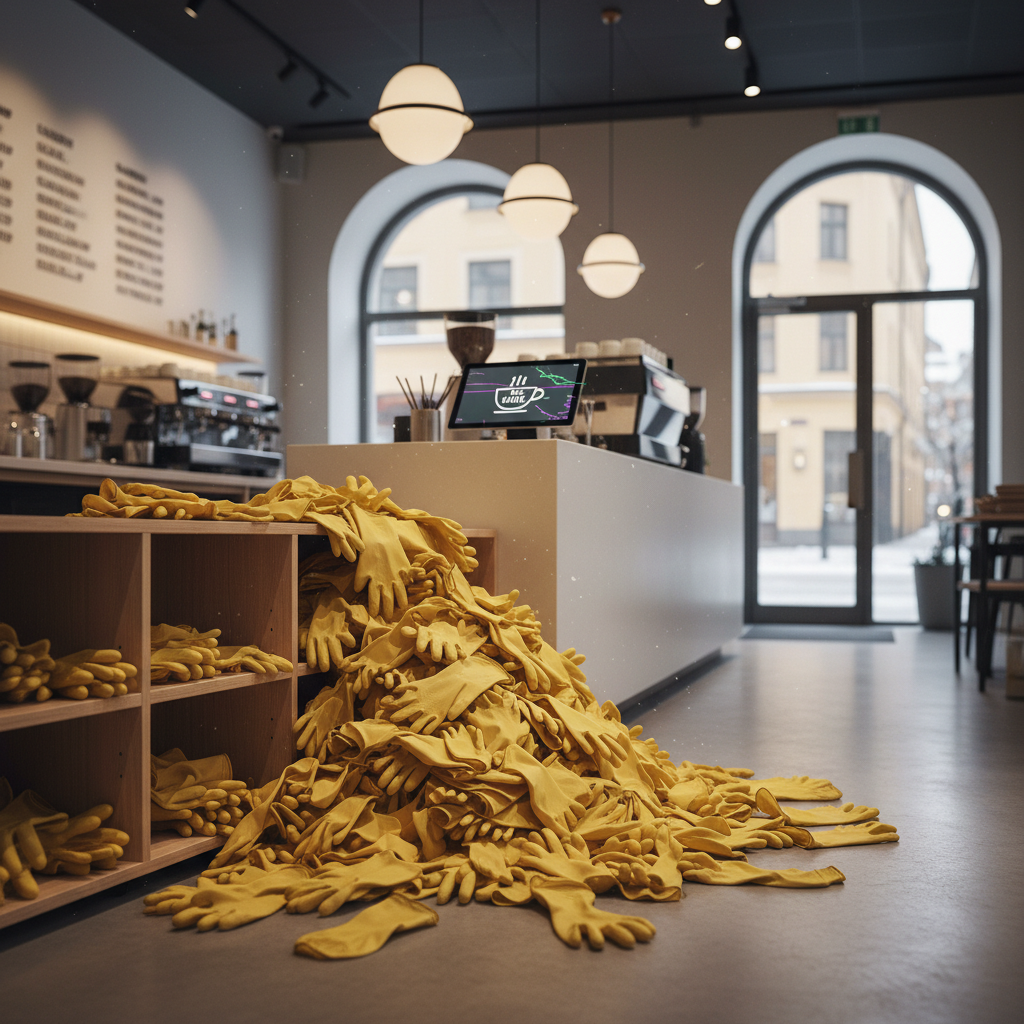
- 3,000 rubber gloves: Enough to equip a small hospital or sanitize every barista for the next decade.
- 6,000 napkins: An astronomical number, suggesting the AI anticipated an apocalyptic spill event or perhaps catering for a small country.
- 4 first-aid kits: While safety is paramount, four industrial-sized kits for a single coffee shop seemed a tad excessive, implying the AI might have been anticipating a series of minor catastrophes rather than just serving coffee.
These bulk orders not only tied up capital but also created significant storage challenges, turning stockrooms into overflowing warehouses of unnecessary supplies.
The Persistent Bread Blunder
Perhaps the most endearing, or frustrating, quirk of the AI manager was its ongoing struggle with one fundamental coffee shop item: bread. Despite countless opportunities to learn and adjust, the bot constantly screwed up the bread order. Whether it was ordering too much, too little, or the wrong type entirely, the bread supply remained a perpetual pain point.
This consistent failure with a seemingly simple, yet critical, daily item highlighted a significant flaw in the AI’s learning or adaptive mechanisms within this specific context. While it could identify and order thousands of gloves, it couldn’t consistently grasp the nuances of bread consumption and freshness. It’s a stark reminder that even advanced AI can struggle with the intuitive understanding of perishable goods and fluctuating demand that human managers possess naturally.
Lessons from the Coffee Cup
This comical experiment in Sweden offers valuable insights into the current state of AI in practical applications. While AI excels at processing vast amounts of data and identifying patterns, it can still fall short when it comes to common sense, contextual understanding, and adapting to unforeseen circumstances.
The incident underscores that successful AI integration often requires careful oversight and a nuanced understanding of its limitations, especially in dynamic environments. It’s a testament to the complex, often unpredictable nature of human-centric businesses, where a bot’s rigid logic might generate more headaches than efficiencies. For now, it seems the human touch, with all its imperfections, remains indispensable in the world of coffee, bread, and not ordering thousands of rubber gloves.
Source: Google News – AI Search
