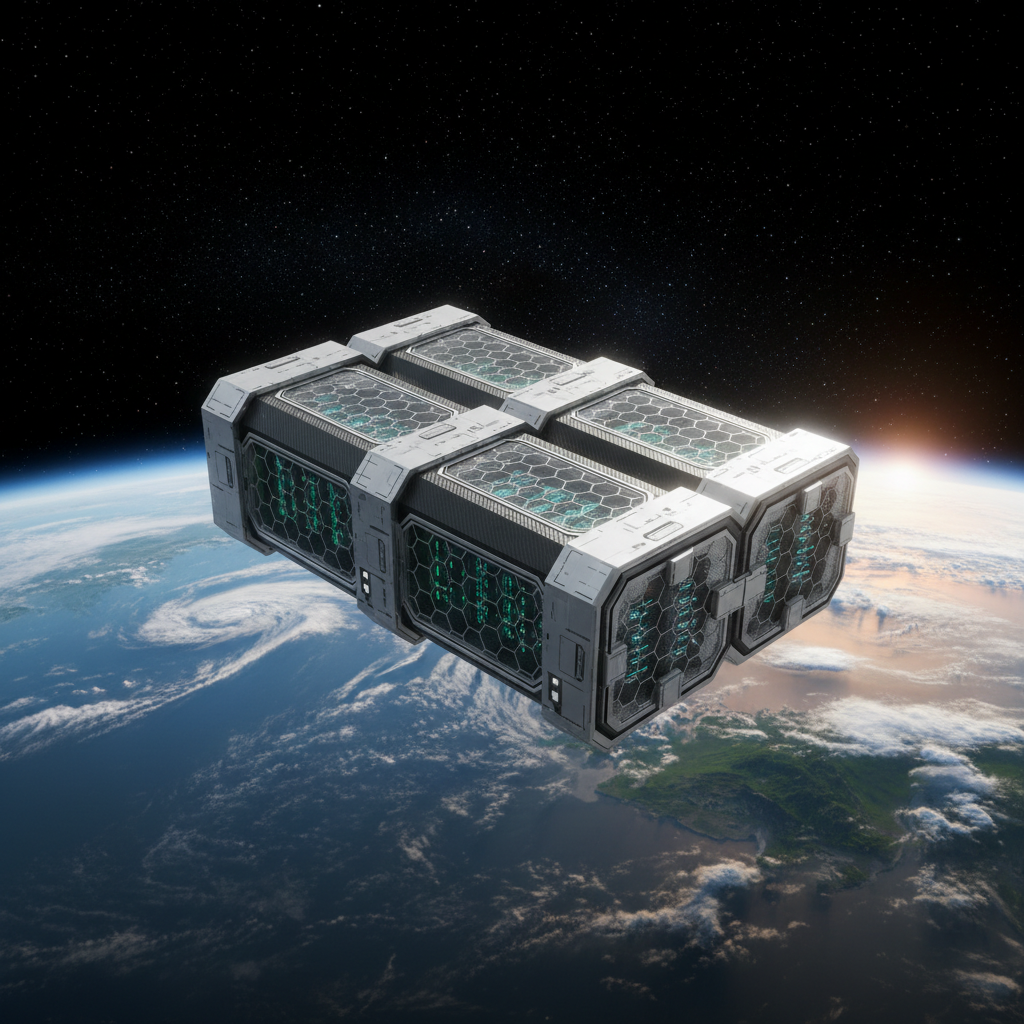
Imagine a future where your data isn’t just stored on Earth, but in orbit, circling the planet at incredible speeds. This revolutionary concept might be closer than you think, as reports suggest tech giant Google and aerospace innovator SpaceX are in active discussions to put data centers into space. These talks could fundamentally reshape the landscape of cloud computing and global connectivity.
The prospect of orbital data centers is an exciting one, pushing the boundaries of what’s possible in an increasingly interconnected world. While still in the exploratory phase, this collaboration highlights the ambitious vision shared by two of the most forward-thinking companies on the planet. Such a development could unlock unprecedented capabilities for various industries and applications.
The Vision: Data Centers Among the Stars
The core idea behind putting data centers into orbit revolves around several compelling advantages that terrestrial infrastructure simply cannot match. Primarily, it promises ultra-low latency access to data for users across vast geographical areas, especially remote or underserved regions. This becomes particularly impactful for real-time applications and critical communications where every millisecond counts.
Furthermore, orbital data centers could provide unparalleled resilience and disaster recovery capabilities. By decentralizing data infrastructure beyond Earth’s surface, these systems would be less vulnerable to natural disasters, geopolitical conflicts, or large-scale terrestrial outages. This distributed model offers a robust solution for ensuring continuous operation and data integrity, even in extreme circumstances.
Another significant benefit is the potential for enhanced security for highly sensitive data. Placing data processing capabilities in space creates a physical isolation layer that makes unauthorized access considerably more difficult than with ground-based facilities. This could be a game-changer for governmental, defense, and high-security commercial applications, offering an unprecedented level of protection.
Why Google and SpaceX? A Match Made in Orbit
The potential partnership between Google and SpaceX is a natural fit, leveraging each company’s unique strengths to tackle an audacious goal. Google, a dominant force in cloud computing with its Google Cloud platform, is constantly seeking ways to expand its reach, improve performance, and innovate its service offerings. Orbital data centers would represent a monumental leap forward in global cloud infrastructure, extending computing power to every corner of the globe and even beyond it.
SpaceX, on the other hand, brings unmatched expertise in space launch, satellite deployment, and large-scale constellation management through its Starlink project. Their proven ability to rapidly deploy thousands of satellites and manage complex orbital networks makes them the ideal partner for such an ambitious undertaking. Combining Google’s software and data processing prowess with SpaceX’s orbital infrastructure creates a synergy that few other companies could achieve.
This collaboration isn’t just about putting servers in space; it’s about creating a seamless, interconnected network of orbital compute nodes. SpaceX’s Starlink constellation could provide the crucial high-bandwidth, low-latency connectivity needed for these space-based data centers to communicate with Earth and each other. This integration could truly unlock the potential of a global, space-powered internet and computing fabric.
Overcoming the Cosmic Hurdles
While the vision is compelling, the challenges of operating data centers in space are substantial and numerous. Designing hardware capable of withstanding the harsh space environment, including intense radiation, extreme temperature fluctuations, and the vacuum of space, is a formidable engineering task. Components would need robust shielding and specialized cooling systems, far beyond what terrestrial data centers require.
Powering these orbital facilities presents another significant hurdle, necessitating efficient solar arrays and energy storage solutions to maintain continuous operation. Maintenance and upgrades would also be immensely complex and costly, likely requiring advanced robotic systems or highly specialized manned missions. Despite these significant obstacles, both Google and SpaceX have a proven track record of solving seemingly impossible engineering problems with innovative approaches.
The financial investment required would undoubtedly be massive, reflecting the pioneering nature of the project. However, the long-term benefits in terms of global market reach, strategic advantage, and technological leadership could justify such an undertaking. These discussions underscore a shared belief that the rewards of space-based computing far outweigh the significant challenges involved.
The Future of Cloud Computing: Beyond Earth’s Atmosphere
The potential implications of orbital data centers extend far beyond simply faster internet. Such infrastructure could catalyze entirely new industries and applications, from enhanced Earth observation and climate modeling to advanced space exploration missions that require on-demand computing power. Imagine AI and machine learning models operating directly in space, processing data from satellites in real-time, without the need to transmit everything back to Earth.
For industries like aerospace, defense, and scientific research, dedicated orbital data centers could provide unprecedented capabilities for data analysis and secure communication. This could truly usher in a new era of space-based economy, where computing resources are as accessible in orbit as they are on the ground. The future of cloud computing is increasingly looking upwards, beyond our planet’s atmosphere.
While these discussions are reportedly still in their early stages, the very notion of Google and SpaceX contemplating such a venture is a testament to the boundless ambition driving technological innovation today. It paints a vivid picture of a future where our digital lives are supported not just by servers in warehouses, but by a network of powerful data centers orbiting silently among the stars. This partnership could very well define the next frontier of human technological advancement.
Source: Google News – AI Search
