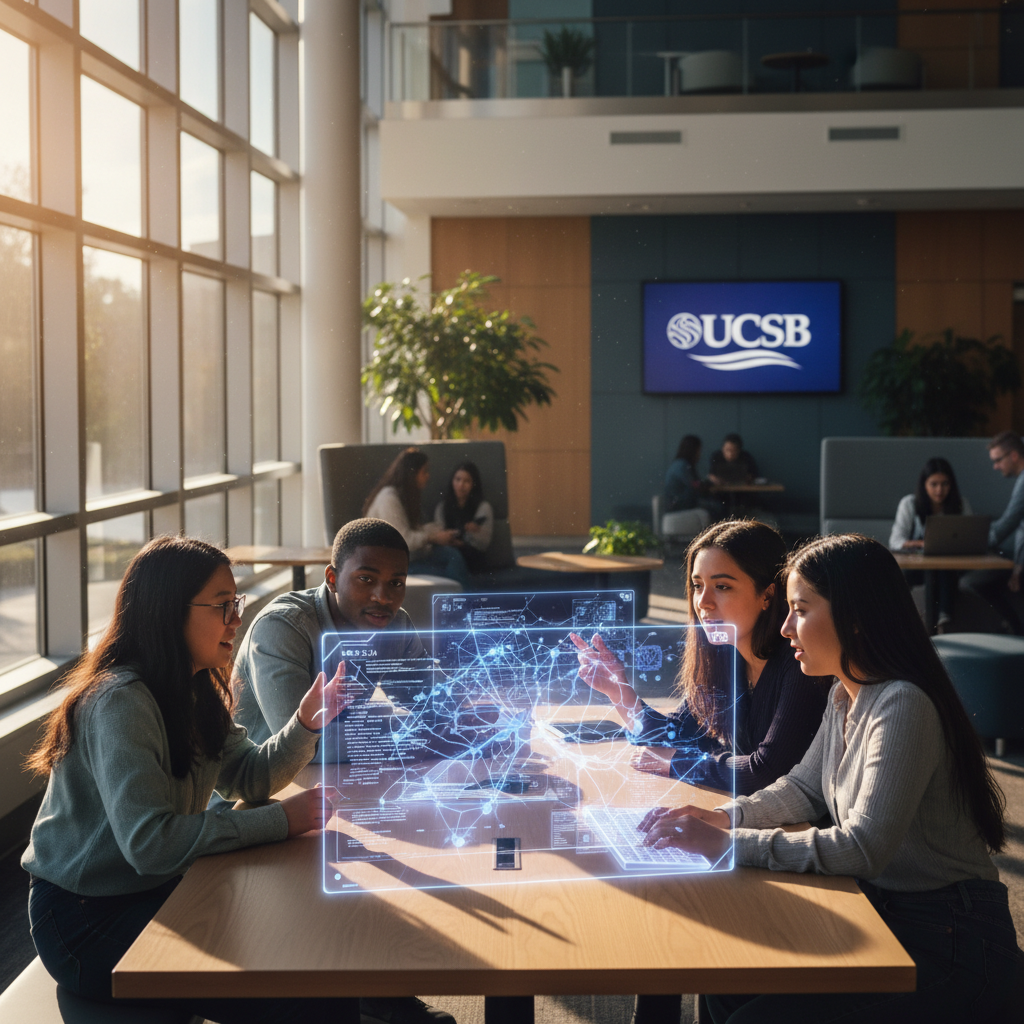
The academic landscape is constantly evolving, and at the forefront of this transformation is artificial intelligence. Recently, the University of California, Santa Barbara (UCSB) played host to a significant event: a Google AI Pop-Up. This immersive experience offered students, faculty, and the wider campus community a unique opportunity to delve into the rapidly expanding world of AI and its profound implications for education.
The event underscored a pivotal moment, highlighting how AI is no longer a futuristic concept but a tangible tool shaping learning, teaching, and research right now. Google’s presence at UCSB served as a vibrant demonstration of AI’s current capabilities and its immense potential to revolutionize traditional educational paradigms. It sparked important conversations about how technology can enhance access, personalize learning, and prepare the next generation for an AI-driven world.
Google’s AI Showcase Lands at UCSB
The Google AI Pop-Up at UCSB was more than just a presentation; it was an interactive hub designed to demystify artificial intelligence. Attendees had the chance to engage directly with Google’s latest AI innovations, exploring a range of tools and platforms that are already making waves across various sectors, including academia. From machine learning models to natural language processing applications, the showcase offered a comprehensive look at the cutting edge of AI development.
Students and educators were particularly keen to see how these advanced technologies could be integrated into their daily academic lives. Google representatives were on hand to provide live demonstrations, answer questions, and facilitate discussions on topics ranging from ethical AI development to practical implementation strategies. The atmosphere was one of curiosity and collaborative learning, reflecting the university’s commitment to embracing technological progress.
A key focus of the pop-up was demonstrating AI’s accessibility and utility, breaking down complex concepts into digestible insights. It provided a valuable platform for individuals to not only understand AI but also to envision how they could become active participants in its evolution. This direct engagement is crucial for fostering an informed and tech-savvy academic community ready to harness AI responsibly.
Exploring AI’s Transformative Potential in Academia
The core message emanating from the Google AI Pop-Up was clear: AI is poised to fundamentally transform education. It offers unparalleled opportunities to personalize learning experiences, making education more adaptive and responsive to individual student needs. Imagine AI-powered tutors that provide instant feedback, or smart platforms that tailor content based on a student’s learning style and pace.
Beyond individual learning, AI also holds immense promise for educators and researchers. Artificial intelligence can automate administrative tasks, freeing up valuable time for teaching and mentorship. Furthermore, in research, AI algorithms can analyze vast datasets at speeds impossible for humans, accelerating discoveries across disciplines from science to humanities. This efficiency allows researchers to focus on hypothesis generation and deeper analysis, pushing the boundaries of knowledge faster than ever before.
The event also highlighted AI’s role in promoting greater equity and accessibility in education. AI-driven tools can break down barriers for students with diverse learning needs, offering real-time translation, transcription, and adaptive interfaces. This inclusive approach ensures that quality education becomes more attainable for a wider audience, fostering a truly global learning community.
Key Takeaways and Practical Applications
For many attendees, the pop-up served as a powerful introduction to the tangible benefits of integrating AI into educational practices. Discussions revolved around specific applications such as:
- Personalized Learning Paths: AI algorithms can analyze student performance and recommend customized learning materials and activities.
- Automated Grading and Feedback: Tools powered by AI can efficiently assess assignments and provide constructive criticism, enhancing the learning cycle.
- Intelligent Tutoring Systems: AI can offer real-time, on-demand assistance to students, supplementing traditional classroom instruction.
- Research Acceleration: AI helps process and interpret complex data, enabling faster insights and discoveries in various academic fields.
- Enhanced Accessibility: AI-powered features like voice-to-text, text-to-speech, and translation tools make educational content more accessible to all learners.
These practical applications demonstrate that AI is not just a theoretical concept, but a powerful suite of tools ready for deployment in modern educational settings.
The enthusiasm shown by UCSB’s community underscored a growing readiness to embrace these technological advancements. Educators are increasingly recognizing AI not as a replacement for human interaction, but as a robust assistant that can amplify their impact and broaden their reach. By leveraging AI, institutions can create richer, more dynamic learning environments that cater to the demands of the 21st century.
The Future of Learning, Powered by AI
The Google AI Pop-Up at UCSB was more than just a momentary event; it was a forward-looking glimpse into the future of education. It emphasized the critical need for academic institutions to understand, adapt to, and proactively shape the integration of AI into their curricula and operations. Engaging with industry leaders like Google is vital for universities seeking to remain at the forefront of innovation.
As AI continues its rapid development, discussions around ethical considerations, data privacy, and responsible AI deployment will become increasingly important. Events like this pop-up foster an environment where these crucial conversations can begin, ensuring that AI’s powerful capabilities are harnessed for the greater good of all learners. The partnership between technology giants and academic institutions like UCSB is crucial in navigating this exciting, yet complex, new frontier.
Source: Google News – AI Search
