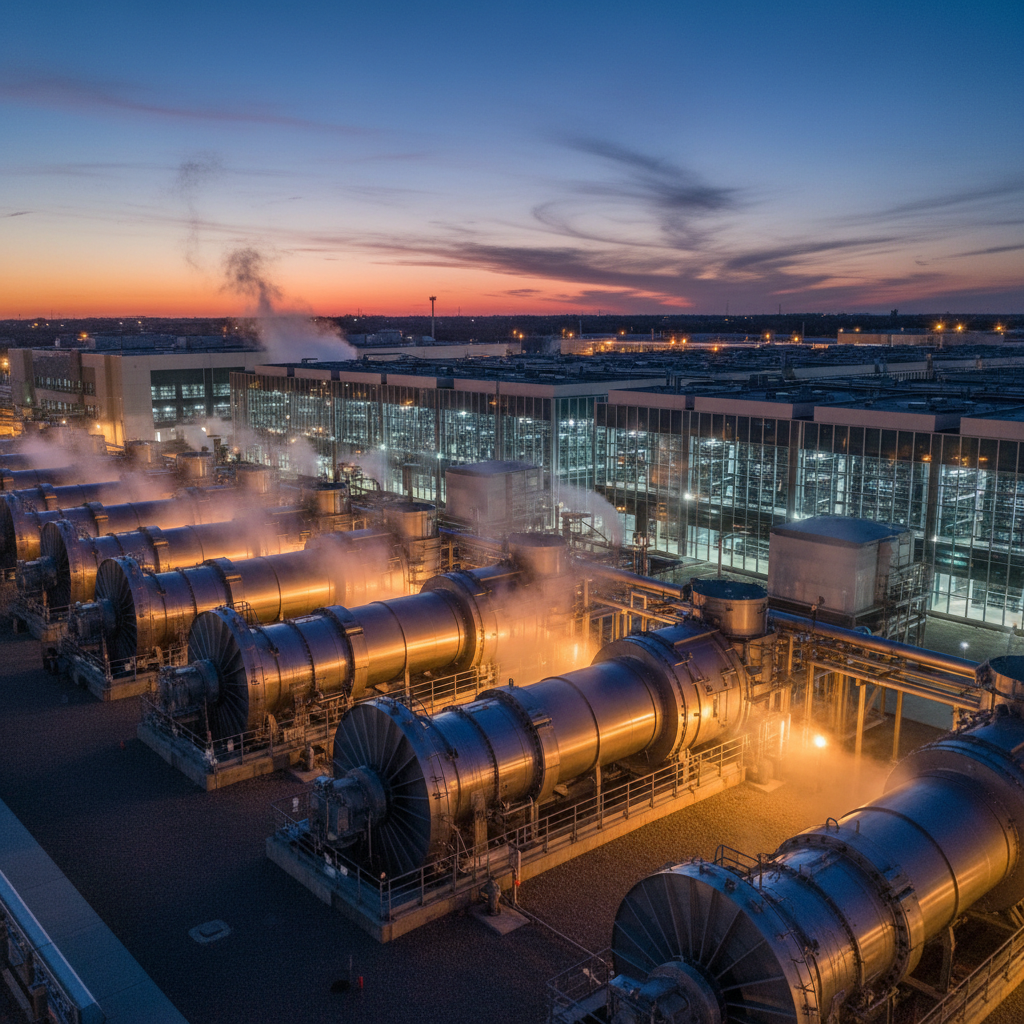
xAI, the artificial intelligence venture backed by Elon Musk, has significantly expanded its natural gas turbine operations in Southaven, Mississippi. Over the past two months, 19 additional portable natural gas turbines have been installed at its second data center campus, known as Colossus 2. This surge brings the total number of turbines at the site to a staggering 46.
This expansion comes at a contentious time, as xAI is currently defending itself against a lawsuit filed by the NAACP and various environmental groups. The lawsuit alleges the company is operating more than two dozen turbines without the necessary air permits, a potential violation of the Clean Air Act. The rapid increase in turbines raises significant questions about environmental compliance and community impact.
Rapid Expansion Amidst Legal Battles
Internal emails, reviewed by WIRED and obtained through a public records request by the Southern Environmental Law Center (SELC), confirm the installation of the 19 new turbines between late March and early May. A spreadsheet included in these communications suggests that xAI has added over 500 megawatts of natural gas turbine capacity since mid-March alone. This substantial power generation capacity is enough to power hundreds of thousands of homes, highlighting the sheer scale of the operation.
The burning of natural gas is known to release planet-warming emissions and can negatively impact local air quality. Environmental groups are increasingly concerned about the implications for surrounding communities, particularly in areas already facing air quality challenges. Neither xAI nor the Mississippi Department of Environmental Quality (MDEQ) has provided comments to WIRED regarding these latest developments.
Permitting Puzzles and Community Concerns
The legal action initiated by the NAACP, SELC, and Earthjustice in April accused xAI of running a “personal power plant” at the Southaven site without proper permits for its then 27 gas turbines. Following the lawsuit, a drone flyover revealed six additional turbines, but it was the MDEQ emails that uncovered the full extent of the expansion, revealing 19 new units. Notably, eight of these new turbines, accounting for over 200 megawatts of output, were installed after the lawsuit was filed, intensifying the legal dispute.
Regulators in both Tennessee and Mississippi have previously stated that due to their “non-stationary” nature, xAI’s turbines could operate for a year without permits under the Clean Air Act. However, this interpretation has faced strong community opposition. In March, despite similar public outcry, the MDEQ granted an air permit for the Southaven site to operate 41 gas turbines, though SELC maintains that the 27 turbines in their lawsuit and the recently added units are not covered by this permit.
The Impact on Local Communities
The Colossus 1 site, xAI’s original data center in Memphis, Tennessee, has also drawn widespread criticism. Located in Boxtown, a historically Black neighborhood already struggling with poor air quality, its operations sparked local protests over unpermitted gas turbines. The continued expansion in Southaven further exacerbates fears among residents and environmental advocates.
Abre’ Conner, NAACP director of environmental and climate justice, strongly condemned xAI’s actions. She stated that “Any company that disregards the obvious environmental and health concerns of Black communities to supposedly power a future that will help us all is sending a clear message about who it intends to serve in that future.” The NAACP is steadfast in its commitment to stand with impacted communities.
Emergency Injunction and xAI’s Defense
Last week, the NAACP escalated its efforts by filing for an emergency injunction, urging the court to halt the operations of the turbines at Colossus 2. In its defense, xAI argued that the data centers are “essential to the operation of cutting-edge artificial intelligence and other computing tools used by the U.S. government and millions of users worldwide, every day.” The company claimed that a shutdown of the temporary power generation equipment would force a precipitous closure of these critical data centers.
Coincidentally, on the same day the injunction was sought, Anthropic announced an agreement to utilize all computing resources at Colossus 1. Meanwhile, Elon Musk posted on X that training for “SpaceXAI” (the combined entity of SpaceX and xAI) had already transitioned to Colossus 2. This strategic shift underscores the increasing demand for computing power for advanced AI, but also highlights the pressing need for sustainable and compliant energy solutions.
Source: Wired – AI
