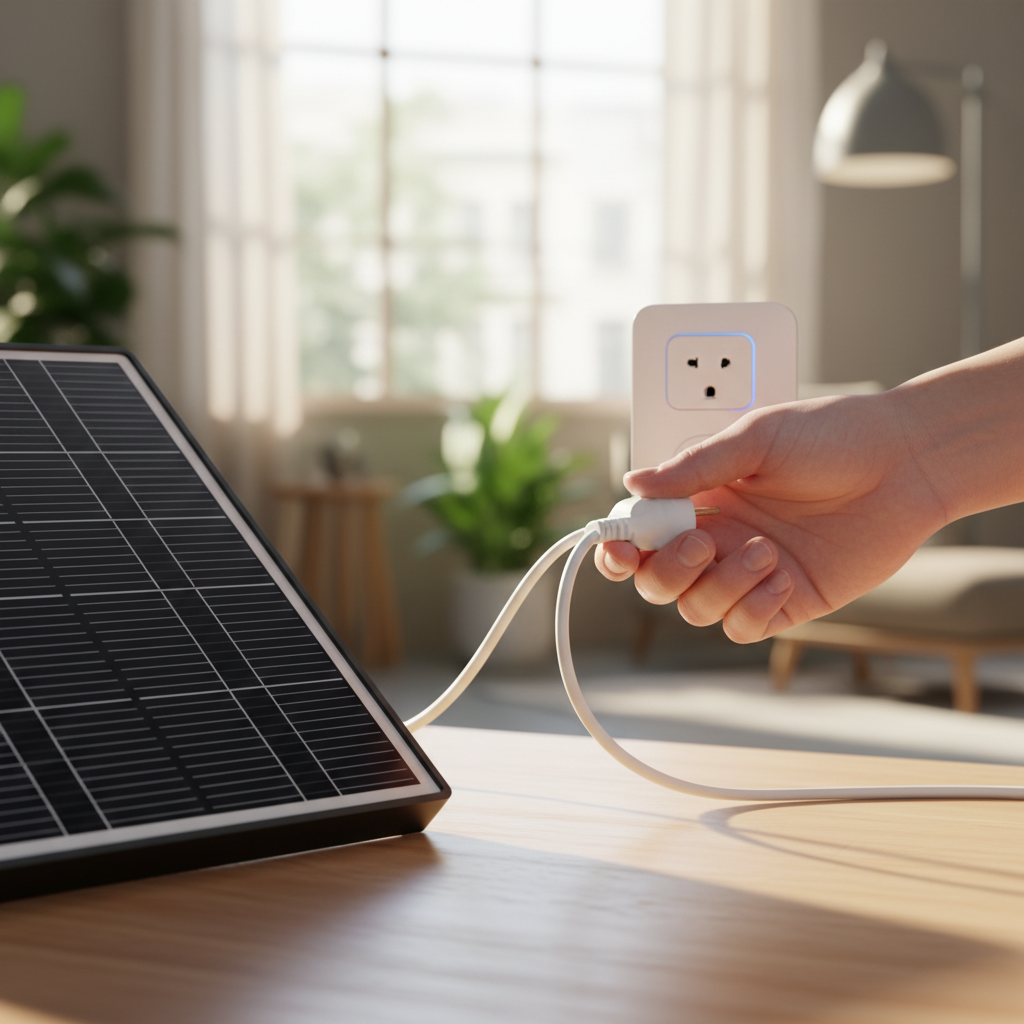
The allure of harnessing the sun’s immense power has captivated innovators for decades. From tiny panels to vast solar farms, the technology has evolved dramatically, making renewable energy more accessible than ever before. Today, a new player is emerging on the scene: plug-in solar systems, offering a surprisingly straightforward way to generate your own electricity right at home.
For years, homeowners typically had two main solar options. You could invest in a large, professionally installed rooftop system, or connect panels to a portable power station for limited use. While rooftop solar offers comprehensive coverage, it comes with a significant upfront cost and complex installation. Portable power stations, though convenient, restrict how and where that energy can be used.
What is Plug-In Solar and How It Works
Imagine connecting your solar panels directly to your home’s electrical system, without needing a team of electricians. This is the promise of plug-in solar, often referred to as balcony solar or portable solar. It’s a game-changer for individuals seeking greater energy independence and sustainability.
Let’s clear up a common misconception: you can’t simply plug solar panels directly into a wall socket. Solar panels produce DC (direct current) electricity, while your home appliances run on AC (alternating current). Attempting a direct connection would, at best, fail and, at worst, create a hazardous situation.
The secret sauce lies in the microinverter, the intelligent brain of any plug-in solar setup. This compact device seamlessly converts the DC power from your solar panels into AC electricity that your home understands. Crucially, it also ensures this converted power is safely and efficiently fed into your home’s existing electrical grid via a standard wall outlet, turning it into an inlet.
This ingenious design means you can often install these systems yourself, bypassing the need for expensive professional labor. This accessibility also opens the door for renters or apartment dwellers, who previously had limited solar options. For example, some progressive areas, like Utah, are already paving the way for tenants to install plug-in solar without requiring permanent property modifications.
Powering Your Home: Base Load and Beyond
Plug-in solar is primarily designed to cover your home’s base load — the constant, background electricity draw during the day. This includes essential devices like your internet router, refrigerator, freezer, and various chargers that are always consuming power. For an average US home, this typically ranges from 200 to 400 watts, translating to about 4.8 to 9.6 kWh over 24 hours.
The amount of energy your system can collect depends on several factors: the wattage of your solar panels, the average Peak Sun Hours (PSH) in your location, and a derate factor accounting for inefficiencies, shading, and panel cleanliness. A simplified calculation helps estimate daily yield: Energy Collected (kWh/day) = Panel Output (kW) × Peak Sun Hours (PSH) × Derate Factor (often around 0.77 for a conservative estimate).
For instance, a 1 kW (1,000-watt) solar array in Alabama, with an average of 3.5 PSH, might collect around 2.7 kWh per day. Move to sunnier Arizona, with 6.5 PSH, and that figure jumps significantly to approximately 5 kWh daily. Simply place your panels in a sunny spot—whether in your garden or on a balcony—connect them to the microinverter, plug into an outlet, and start generating clean energy.
What happens if your system generates more power than your base load consumes? Currently, excess energy might flow back to the grid, though you’re unlikely to be compensated under typical domestic tariffs. Another option, albeit one that increases initial costs, is to funnel the surplus power into a portable power station for later use, maximizing your energy independence.
Navigating Regulations and Costs
Despite its promise, the widespread adoption of plug-in solar faces significant hurdles, primarily due to regulatory red tape. While countries like Spain and Germany have embraced these systems, allowing consumers to purchase them off the shelf, the US and UK are still playing catch-up. Utah stands out as a pioneering US state, permitting systems up to 1.2 kW without utility approval or fees, and many other states are considering similar legislation.
The initial investment for a plug-in solar system can also be a significant barrier. A 1,200 W plug-in solar kit might cost around $2,400 today, which can seem substantial compared to an average electricity cost of about 17 cents per kWh. However, as more states legalize and more manufacturers enter the market, we can anticipate a healthy drop in prices.
Let’s consider the payback period. In a best-case scenario for Utah, with 7 PSH, a 1,200 W system could generate around 6.4 kWh per day. At Utah’s average electricity cost of $0.1333 per kWh, this translates to savings of about $0.86 daily, or $315 annually, leading to an investment recoupment in roughly 7.5 years. If the system only covers a 400 W base load during daylight hours, the annual savings drop to about $135, extending the payback period to 17 years. This highlights the importance of matching system output to your daytime energy consumption.
Safety is a valid concern raised by some legislators. However, reputable plug-in solar systems must conform to strict National Electrical Code (NEC) regulations and carry Underwriters Laboratories (UL) certification. These rigorous standards ensure they are as safe as any other electrical appliance in your home. From personal experience, testing an EcoFlow PowerStream microinverter for over six months, the hardware has proven robust and reliable.
Looking Ahead: The Future of Plug-In Solar
Currently, plug-in solar remains a niche product, characterized by higher prices and longer payback periods for many households. However, this landscape is rapidly changing. As more countries and states embrace this technology, increased competition among manufacturers will inevitably drive prices down, making it a more attractive option for the average consumer.
For now, plug-in solar makes the most sense if you reside in a sunny region and have significant daytime energy demands, such as charging an electric vehicle or running energy-intensive appliances. If your primary goal is to power only a few low-wattage devices in an area with minimal sun exposure, the economic benefits are still limited.
Keep a close eye on this space. Plug-in solar is on the cusp of a major transformation, with regulations evolving and technological advancements promising to make sustainable home energy more accessible and affordable than ever before.
Source: ZDNet – AI
