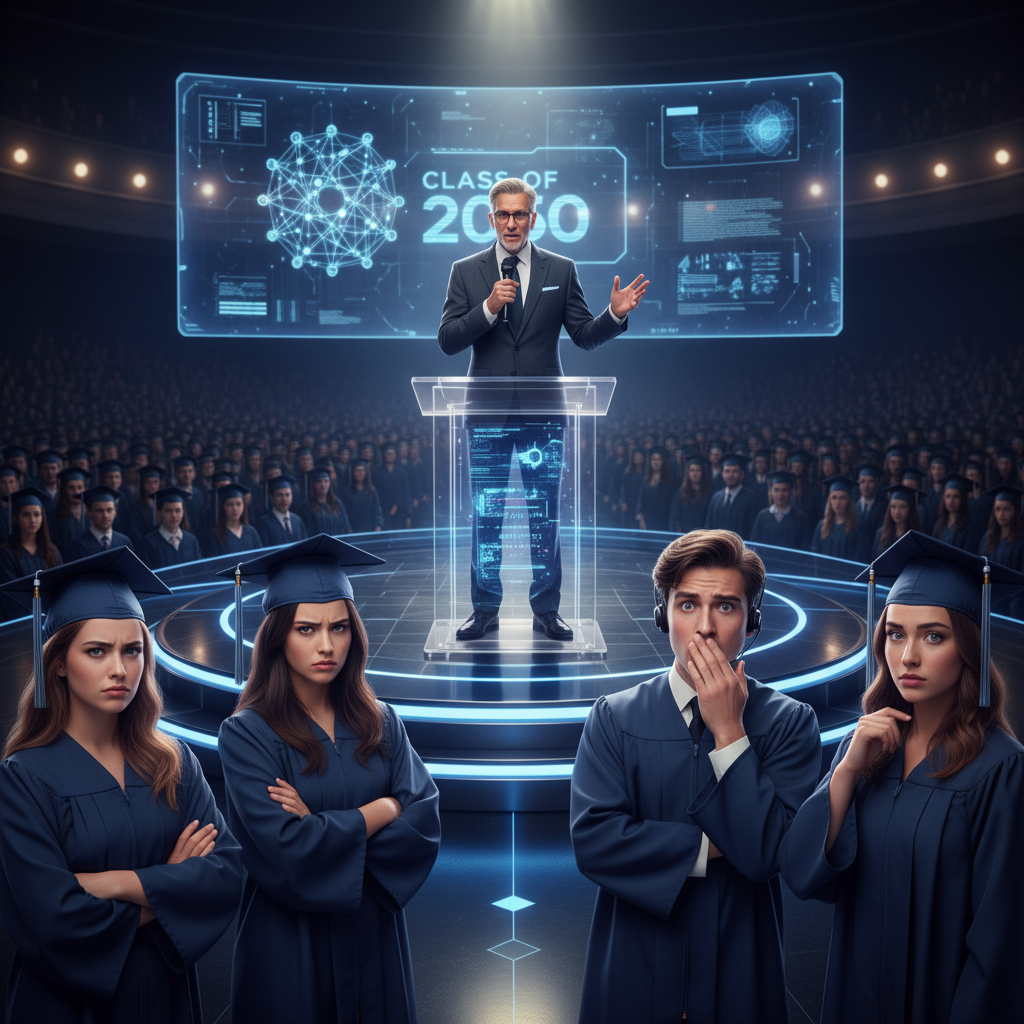
Graduation ceremonies are typically moments of joyous celebration, a culmination of years of hard work, and a hopeful glance toward the future. Yet, for the class of 2026, one such ceremony took an unexpected and highly contentious turn, transforming a moment of academic triumph into a public debate over the future of technology.
The speaker in question was none other than Eric Schmidt, the renowned former CEO and Chairman of Google, a figure synonymous with the advancements that have shaped our digital world. He stood before a sea of eager graduates, ready to impart wisdom, but was instead met with a wave of boos and shouts that echoed across the auditorium.
The subject that ignited such a fierce reaction? Artificial Intelligence (AI). Schmidt, a long-time advocate for technological progress, attempted to paint a picture of AI’s transformative potential, only to be confronted by a generation deeply apprehensive about the very future it promises.
When Optimism Met Apprehension
Schmidt’s address likely aimed to inspire, focusing on the incredible opportunities and innovations that AI could unlock. One could imagine him speaking of AI as a powerful tool to solve complex global challenges, accelerate scientific discovery, and enhance human capabilities across countless fields.
He might have emphasized how AI could act as a ‘co-pilot’ in various professions, streamlining tasks and boosting productivity, ultimately leading to a more efficient and prosperous society. Such a vision, from a tech titan like Schmidt, would typically be met with respectful applause, especially at an event celebrating entry into the professional world.
However, the mood of the 2026 graduates proved to be starkly different. Their generation has grown up in a world increasingly shaped by technology, witnessing both its wonders and its disruptive potential firsthand. Their perspective on AI is nuanced, colored by immediate concerns about their own career prospects and the broader societal implications.
The boos and shouts weren’t simply rude interruptions; they were a visceral expression of profound anxiety. They signaled a collective unease about the promises of AI juxtaposed with the perceived threats to human agency and livelihood. This moment served as a powerful reminder that not everyone shares the same unbridled enthusiasm for the rapid pace of technological change.
The Echo of Student Concerns
What exactly fueled this extraordinary outpouring of dissent? The graduating class, poised to enter the job market, is acutely aware of the ongoing discussions surrounding AI’s impact on employment. Their worries are grounded in tangible fears about the economic landscape they are inheriting.
These students are not necessarily anti-technology, but they demand a more transparent and ethically conscious approach to its development and deployment. Their protest was a plea for tech leaders to acknowledge and address the genuine human costs and challenges that accompany groundbreaking advancements.
Their collective concerns likely stemmed from several critical areas:
- Job Displacement: A pervasive fear that AI automation will render many entry-level and even specialized jobs obsolete, making it harder for new graduates to find stable employment.
- Ethical Implications: Worries about algorithmic bias, the misuse of powerful AI, surveillance, and the erosion of privacy in an AI-driven world.
- Future of Work: Uncertainty about the nature of future jobs, the skills required, and whether education systems are adequately preparing them for an AI-transformed workforce.
- Digital Divide: Concerns that advanced AI tools might exacerbate inequalities, leaving behind those without access to the necessary education or resources.
- Lack of Control: A feeling that powerful technologies are being developed and deployed without sufficient public input or democratic oversight.
The reaction to Schmidt’s speech underscored a significant generational gap in how Artificial Intelligence is perceived. While seasoned tech visionaries often champion its revolutionary potential, younger generations are grappling with its immediate, tangible effects on their personal and professional futures.
A Broader Message for the Tech World
This incident at the 2026 graduation ceremony was more than just a momentary disruption; it was a potent symbol. It highlighted a growing sentiment among the public, particularly among those directly facing its consequences, that the tech industry needs to listen more closely to societal concerns.
The message from the graduates was clear: innovation must be tempered with responsibility, and progress should not come at the expense of human well-being or ethical considerations. Tech leaders like Eric Schmidt, despite their monumental contributions, cannot simply present a utopian vision without acknowledging the legitimate fears of those who will live in this evolving world.
Moving forward, meaningful dialogue is essential. It’s not enough to simply build powerful AI systems; there must be a concerted effort to communicate their benefits responsibly, address their risks transparently, and involve diverse voices in their development and governance. The boos from the class of 2026 serve as a stark reminder that the future of AI hinges not just on technological prowess, but on public trust and ethical stewardship.
Source: Google News – AI Search
