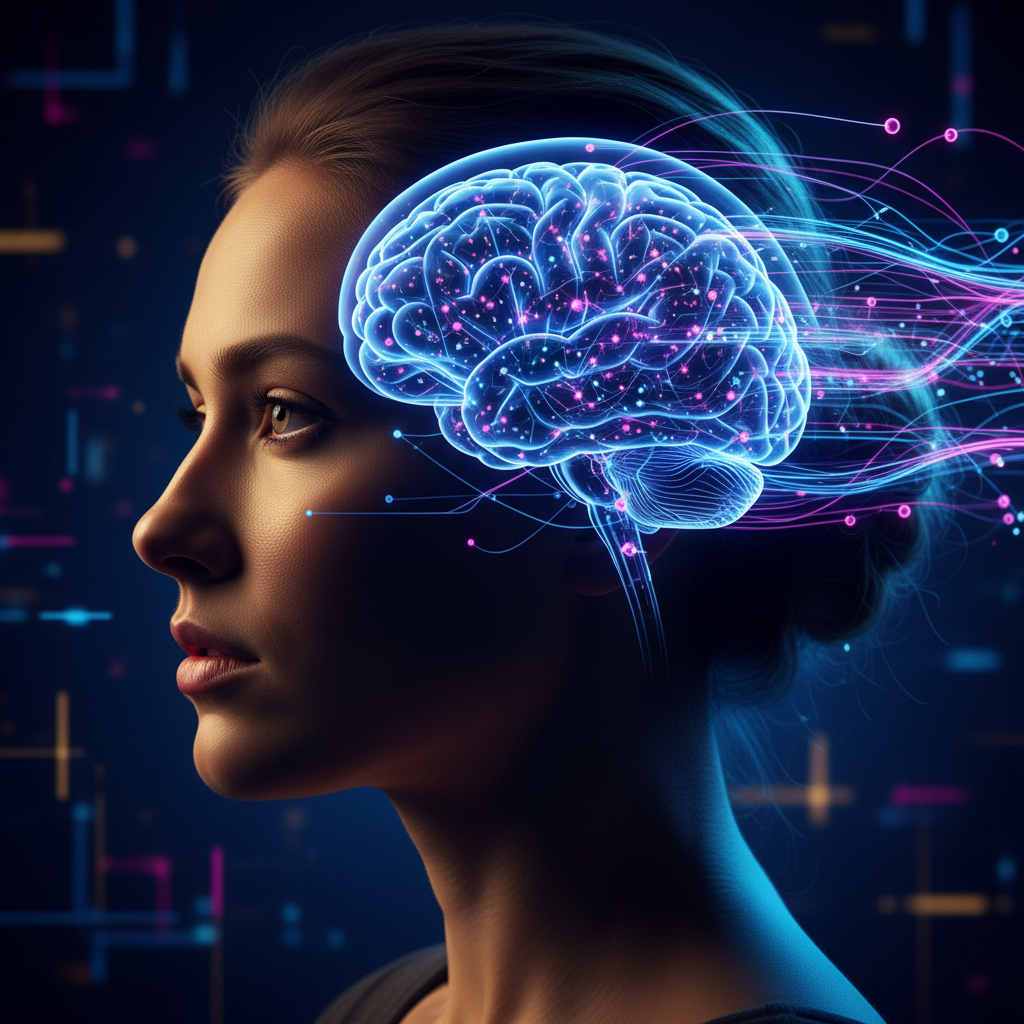
In an age increasingly dominated by artificial intelligence, a striking warning has emerged from an unlikely yet deeply philosophical corner: the Royal Observatory Greenwich. This esteemed institution, a beacon of scientific inquiry and discovery for centuries, suggests that our growing reliance on instant AI-generated answers could inadvertently trivialise human intelligence and diminish the profound joy of intellectual pursuit.
The Observatory’s public astronomer, Dr. Marek Kukula, has voiced concerns that readily available AI solutions might strip away the essential processes of exploration and critical thinking. He argues that the immediate gratification offered by AI short-circuits the very mechanisms that foster genuine understanding and innovation, turning profound knowledge into mere disposable data.
The Echo of Enlightenment: Beyond Instant Gratification
Dr. Kukula’s perspective draws a compelling parallel to the philosophical spirit of the 17th-century Enlightenment, an era defined by a fervent pursuit of knowledge and reasoned inquiry. This period championed the idea that understanding comes not from simply receiving information, but from the active engagement in asking questions, forming hypotheses, and painstakingly piecing together answers.
The Royal Observatory itself, founded in 1675, stands as a testament to this spirit, having been established to solve crucial navigational problems through observation and scientific rigour. Its very existence embodies the value of human intellect applied to complex challenges, a stark contrast to the passive consumption of AI-delivered facts.
When AI provides immediate, definitive answers, it risks bypassing this crucial developmental phase. We might gain information, but we lose the invaluable experience of wrestling with a problem, exploring dead ends, and ultimately forging our own connections and insights. This journey is often more enriching than the destination itself.
The “Aha!” Moment: Preserving the Thrill of Discovery
One of the most profound aspects of human intelligence is the “Aha!” moment – that flash of insight when disparate pieces of information suddenly click into place, revealing a new understanding. This experience, often the culmination of effort and curiosity, is deeply satisfying and fundamental to human learning and innovation.
Dr. Kukula fears that AI, by delivering pre-packaged solutions, may deprive us of these vital moments of personal discovery. If we always defer to AI for answers, we risk becoming intellectual spectators rather than active participants in the grand human endeavour of making sense of the world.
Consider the analogy of a calculator: while efficient for complex computations, over-reliance can dull our fundamental arithmetic skills and understanding of mathematical principles. Similarly, AI could potentially erode our capacity for critical thinking, problem-solving, and the nuanced interpretation of information.
The concern isn’t about AI’s capability to provide correct answers, but rather the potential for this ease to diminish our own cognitive muscles. It’s about preserving the human capacity for nuanced thought, for challenging assumptions, and for the deep, personal connection to knowledge that comes from earning it.
Navigating the Future of Knowledge with AI
This warning from the Royal Observatory is not a call to reject AI outright, but rather an invitation to engage with it thoughtfully and critically. The challenge lies in leveraging AI’s incredible power as a tool to augment human intelligence, rather than allowing it to replace our innate drive to explore and comprehend.
Educators, policymakers, and individuals alike must consider how to integrate AI in a way that continues to foster independent thought, creativity, and the joy of intellectual discovery. It means teaching future generations not just how to use AI, but how to think for themselves, question its outputs, and embark on their own journeys of understanding.
The ideal scenario involves a synergy where AI handles repetitive tasks and provides vast datasets, freeing up human minds to focus on higher-order thinking, ethical considerations, and groundbreaking innovations. This symbiotic relationship would allow us to push the boundaries of knowledge further, enriched by both artificial and human intelligence.
Ultimately, the message from the Royal Observatory Greenwich serves as a vital reminder: the pursuit of knowledge is not merely about accumulating facts, but about the journey of discovery itself. Preserving this journey, with its challenges, its insights, and its profound “Aha!” moments, is crucial for the continued evolution and vitality of human intelligence.
Source: Google News – AI Search
