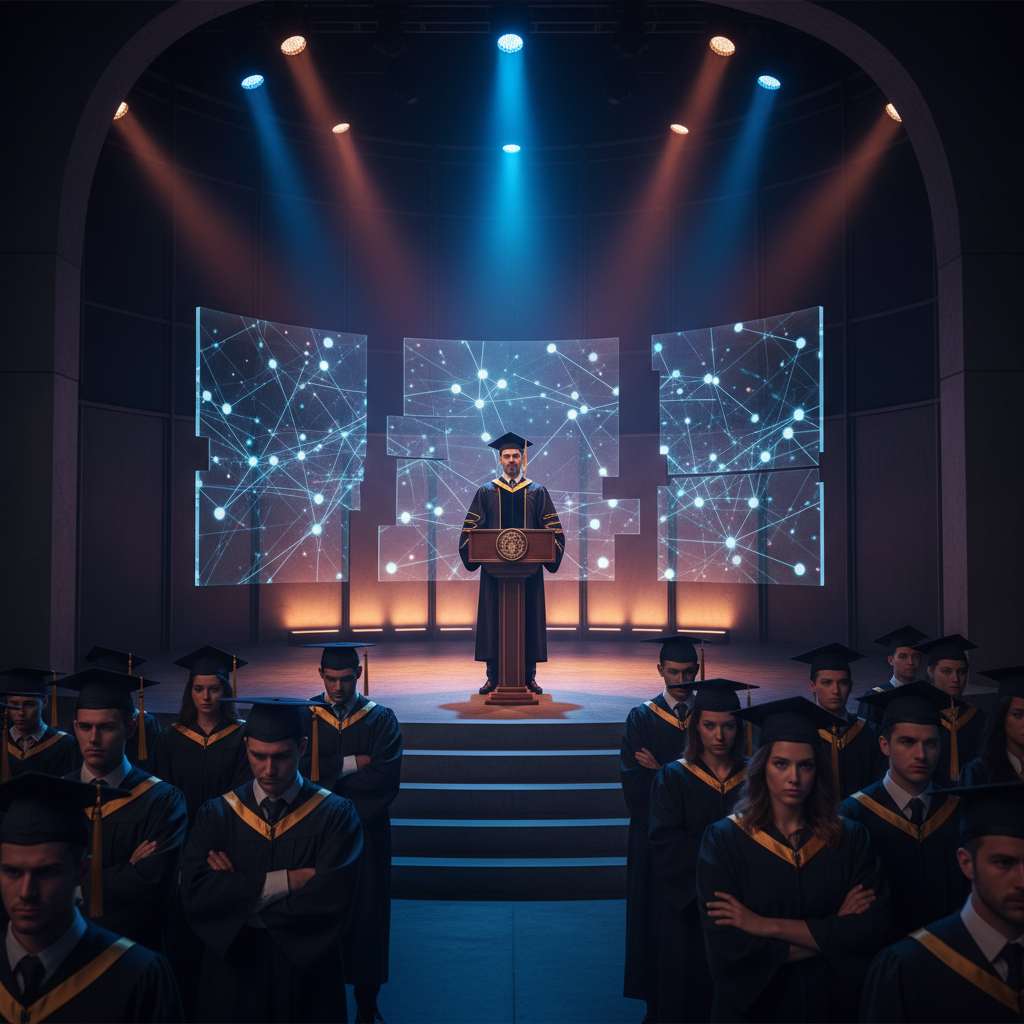
Graduation ceremonies are typically vibrant affairs, brimming with optimism, proud families, and inspiring speeches about the future. However, a recent commencement at an Arizona university took an unexpected turn, highlighting a growing tension between technological advancement and public sentiment. The usually celebratory atmosphere shifted when former Google CEO Eric Schmidt, a titan of the tech industry, delivered his remarks on artificial intelligence.
Schmidt, known for his instrumental role in scaling Google to global dominance, was invited to share his valuable insights on the transformative power of AI. Yet, as he spoke about the technology’s immense potential and its inevitable impact on industries and human capabilities, a palpable wave of dissent rippled through the audience. Instead of the anticipated applause, Schmidt was met with a chorus of boos from the graduating class, a stark signal of unease.
The Unsettling Moment at Commencement
The incident unfolded as Schmidt detailed his vision for a future increasingly shaped by AI, emphasizing its capacity to drive innovation and solve complex problems. He passionately articulated the benefits of this burgeoning field, suggesting it held the key to unprecedented progress. However, his optimistic outlook starkly contrasted with the anxieties simmering within the graduating students, many of whom are stepping into a job market already feeling the tremors of technological disruption.
The boos, though not prolonged, were undeniably clear, capturing the surprise of many attendees and generating significant buzz online. This wasn’t merely a polite disagreement; it was a visceral expression of apprehension and perhaps even frustration from a generation grappling with an uncertain future. The moment quickly became a potent symbol of the broader societal conversation surrounding artificial intelligence.
Why the Discontent? Unpacking Student Anxieties
The strong negative reaction from the graduates wasn’t arbitrary; it likely stemmed from a confluence of concerns deeply rooted in the current socio-economic landscape. For many, AI represents not just innovation, but also a significant threat to traditional career paths and job security. The fear of automation displacing human labor is a very real and pressing issue for those about to enter the workforce.
Furthermore, there’s a widespread skepticism among younger generations regarding the intentions and accountability of big tech. With Silicon Valley often perceived as disconnected from everyday realities, a figure like Eric Schmidt, representing the pinnacle of this industry, can become a lightning rod for broader societal grievances. The rapid pace of technological change often outstrips public understanding and ethical frameworks, fueling a sense of unease.
Several factors likely contributed to the students’ boisterous disapproval:
- Job Displacement Fears: Graduating into a world where AI is frequently discussed in terms of automation and redundancy creates palpable anxiety about future employment.
- Ethical Concerns: Worries about AI’s ethical implications, from data privacy to algorithmic bias, are prevalent among younger, digitally native generations.
- Skepticism Towards Big Tech: A growing distrust of large technology corporations and their influence on society, economy, and personal lives.
- Economic Inequality: Perceptions that technological advancements primarily benefit a select few, exacerbating existing economic disparities.
These underlying sentiments converge to create an environment where a message of pure AI optimism, even from an industry luminary, can be met with resistance rather than reverence.
Schmidt’s Perspective and the Broader Dialogue
While the exact details of Schmidt’s immediate reaction weren’t widely publicized, it’s clear the incident underscored a significant disconnect. Leaders in the tech world often view AI through a lens of immense opportunity, focusing on its capacity to enhance productivity, drive scientific breakthroughs, and improve quality of life. They envision a future where human ingenuity is amplified, not replaced.
However, this optimistic vision often clashes with the reality faced by individuals who fear being left behind by this rapid technological evolution. The incident serves as a crucial reminder that the narrative around AI needs to be more inclusive, addressing not just its potential benefits but also its profound societal challenges and the very real anxieties it generates. It highlights the urgent need for a more nuanced and empathetic conversation about technology’s future.
The Future of AI: A Dialogue, Not a Monologue
The Arizona graduation ceremony incident transcends a single moment of dissent; it symbolizes a critical turning point in the public discourse surrounding artificial intelligence. It indicates that the general public, especially those directly impacted by shifts in the job market, are no longer passively accepting the industry’s assurances. Instead, they are demanding a voice in shaping technology’s trajectory.
This episode should serve as a wake-up call for tech leaders and policymakers alike. It emphasizes that meaningful progress in AI and other transformative technologies requires more than just innovation; it demands open dialogue, robust ethical considerations, and proactive strategies to mitigate potential harms. Understanding and addressing the very human anxieties that AI evokes will be crucial for its responsible and widely accepted integration into society.
Source: Google News – AI Search
