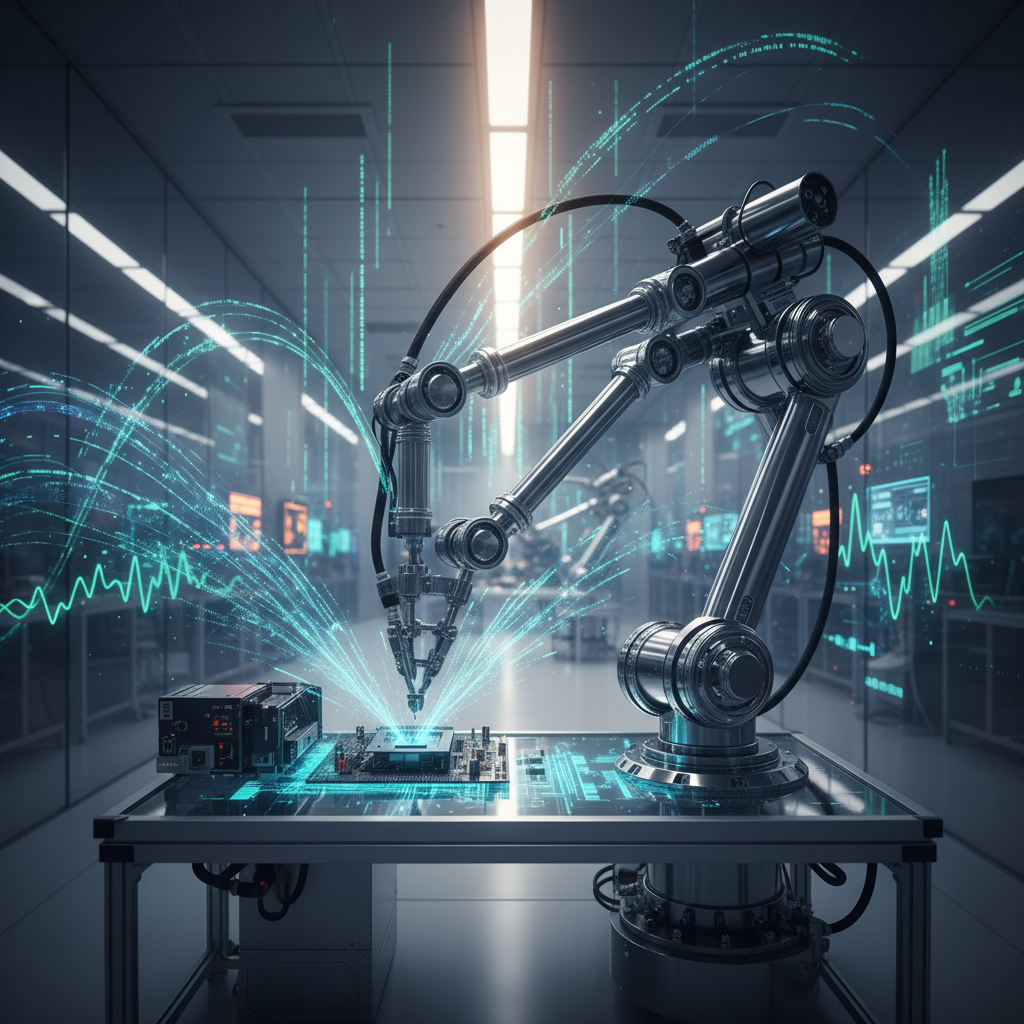
The landscape of industrial automation is undergoing a profound transformation, driven by the increasing convergence of physical machinery and advanced artificial intelligence. In a landmark collaboration that promises to redefine manufacturing, FANUC, a global leader in factory automation, has teamed up with tech giant Google to accelerate the development and deployment of “Physical AI.” This strategic partnership is set to unlock unprecedented levels of efficiency, flexibility, and intelligence on the factory floor.
This alliance represents a significant step towards a future where robots and machines are not just programmed tools but adaptive, learning entities. By combining FANUC’s deep expertise in industrial robotics and CNC systems with Google’s cutting-edge AI and machine learning capabilities, the collaboration aims to bridge the gap between digital intelligence and physical execution. Manufacturers can look forward to a new era of smart factories capable of self-optimization and continuous improvement.
The Dawn of Physical AI: What It Means
At its core, “Physical AI” refers to artificial intelligence that operates directly within the physical world, interacting with real-time sensory data and controlling physical systems like robots and machines. Unlike traditional AI often confined to software or virtual environments, Physical AI empowers industrial equipment to perceive, reason, learn, and act autonomously in dynamic manufacturing settings. This capability moves beyond rigid programming, allowing systems to adapt to unforeseen changes and optimize performance on the fly.
The implications for manufacturing are enormous, addressing long-standing challenges such as labor shortages, the need for increased customization, and the demand for higher productivity. Physical AI promises to make industrial processes more resilient, agile, and cost-effective. It’s about creating intelligent machines that can learn from their experiences, predict potential issues, and make informed decisions to keep production flowing smoothly.
For instance, imagine a robot that can not only perform a task but also learn new ways to perform it more efficiently, or detect subtle defects in real-time that human operators might miss. This level of autonomy and intelligence is what Physical AI brings to the table, making factories smarter, safer, and significantly more productive. It’s a paradigm shift from automation to autonomous intelligence.
Unlocking Synergy: FANUC’s Expertise Meets Google’s AI Prowess
The collaboration between FANUC and Google is a perfect marriage of industrial hardware and software intelligence. FANUC brings decades of unparalleled experience in developing robust, reliable, and high-performance industrial robots, CNC systems, and factory automation solutions. Their deep understanding of the physical demands and intricacies of manufacturing environments is critical for successful real-world AI deployment.
On the other side, Google contributes its world-class expertise in artificial intelligence, machine learning algorithms, cloud computing infrastructure, and vast data processing capabilities. Google’s advancements in areas like computer vision, reinforcement learning, and natural language processing provide the computational backbone for Physical AI. This combination creates a powerful synergy, merging operational technology (OT) with information technology (IT) at an unprecedented scale.
Together, they aim to develop AI solutions that are not just theoretical but practical, scalable, and immediately applicable to diverse manufacturing scenarios. The goal is to democratize advanced automation, making sophisticated AI capabilities accessible to a wider range of industries, from automotive to electronics to consumer goods. This partnership will accelerate innovation at the intersection of robotics and AI, fostering a new generation of intelligent industrial systems.
Revolutionizing the Factory Floor: Tangible Benefits
The collaboration between FANUC and Google is poised to deliver a multitude of tangible benefits for manufacturers worldwide. By integrating advanced AI into industrial equipment, businesses can expect to see significant improvements across various operational fronts. These advancements will translate directly into competitive advantages and operational excellence.
Key benefits include:
- Enhanced Robot Capabilities: Robots will gain the ability to learn and adapt to new tasks and environments with minimal human intervention, reducing programming time and increasing flexibility.
- Predictive Maintenance: AI models will analyze real-time data from machinery to predict equipment failures before they occur, minimizing downtime and optimizing maintenance schedules.
- Improved Quality Control: Vision AI systems will detect defects with greater accuracy and speed than human inspection, leading to higher product quality and reduced waste.
- Optimized Production Processes: AI will analyze production data to identify bottlenecks and inefficiencies, recommending adjustments for continuous process optimization and higher throughput.
- Easier System Integration and Programming: Leveraging cloud-based AI will simplify the integration of complex robotic systems and make them easier to program and manage, lowering the barrier to entry for advanced automation.
These benefits collectively pave the way for more agile and resilient manufacturing ecosystems. Factories will be able to respond faster to market changes, produce more customized products, and operate with greater energy efficiency. The emphasis is on creating a truly smart factory environment where machines and humans collaborate seamlessly.
The Future of Smart Manufacturing is Here
This partnership between FANUC and Google marks a pivotal moment in the evolution of industrial automation, signaling a future where intelligence is deeply embedded in every aspect of manufacturing. The acceleration of Physical AI promises to transform production lines into dynamic, self-optimizing systems that are capable of continuous learning and adaptation. This is more than just an upgrade; it’s a fundamental rethinking of how goods are made.
As this collaboration unfolds, we can anticipate a new wave of innovation that will not only boost productivity and reduce costs but also create new opportunities for skilled labor in overseeing and managing these advanced intelligent systems. The vision of a truly autonomous and intelligent factory, once a distant dream, is now rapidly becoming a tangible reality. The future of manufacturing is here, and it’s smarter, faster, and more flexible than ever before.
Source: Google News – AI Search
