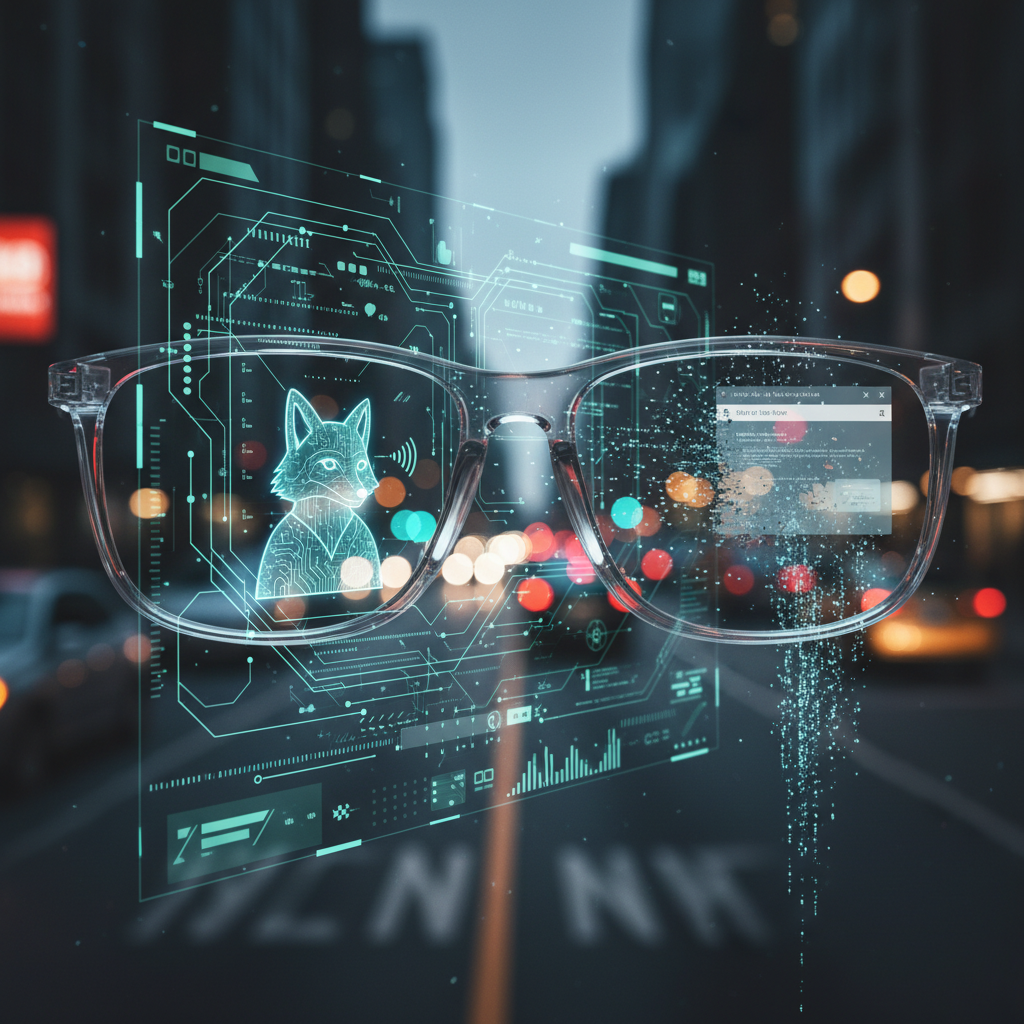
The digital landscape is undergoing a monumental shift, spearheaded by two interconnected advancements from tech giant Google. We’re talking about a comprehensive AI makeover and the quiet, yet impactful, return of smart glasses. Together, these innovations aren’t just incremental updates; they could fundamentally redefine how we access information and interact with the internet, potentially signaling the end of traditional browsing as we know it.
For years, our primary gateway to the web has been through a browser window, typing queries, and sifting through search results. However, Google’s latest ventures suggest a future where information is delivered contextually, proactively, and often, without even needing to lift a finger. This isn’t just about faster search; it’s about a paradigm shift towards a more integrated and intuitive digital experience.
Google’s AI Transformation: Beyond the Search Bar
Google has been at the forefront of artificial intelligence for years, but recent developments mark a significant acceleration in its integration across all core products. No longer content with merely indexing web pages, Google’s AI is now designed to understand, synthesize, and even generate information, offering direct answers rather than just links. This is a monumental leap from the traditional “ten blue links” model we’ve become accustomed to.
Key to this evolution is the rollout of features like the Search Generative Experience (SGE), which leverages generative AI to provide comprehensive, AI-summarized answers directly within search results. Instead of clicking through multiple websites, users are presented with a concise overview, often complete with follow-up questions and related topics. This makes information gathering significantly more efficient, fundamentally altering the user journey.
Furthermore, Google’s powerful AI models, such as Gemini, are now powering conversational interfaces that can handle complex queries, follow context, and even assist with creative tasks. Imagine asking a question about a complex topic and receiving a coherent, multi-paragraph explanation, followed by a list of sources, all generated in real-time. This level of interaction moves beyond simple keyword matching into true digital companionship.
This AI makeover is about making information ambient and anticipatory. Google is striving to understand user intent on a deeper level, providing relevant data before it’s even explicitly requested. This shift transforms Google from a mere search engine into an intelligent assistant, poised to serve information in ways previously confined to science fiction.
The Resurgence of Smart Glasses: A New Lens on Reality
While Google Glass’s initial foray into the market faced hurdles, the concept of wearable computing is making a significant comeback, albeit with a more refined and purposeful approach. Today’s smart glasses are less about novelty and more about practical utility, driven by advancements in miniaturization, display technology, and, crucially, artificial intelligence. These new devices promise to blend digital information seamlessly with our physical surroundings.
Modern smart glasses are evolving into powerful augmented reality (AR) devices, capable of overlaying digital content onto the real world. Imagine walking down a street and seeing navigation arrows projected onto the pavement, or looking at a restaurant and instantly viewing its star rating and menu details. This hands-free, context-aware information delivery bypasses the need to pull out a smartphone entirely.
Crucially, these devices are designed to work in tandem with advanced AI. Your smart glasses could listen to your conversations, analyze your surroundings, and proactively present relevant information. For instance, if you’re discussing a historical landmark, your glasses might display a brief summary of its history, triggered by your speech and location. This creates a truly immersive and intuitive information retrieval system.
Companies are investing heavily in this space, developing lightweight, stylish, and functional eyewear that promises to enhance daily life without being intrusive. The technological leap from early prototypes to current iterations is significant, positioning smart glasses as a viable future interface for digital interaction, far beyond just displaying notifications.
The Convergence: How AI and Smart Glasses Reshape Browsing
The true revolution lies in the synergy between Google’s AI advancements and the capabilities of smart glasses. When combined, these technologies create an entirely new paradigm for accessing and interacting with information, moving us firmly away from the traditional browser-centric model. The screen, as we know it, may no longer be the primary interface.
Imagine a future where your “browsing” experience isn’t initiated by opening an app, but by simply looking around or speaking a query aloud. Your smart glasses, powered by Google’s sophisticated AI, could provide answers, directions, or data overlays directly into your field of vision. This is ambient computing in its purest form, where information is delivered exactly when and where you need it, contextually and without interruption.
This hands-free, glanceable information delivery system promises unparalleled efficiency. Whether you’re navigating a new city, trying to identify a plant in your garden, or getting real-time translations during a foreign conversation, the information is there, superimposed onto your reality. It’s a fundamental shift from seeking information to having it presented proactively and intelligently.
The concept of “browsing” thus transforms from an active search process into a passive, yet highly informative, experience. The AI acts as a filter and synthesizer, while the smart glasses act as the seamless display mechanism. This integration means less time spent tapping and swiping, and more time engaging directly with the world, enriched by digital insights.
What This Means for Our Digital Future
This powerful combination of advanced AI and sophisticated smart glasses heralds a future of unparalleled convenience and immersion. For users, it means instant, context-aware information delivery, enhancing everything from daily errands to complex professional tasks. The friction between our physical and digital lives will continue to diminish, creating a more integrated experience.
For content creators and businesses, this shift presents both challenges and exciting opportunities. The focus will move from optimizing for keyword searches and click-through rates to ensuring content is digestible, factual, and easily synthesizable by AI. Visual and audio content tailored for AR overlays will likely gain prominence, demanding new strategies for engagement.
Ultimately, Google’s AI makeover and the return of smart glasses are not just technological upgrades; they represent a fundamental reimagining of our relationship with the internet. While traditional browsing might not disappear entirely overnight, its dominance is certainly being challenged. We are on the cusp of an era where information is not just found, but intelligently delivered, transforming our digital interactions forever.
Source: Google News – AI Search
