At ZDNET, our commitment to delivering trustworthy and insightful technology advice is paramount. We believe in providing you with the most accurate information, backed by extensive testing and research. Our aim is to empower you to make smarter buying decisions for all your tech needs, from gadgets to essential services.
Our “ZDNET Recommends” process is a rigorous journey of discovery and evaluation. We dedicate countless hours to hands-on testing, thorough research, and comprehensive comparison shopping. By gathering data from reputable vendor and retailer listings, cross-referencing with other independent review sites, and delving into countless customer reviews, we uncover what truly matters to real users.
Why You Can Trust Our Recommendations
Transparency is key to our editorial integrity. When you click through our site to a retailer and make a purchase, we may earn an affiliate commission. This system helps support our dedicated team and the work we do, but it never influences our editorial content, what products we cover, or how we review them.
Crucially, these affiliate commissions do not affect the price you pay for any product or service. Neither ZDNET nor our authors receive direct compensation for these independent reviews, adhering to strict guidelines that safeguard our content from advertiser influence. Our editorial team writes solely on behalf of you, our valued reader, ensuring unbiased and knowledgeable advice.
Every article undergoes thorough review and fact-checking by our editors to meet the highest standards of accuracy. Should any error or misleading information be published, we are committed to promptly correcting or clarifying the content. If you spot any inaccuracies in our articles, we encourage you to report them via our dedicated form, helping us maintain our commitment to excellence.
Introducing the Flipper One: A New Era of Open Hardware
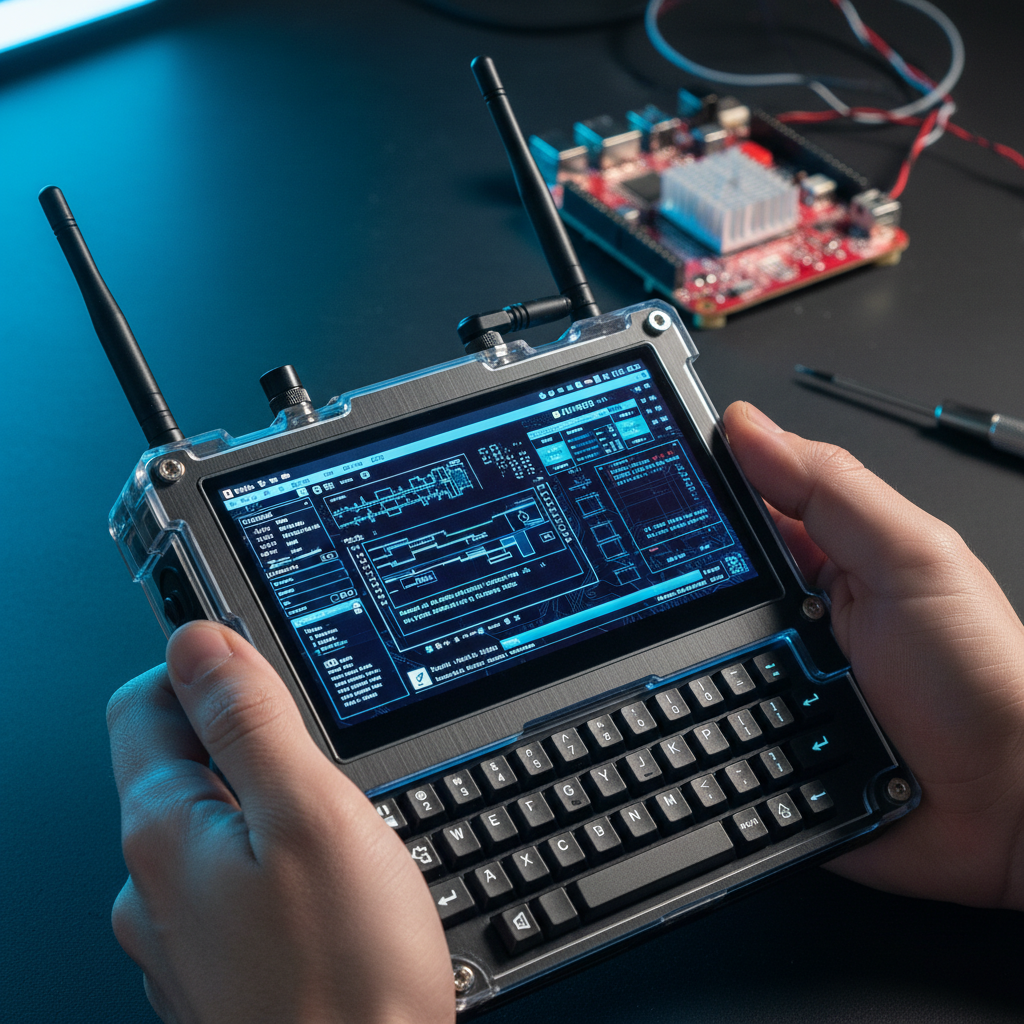
After months of buzzing anticipation, Flipper Devices Inc., the visionary company behind the immensely popular Flipper Zero, has finally unveiled its next groundbreaking project: the Flipper One. If the Flipper Zero captured your imagination with its versatility, prepare to be truly impressed by what its successor offers.
The Flipper One stands out as a truly open, high-performance Linux platform, designed to be the foundation for virtually any project you can envision. When Flipper Devices says “open,” they mean it, from full mainline Linux kernel support with absolutely no binary blobs or proprietary firmware, to vendor-agnostic board support. This device is ready for anything.
Imagine building anything from an advanced network analyzer to a sophisticated SDR (Software-Defined Radio), or even a compact offline AI or Large Language Model (LLM) project. The Flipper One provides an unprecedented level of freedom and flexibility. It’s a genuine testament to open-source hardware and software.
Unpacking the Power: Hardware and Connectivity
To power such ambitious endeavors, the Flipper One packs a serious punch. At its heart lies a high-performance 2.2 GHz octa-core RK3576 chipset, featuring a Mali-G52 GPU and an NPU capable of an impressive 6 TOPS (Trillion Operations Per Second). This robust hardware is perfectly suited for running local LLMs, including a dedicated Flipper One-specific LLM for on-device use.
This powerful chipset boasts full Linux support and is complemented by a generous 8GB of built-in RAM, ensuring smooth operation for the operating system and various applications. All this formidable processing power is cleverly integrated into a device that fits comfortably in the palm of your hand.
Beyond its main processor, the Flipper One incorporates a secondary dual-core Raspberry Pi RP2350 microcontroller. This efficient co-processor handles essential basic tasks, such as managing the display, button interface, touchpad control, LEDs, and the power subsystem. For less demanding applications, the Flipper One can even operate entirely on the RP2350 chip, making it incredibly power-efficient when not running its full Linux environment.
The Flipper One is engineered for extensive connectivity and modularity. It features a crisp 1.4-inch screen, a responsive touchpad, and a classic 5-button D-pad for intuitive control. A crucial element of its design is the versatile M.2 slot, which accepts a wide array of hardware modules to expand its capabilities.
- Cellular or Satellite Modems for global communication
- Dedicated SDR modules for advanced radio applications
- Fast SSDs (NVMe or SATA) for ample storage
- Powerful AI accelerators for enhanced local processing
- Advanced Wi-Fi cards for network versatility
While the Flipper Zero excelled at interacting with offline “level zero” devices, the Flipper One is purpose-built for IP-connected hardware, or “level one” applications. To achieve this, it offers twin gigabit Ethernet ports, allowing it to function as a router or network bridge right out of the box. It also boasts Wi-Fi 6E support and 5 Gbps Ethernet over USB-C, a significant upgrade from the Flipper Zero’s more primitive wireless options.
The Wi-Fi capabilities are managed by the MediaTek MT7921AUN chipset, a favorite among hardware hackers and penetration testers. This chipset is fully supported by Linux and offers advanced features like monitor mode and packet injection, making the Flipper One an invaluable tool for security professionals and enthusiasts alike.
Revolutionary Software and Community Engagement
One common frustration with platforms like the Raspberry Pi is the constant need to re-flash microSD cards when switching tasks. The Flipper One developers aim to eliminate this hassle with a completely different approach. They envision an end to juggling multiple microSD cards, streamlining your workflow.
The Flipper One will run two innovative operating systems alongside a Debian-based Linux: Flipper OS and FlipCTL. Flipper OS acts as a smart layer atop the Linux kernel, enabling the creation and management of profiles, each configured with specific packages and settings. This means you can boot, clone, or delete profiles at will, instantly transforming your device’s function without tedious reinstallation.
Imagine having multiple virtual machines on a desktop system, but in a portable form factor. This fascinating profile system allows you to easily switch between different use cases, or quickly revert to a working configuration if something goes awry. The developers even plan to extend this concept beyond the Flipper One, aiming for a platform applicable to other “cyberdeck builds” or portable Linux boxes.
FlipCTL is another brilliant innovation, specifically designed to solve the common challenge of using Linux systems on tiny screens. It provides a comprehensive framework for building menu-based interfaces that are perfectly suited for small LCD displays, controllable with just a D-pad and a few buttons. This allows you to access powerful Linux tools like ping, nmap, and traceroute directly from the built-in screen, making command-line interactions manageable and user-friendly.
FlipCTL also enables the creation of simple, dedicated tools like a router or a NAS box, without needing to delve into a full-blown Linux desktop environment. Furthermore, the Flipper One can serve as a “thin client” or “survival desktop”—a complete Linux system you can carry anywhere. Just add a display, keyboard, and mouse, and you have a fully functional computer at your fingertips.
The announcement of the Flipper One isn’t just a product reveal; it’s also a passionate call for community collaboration. While the project is clearly advanced, Flipper Devices wants the help of its vibrant community to shape the device’s direction and assist with intricate development tasks. This includes achieving full mainline Linux kernel support for NPUs, perfecting Flipper OS profile management, and even helping choose specific NTN (Non-Terrestrial Network, i.e., satellite) M.2 modules.
Normally, rallying such extensive community support would be a daunting challenge. However, the Flipper Zero has fostered an enormous, dedicated community of developers and enthusiasts. They’ve built custom firmware, created bespoke apps, and actively contribute to one of the liveliest and most supportive tech communities around. Given this established passion, the Flipper One is poised for success.
The Flipper Zero showcased the immense power of accessible, user-friendly tools for tasks like RFID and sub-GHz frequency interaction. The Flipper One builds on this legacy, aiming to be a serious contender to the Raspberry Pi and other Single Board Computer (SBC) projects. It’s designed to be a versatile, modular, and truly open hardware and software cyberdeck platform.
This platform not only packs impressive internal hardware but also cleverly leverages the M.2 slot to maximize versatility. Whether you need to slot in an SSD for massive storage or integrate a satellite modem for remote connectivity, the Flipper One strives to make it incredibly easy. If the Flipper Zero is any indication, the Flipper One is set to become an indispensable tool for a wide range of users.
While the exact price remains an unknown, it’s clear the Flipper One will likely surpass the Flipper Zero’s $199 price tag. However, its modular nature could help manage initial costs, allowing users to invest in accessories like M.2 satellite modems (which might add another $100+) as needed. Much like the evolving landscape of Raspberry Pi 5 boards, premium versatility comes with its own investment.
Source: ZDNet – AI
