The idea of harnessing the sun’s power for your home has never been more appealing, especially with rising energy costs. While rooftop solar systems are a major commitment, a new, more accessible option is rapidly gaining traction: plug-in solar. This innovative approach promises a simpler path to renewable energy, and it might be coming to your state sooner than you think.
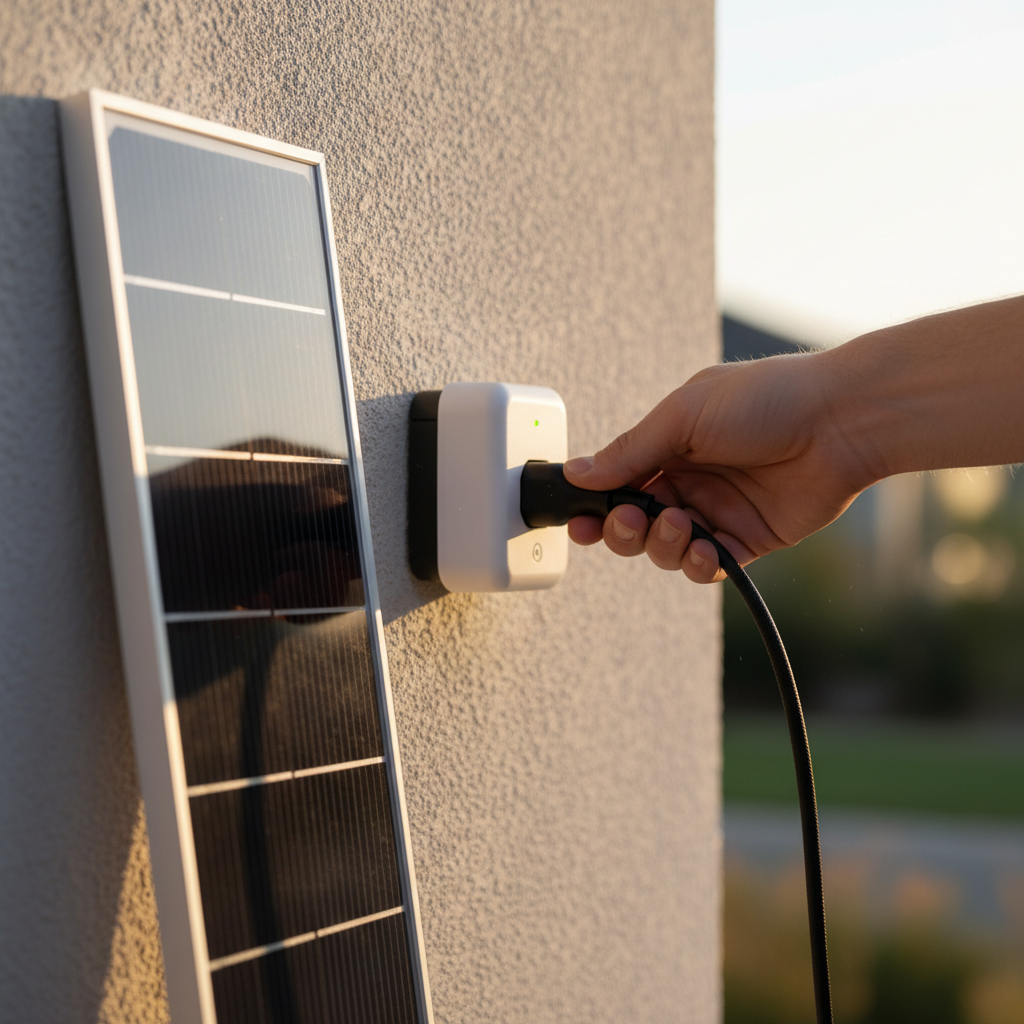
Often referred to as balcony solar or DIY solar, these systems are designed for remarkable ease of use. They typically include a compact solar panel, an integrated inverter, and a small battery, all engineered for a “plug-and-play” experience. You simply connect them to a standard 120-volt household outlet, and they automatically begin feeding electricity to the nearest running appliance.
Unlike large rooftop arrays, plug-in solar panels aren’t intended to entirely replace your grid electricity or eliminate dependency on utility companies. Instead, they provide a supplementary source of clean energy, generating anywhere from 200W to 1,800W. This makes them an affordable investment, offering a straightforward solution to help reduce energy costs and embrace sustainability without complex installations.
Forget the need for professional installers or clambering onto rooftops; these small, portable systems can be placed almost anywhere. A balcony, backyard, or patio is all you need to start generating your own power. This accessibility is a game-changer for many, as Justin Nielsen, a Solar Energy Expert from Wolf River Electric, highlights.
“Historically, solar adoption has been tied to homeownership, but that’s not a reflection of today’s housing realities,” Nielsen commented. “More than a third of Americans rent, and that number is even higher in urban areas where sustainability is most urgent. If we’re serious about transitioning to renewable energy, we need scalable solutions that work for everyone, not just those with rooftops.” These systems also bypass installation costs, permits, and inspections, making backyard solar a consumer-friendly option.
The Rise of Plug-in Solar in the US
For a long time, the legality of plug-in solar in the United States was a significant hurdle. However, that landscape is rapidly changing, largely thanks to states like Utah. In 2025, Utah pioneered the movement by legalizing plug-in solar systems up to 1,200W with its HB 340 bill. This landmark legislation eliminated the need for traditional utility interconnection agreements, allowing for a plug-and-play experience.
Utah’s success was heavily inspired by countries like Germany, where balcony solar systems have been popular for years due to government encouragement of distributed energy, high electricity prices, and prevalent urban apartment living. Republican lawmaker Raymond Ward’s HB 340 was intentionally narrow, focusing on low-cost implementation without subsidies or mandates. It also capped systems at 1,200W and mandated UL-certified equipment with anti-islanding protections to ensure safety.
Following Utah’s lead, the momentum for plug-in solar legislation has exploded across the nation. As many as 30 states have introduced similar bills, with several now on the verge of becoming law. For instance, Virginia signed its plug-in solar law in 2026, set to be effective on July 1, 2026. Colorado and Maine also approved legislation in 2026, while states like California, New York, Vermont, Hawaii, and Maryland currently have active bills in progress.
The potential legalization of plug-in solar in California could be a monumental turning point, likely creating a snowball effect nationwide. With over 39 million residents and an already robust solar market, California’s adoption would significantly increase the availability and market penetration of such systems. San Francisco Senator Scott Wiener emphasized this point when the Senate passed the Plug And Play Solar Act SB 868.
“These units are small and mobile enough that millions of Californians can use them to save on affordable clean energy where rooftop systems aren’t appropriate,” Wiener stated. “The cost of electricity has risen to absurd levels, and plug-in solar is an easy way families can lower costs.” Indeed, California’s electricity costs have surged by almost 40% between 2022 and 2025, making its rates the second-highest in the US, behind only Hawaii.
Navigating the Regulatory Hurdles
One major reason for the staggered rollout of backyard solar across the US is the absence of a unified national approval process. Electrical connectivity rules are primarily managed at the state level by local utilities and public utility commissions. This means each state must individually pass legislation and update its utility regulations to greenlight plug-in solar, creating a complex patchwork of rules.
American utilities and electrical regulators have historically been cautious, slowing widespread legalization due to legitimate concerns. These worries include potential grid instability, backfeeding during power outages, overloaded circuits, the use of uncertified inverters, and fire risks. Unlike Europe, which standardized equipment and regulations years ago, the US has primarily focused its legislation on large, permanent solar installations.
Another significant obstacle is that US utilities often have stringent requirements for any device capable of sending electricity back into the grid, regardless of the amount. While most plug-in solar systems are too small to export excess electricity — as homes typically consume all the generated solar energy — the possibility necessitates regulation. This means permits, interconnection agreements, inspections, and utility approval, precisely what backyard solar setups aim to avoid.
Furthermore, utility companies naturally resist changes that might allow consumers to bypass them entirely, as this impacts their revenue, visibility, and control. With the rise of plug-in solar, utilities face the risk of losing small but significant amounts of electricity sales. This combination of technical concerns and economic considerations has historically slowed the progress of simplified solar solutions.
Real-World Benefits and Savings
Millions of backyard solar setups in Germany have already demonstrated the system’s effectiveness and reliability. It’s crucial to understand, however, that plug-in solar systems are designed to offset your home’s constant electricity usage, not to power your entire house independently. They work most efficiently when dedicated to devices that continuously draw power.
Think of appliances like your refrigerator, Wi-Fi equipment, televisions, smart home devices, and HVAC fans; these are perfect candidates for clean energy from your plug-in system. For example, a typical setup with two 410W panels can harness between 3 to 5 kWh daily, or 90-150 kWh monthly. Depending on your local electricity rates, this can translate to anywhere between $13 and $35 in monthly savings.
Beyond the savings, plug-in solar offers numerous practical advantages over traditional rooftop solar arrays. These systems often come with cheaper, smarter inverters, boast significantly easier installations, and have a proven track record of very few safety incidents. This makes them an attractive alternative for those looking to dip their toes into solar without the significant commitment of a full rooftop installation.
The burgeoning popularity of backyard solar stems largely from its affordability and unparalleled flexibility. These systems are modular and portable, allowing consumers to choose the size of their setup and even take it with them when they move to a new home. This adaptability, combined with lower barriers to entry, makes them an ideal solution for a diverse range of households.
Justin Nielsen highlights broader applications: “Community solar programs let renters benefit from solar without physical installation. Balcony systems empower individuals to generate their own electricity, even in high-rise buildings.” He notes apartment-wide installations are also proving economically viable for developers. Even a small 600W to 800W system can noticeably trim electricity bills, especially for users with time-of-use billing and expensive evening electricity, providing tangible energy savings.
Source: ZDNet – AI
