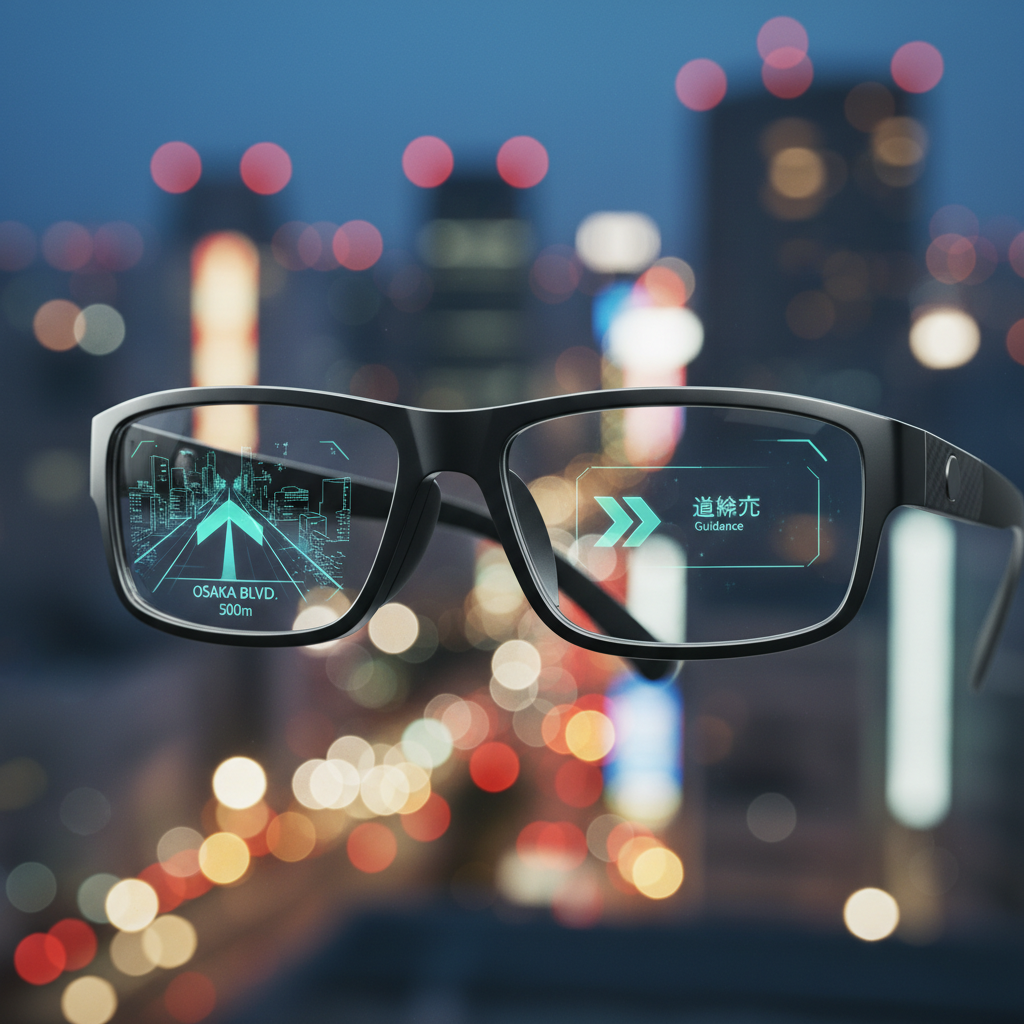
Imagine a future where technology seamlessly blends with your daily life, not just on a screen in your hand, but right before your eyes. That future is rapidly approaching, with tech giants like Samsung and Google heavily investing in the next generation of smart glasses. These aren’t just enhanced spectacles; they’re poised to be revolutionary devices, integrating artificial intelligence, real-time translation, and intuitive hands-free navigation directly into your field of vision.
For years, the concept of smart eyewear has tantalized us, promising to transform how we interact with the digital world. Now, with significant advancements in miniaturization, AI processing, and display technology, these futuristic glasses are moving from science fiction to tangible prototypes. Both Samsung and Google are pushing the boundaries, each with their unique vision for making augmented reality an integral part of our everyday experience.
The Vision: More Than Just a Screen
The core promise of these upcoming smart glasses lies in their ability to provide contextual, relevant information without demanding your full attention. Unlike smartphones, which pull you away from the real world, smart glasses aim to enhance it. They are designed to overlay digital content onto your surroundings, creating an augmented reality that is both informative and unobtrusive.
Samsung’s approach, often showcased in patent filings and concept videos, suggests a focus on immersive augmented reality and perhaps even mixed reality experiences. Their glasses could offer dynamic interfaces that adapt to your environment, turning any surface into a display or providing detailed 3D holograms for work or entertainment. This emphasis on rich visual interaction could redefine how we consume media and collaborate in digital spaces.
Google, with its history in smart eyewear from Google Glass, is likely building upon lessons learned, aiming for a more refined and consumer-friendly product. Their renewed efforts are expected to prioritize practicality and utility, leveraging Google’s formidable AI capabilities to provide timely information and assistance. This could mean a discreet, always-on assistant that helps you navigate your day with minimal effort, providing information precisely when and where you need it.
Key Features Redefining Interaction
The truly exciting aspect of these future glasses lies in their advanced capabilities, which go far beyond simple notifications. They are set to integrate powerful AI, offering a personalized and highly intelligent assistant that understands your context and anticipates your needs. Imagine your glasses discreetly highlighting points of interest during a walk or reminding you of an upcoming task based on your location.
One of the most anticipated features is real-time translation, a true game-changer for global communication. Picture yourself traveling abroad, and as someone speaks in a foreign language, the translated text appears instantly in your line of sight, allowing for natural, fluid conversations. This capability has the potential to break down language barriers, fostering greater understanding and connection across cultures.
Furthermore, hands-free navigation promises to revolutionize how we find our way. Instead of constantly checking your phone, arrows and directions could be projected directly onto your path, guiding you effortlessly through unfamiliar streets or complex buildings. This allows you to stay present, observe your surroundings, and reach your destination with unprecedented ease, all while keeping your hands free.
Beyond these core features, these smart glasses are expected to offer a suite of functionalities designed for convenience and productivity. This includes instant access to notifications, remote collaboration tools with shared AR experiences, and even health monitoring, all managed through intuitive gaze or subtle gesture controls. They are designed to augment your natural senses, giving you a continuous stream of relevant information without distracting you from the real world.
What’s Next for Smart Eyewear?
While the potential is immense, several challenges remain for smart glasses to achieve mainstream adoption. Factors like battery life, ergonomic design, social acceptance, and, crucially, privacy concerns will need careful consideration from both Samsung and Google. However, the continuous refinement of hardware and software brings us closer to a future where smart eyewear is as common as smartphones.
The race to define the next major computing platform is on, and smart glasses are at the forefront of this evolution. With industry giants like Samsung and Google pouring resources into this category, we can expect significant breakthroughs in the coming years. Their innovations promise to deliver devices that are not just technological marvels but also profoundly enhance our ability to connect, learn, and experience the world around us.
Ultimately, these future smart glasses are about more than just technology; they are about reimagining human-computer interaction in a way that is more natural, intuitive, and integrated into our lives. As we anticipate the arrival of these devices from Samsung and Google, the excitement is palpable for a future where information and assistance are always just a glance away, seamlessly woven into the fabric of our reality.
Source: Google News – AI Search
