Google I/O 2026 offered a fascinating peek into the future of wearable technology, and we recently had the chance for a brief hands-on. We got to test Google’s upcoming AI-powered glasses, the kind that blend both audio and visual experiences. This wasn’t the audio-only version shipping later this fall, but rather the more advanced model teased at last year’s event.
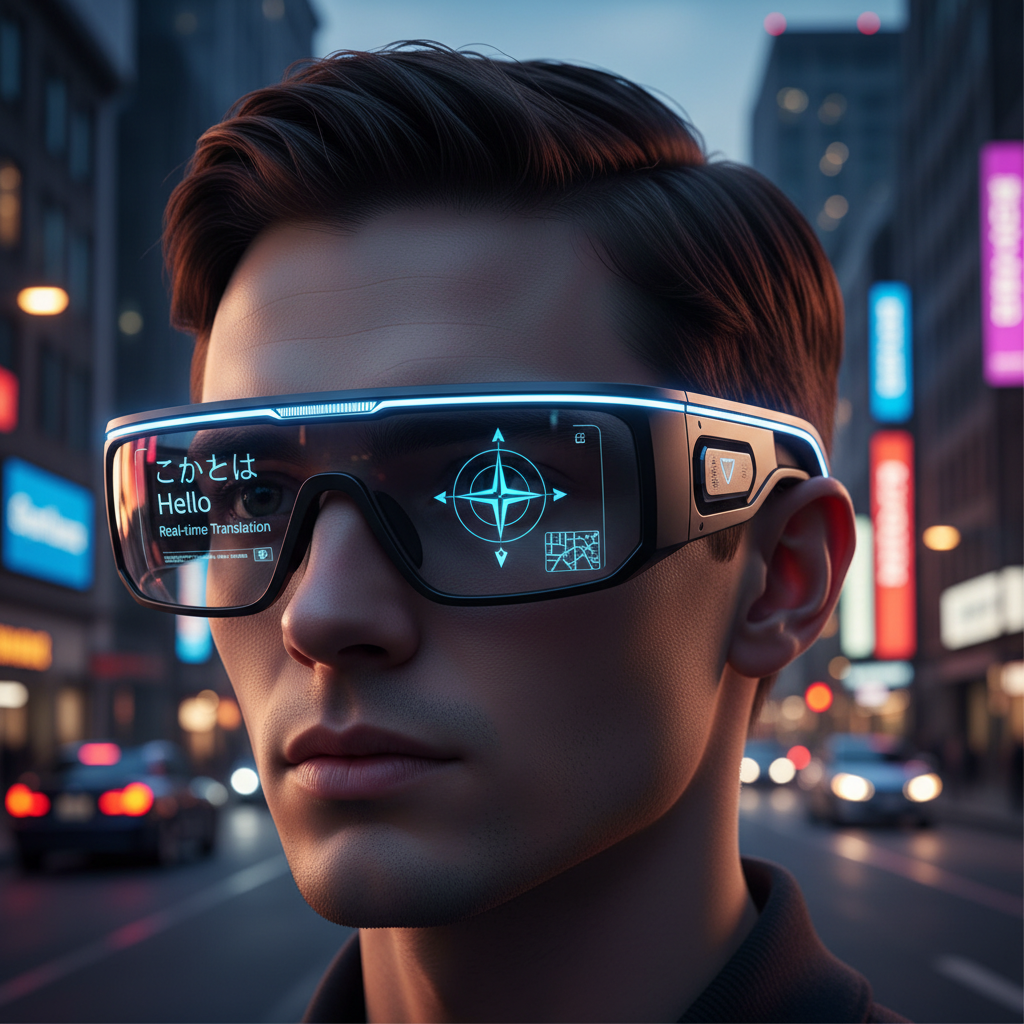
These cutting-edge Android XR glasses feature an innovative in-lens display, seamlessly overlaying helpful information directly onto your view of the real world. Imagine having instant access to key data without needing to pull out your phone. This includes helpful widgets for:
- Live weather updates and forecasts
- Step-by-step walking directions
- Real-time Uber pickup details
- Instant live translation services
- Even custom widgets you’ve designed yourself using AI
The company confirmed these glasses will pair effortlessly with both iOS and Android phones, bridging the gap for a wider user base.
A Glimpse into the Future: What We Saw
This new eyewear represents the exciting next step beyond the initial generation of audio-only glasses that are set to launch soon. Google has partnered with design powerhouses like Warby Parker, Gentle Monster, and Samsung, aiming to marry sophisticated technology with stylish aesthetics. This collaboration suggests a strong focus on making these smart glasses desirable everyday accessories.
The prototype we tested, however, was a very early iteration, albeit one polished enough for external evaluation. Google reps explained that this allowed them to prioritize experimenting with the display technology and its impact on battery life, free from the constraints of final cosmetic details. Consequently, the fit, shape, and dimensions of this prototype will differ significantly from any future shipping version.
Notably, the prototype lacked a feature present in the shipping version: the ability to automatically detect when the glasses are placed on or taken off your head. Our focus was purely on the core AI and display functionalities, offering a unique insight into the “insides” of this groundbreaking wearable.
Interacting with Gemini: Hands-Free AI
Activating Google’s powerful Gemini AI on the glasses is straightforward: a two-second press on the right side of the frame brings it to life. A distinct startup chime confirms Gemini is on and actively listening for your commands. While our demo automatically activated the camera with Gemini, the final shipping version will offer users the flexibility to configure this setting.
Our initial tests included playing music, though the noisy I/O venue made it challenging to assess sound quality effectively. While not a replacement for high-fidelity earbuds, the glasses could certainly provide background music for outdoor activities or chores, maintaining environmental awareness. Turning off the music was as simple as a single tap on the side of the frame, near the temple.
Capturing moments with these glasses is equally intuitive; a press of the photo button instantly takes a picture, which is then sent to your phone or watch. For future video capture, a long press will eventually be available, complete with a thumbnail preview on the display. What truly stands out is the ability to ask Gemini to take a photo and even apply AI manipulations, such as “turn the person into an anime character.”
During our demo, this AI photo manipulation took around 45 seconds for a round-trip due to the heavy Wi-Fi load at the I/O venue. This unique capability allows for creative and personalized photo enhancements directly through voice command, streamlining your digital interactions.
Where Vision Meets Intelligence: Key Demos
When the display is enabled, a simple home screen appears directly in your field of view, presenting customizable widgets like weather forecasts or event countdowns. You can also create quick launchers for frequently used apps such as Google Maps or Translate. This personalized interface promises quick access to essential information.
One of the most impressive demonstrations showcased the real-time language translation capabilities, powered by Google Translate on your phone. As a demonstrator spoke rapid Spanish, the glasses instantly detected the language, displayed the English text translation on the lens, and Gemini simultaneously spoke the English equivalent into our ear. This feature alone could be a game-changer for world travelers, offering unparalleled communication ease.
Navigating with the glasses also felt remarkably intuitive. By simply asking Gemini to guide you to a destination—even a vague request like “the nearest coffee shop”—Google Maps activates on your phone without you needing to touch it. Turn-by-turn directions appear on your display when looking forward, and gazing downwards reveals your blue dot on a map for spatial orientation. This hands-free navigation allows you to stay focused on your surroundings and utilizes your saved destinations like “home” and “work.”
We also explored the glasses’ object identification features, though with mixed results on the prototype. While it struggled initially with a replica Monet painting (due to a camera activation quirk), it smoothly identified a plant and answered questions about a recipe book. These capabilities, while similar to Google Lens, offer the significant advantage of completely hands-free interaction.
The Road Ahead: Display vs. Audio
It’s important to remember that our experience was with a prototype, and the single display over the right eye did present some fuzziness and mild eye strain, possibly exacerbated by prescription contacts. Google assures us the platform supports both single and dual displays, promising a refined visual experience in future iterations. The company is set to share more details later this year as its trusted tester program expands.
In the interim, Google’s strategy involves launching audio-only glasses first, which seems a pragmatic approach given the complex development of display technology. These audio-focused glasses will still leverage Gemini AI, allowing users to listen to music, take photos, make calls, and interact with phone apps through private frame speakers. They can even assist with tasks like adding recipe ingredients to a shopping list or offering real-time feedback on cooking progress.
Ultimately, Google’s AI glasses represent a significant leap towards a more integrated, intelligent wearable future. While the display version is still evolving, the potential for seamless, hands-free interaction with the digital world is clear. The journey from prototype to polished consumer product is long, but the promise of these smart spectacles is undeniably exciting.
Source: TechCrunch – AI
