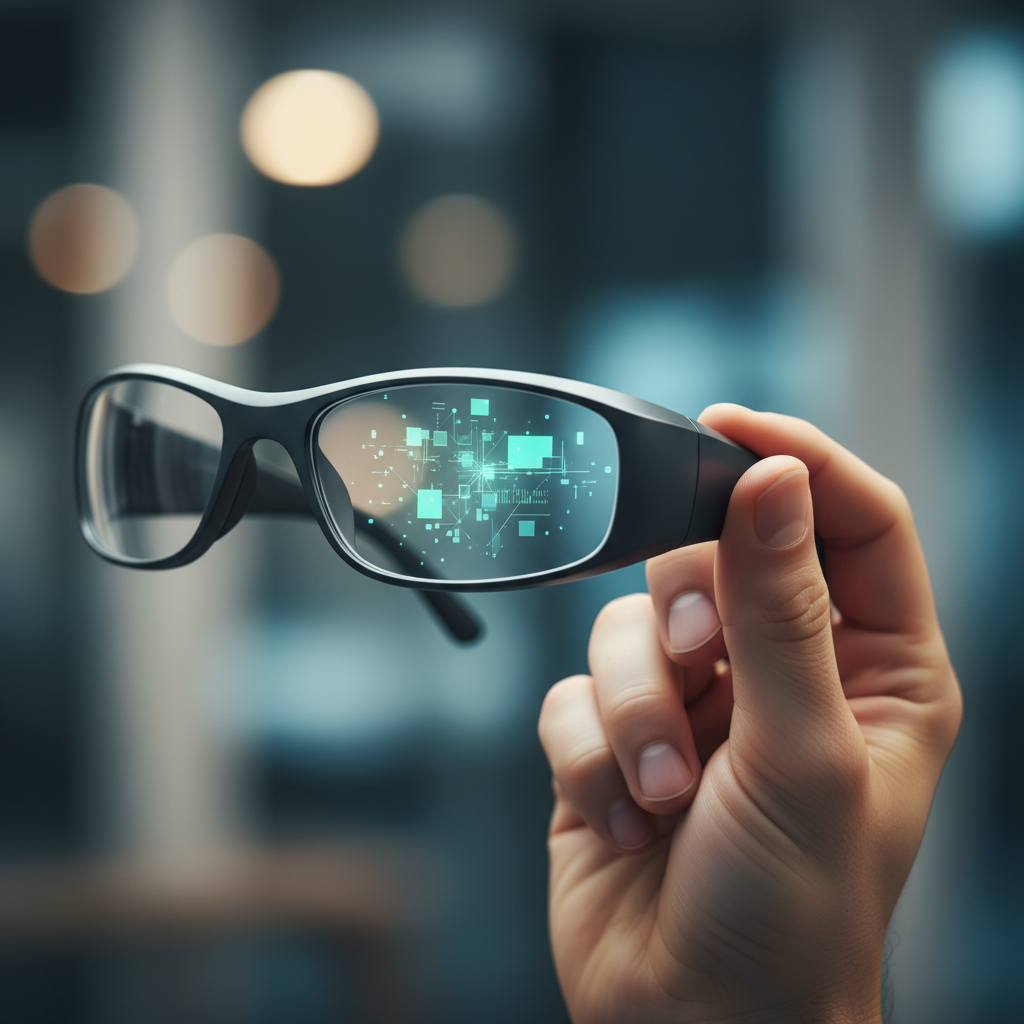
Imagine a world where language barriers simply melt away, or where important information appears subtly within your field of vision, enhancing your reality rather than distracting from it. This is the ambitious future Google is exploring with its experimental AI-powered smart glasses. We recently had a chance to go hands-on with an early prototype, and while the experience was undeniably promising, it also highlighted that this revolutionary technology isn’t quite ready for prime time.
Google’s venture into augmented reality (AR) eyewear aims to integrate advanced artificial intelligence directly into our daily lives, moving beyond the smartphone screen. These aren’t just notification displays; they’re designed to be intelligent assistants, seamlessly processing information from the world around you. The potential applications are vast and genuinely exciting, promising a new era of hands-free interaction.
Stepping into the Future: What Google’s AI Glasses Promise
The core promise of Google’s AI glasses revolves around enhancing human perception and interaction through real-time AI processing. During our demonstration, the most striking feature was the ability to transcribe and translate conversations in real-time. Imagine speaking to someone in a foreign language and seeing their words instantly translated into your native tongue appear as subtitles right before your eyes.
This capability extends beyond mere translation. The glasses can also perform live transcription of spoken words, displaying them as text, which is incredibly useful in noisy environments or for those with hearing impairments. Furthermore, visual AI allows the glasses to identify objects, provide information, or even offer directions based on what you’re looking at. This suite of features points towards a future where information is contextual and always accessible, without needing to pull out a phone.
The Hands-On Experience: A Glimpse of Potential
Physically, the prototype glasses felt surprisingly comfortable, resembling slightly bulkier conventional spectacles rather than a cumbersome headset. The display, projected onto the lens, was subtle and unobtrusive, appearing as a transparent overlay that didn’t block vision. This design choice is crucial for ensuring social acceptance and everyday wearability.
Interacting with the glasses felt intuitive, largely through voice commands and subtle head gestures, minimizing the need for manual controls. The real-time translation feature was particularly impressive, offering near-instantaneous conversion of speech. While not flawless, the accuracy was high enough to follow a conversation with reasonable ease, showcasing the incredible potential for breaking down communication barriers.
However, it was clear this was still a development unit. The processing was swift, but not always perfectly seamless, occasionally stumbling on complex sentences or specific accents. Yet, these minor hiccups didn’t detract from the overall “wow” factor, proving that the underlying technology is robust and progressing rapidly.
Reality Checks: Where the Glasses Fall Short (For Now)
Despite the revolutionary potential, there are significant hurdles to overcome before these AI glasses become a mainstream consumer product. One immediate concern is battery life, which, for a device constantly processing visual and audio data, remains a major engineering challenge. Prototypes often have limited operational times, and extending this for all-day use is essential.
Then there’s the form factor and social acceptance. While subtle for a prototype, they still look distinct from regular glasses, and widespread adoption will require designs that are virtually indistinguishable from traditional eyewear. Privacy also looms large, with concerns about cameras and microphones constantly recording or processing information in public spaces, necessitating clear ethical guidelines and user controls.
Accuracy, especially in real-world, unpredictable environments, also needs refinement. Noisy cafes, diverse accents, and rapid-fire conversations can still challenge even the most advanced AI. These are complex problems that Google is actively working to solve, but they highlight why a commercial release is still some time away.
The Road Ahead: What’s Next for Wearable AI?
Google’s AI-powered glasses represent a bold step into the future of computing, moving us closer to a world where technology enhances our natural abilities rather than just serving as a tool. While the current prototypes are “promising but not quite ready,” they offer an exciting glimpse into what’s possible. The journey from innovative concept to mass-market product is long and fraught with challenges, but the potential rewards are immense.
The iterative development process, much like the early days of smartphones, suggests that refinements in AI algorithms, miniaturization of components, and improvements in battery technology will eventually lead to a more polished product. As Google continues to refine its vision, these AI glasses could fundamentally change how we interact with information and each other. We eagerly anticipate how this technology will evolve and reshape our daily experiences in the coming years.
Source: Google News – AI Search
