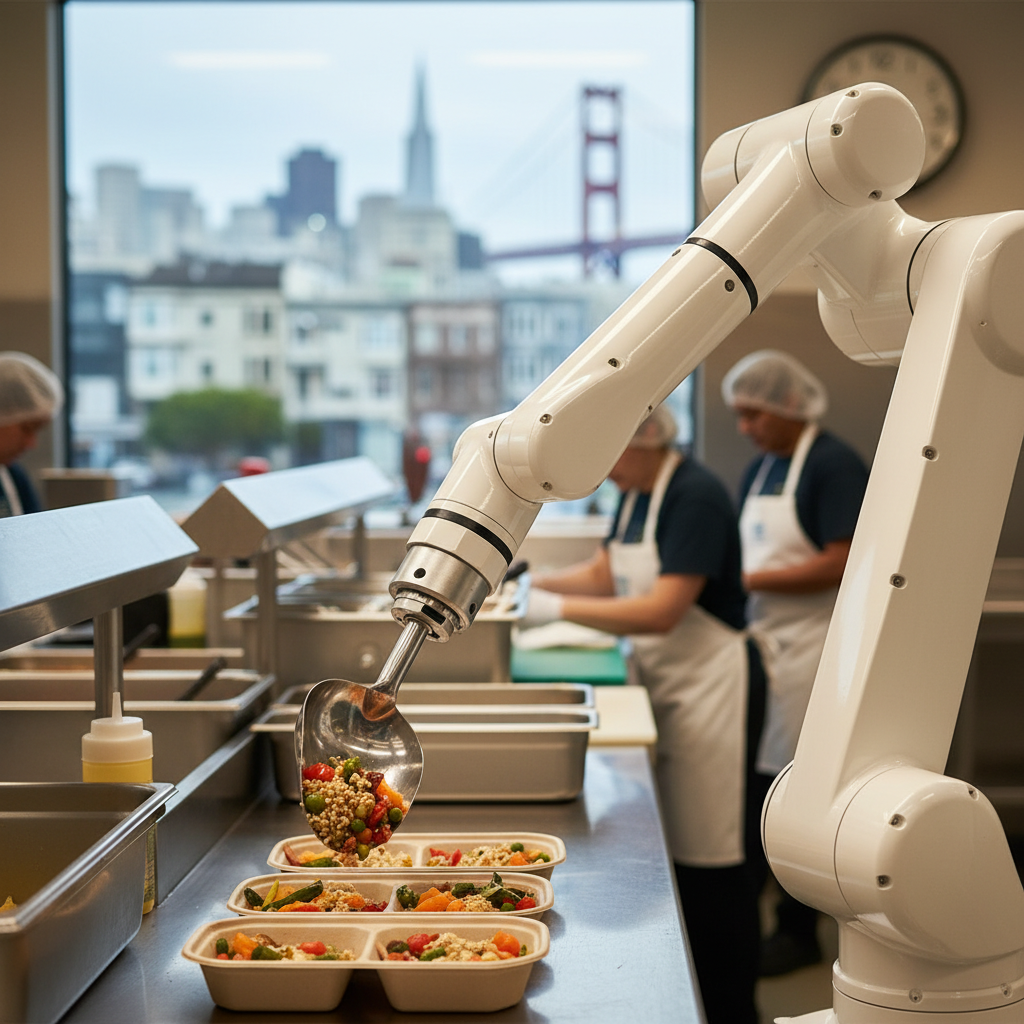
In the heart of San Francisco, a remarkable nonprofit called Project Open Hand has been serving its community since 1985. Founded by local grandmother and HIV-awareness advocate Ruth Brinker, this organization tirelessly prepares and packages nutritious meals. Their vital work ensures that individuals facing various health challenges, from HIV/AIDS to heart disease, diabetes, or chronic kidney disease, receive the specialized sustenance they need.
Crafting these medically tailored meals is a complex undertaking, demanding meticulous attention to allergies and specific nutrient requirements. Each meal must be customized, moving far beyond a one-size-fits-all approach. However, like many nonprofits, Project Open Hand has frequently grappled with a significant challenge: securing enough volunteers to keep their bustling operation running smoothly.
A Dash of Innovation: AI Enters the Kitchen
The solution to their volunteer dilemma emerged from an unexpected source: advanced robotics. Chef Robotics, a San Francisco-based company, specializes in “physical AI for the food industry,” creating robots adept at handling physical objects, specifically for plating. These aren’t culinary robots that cook or chop; they excel at precisely placing food onto plates at scale, a task they already perform for clients like Amy’s Kitchen and Factor, a frozen-meal company.
The partnership between Project Open Hand and Chef Robotics began with a serendipitous conversation on a Bay Area Rapid Transit train. Project Open Hand’s CEO, Paul Hepfer, quickly recognized the potential. Despite incurring a subscription fee for the robots, Hepfer believed the investment in innovation was crucial for the people they serve.
Hepfer emphasizes that nonprofits shouldn’t be constrained by a “scarcity mindset” if it hinders quality improvements or innovation. He noted the rarity of advanced technology in their Tenderloin district location. This embrace of cutting-edge solutions highlights a forward-thinking approach, challenging traditional views of nonprofit operations.
Bridging the Volunteer Gap in a Changing City
San Francisco’s Tenderloin district, often portrayed as fraught with challenges, felt the brunt of the Covid-19 pandemic acutely. As many residents and businesses departed the city, Project Open Hand lost a significant source of its labor: corporate volunteers who had previously dedicated their time to meal assembly. This sudden void left the organization scrambling to maintain its essential services.
While San Francisco has experienced a recent resurgence, particularly buoyed by the AI boom, this influx of new money and workers hasn’t translated into renewed corporate volunteerism for Open Hand. “We used to have so many corporate groups come in here,” Hepfer laments, observing a disconnect between the thriving tech sector and community engagement. This shift underscores a broader challenge for nonprofits relying on traditional volunteer models.
The robots from Chef Robotics stepped in to help fill this critical gap, augmenting rather than replacing human efforts. “It’s not even that they’re faster,” explains Alma Caceres, a sous chef at Project Open Hand, “It’s that we don’t have the volunteers.” This technological assistance allows Project Open Hand to continue meeting the immense demand for its specialized meals.
Robots and Humans: A Collaborative Assembly Line
The two robotic arms seamlessly integrate into the meal assembly line, operating for a few hours each day alongside human volunteers. While human volunteers typically fill around 500 meals per hour, the robots contribute an additional 200, significantly boosting overall capacity. This allows human staff and volunteers to focus on more intricate tasks, such as chopping vegetables or cooking large batches of plant-based protein in the kitchen.
These sophisticated arms can be equipped with various fittings to handle approximately 70 different ingredients. Chef Robotics CEO Rajat Bhageria notes that handling food, which is “sticky, malleable, and wet,” presents a unique “physics problem” that they’ve transformed into a “software problem,” making it scalable. While the robots aim for precision, they can sometimes be a little messy, occasionally dropping bits of food.
However, as one volunteer quipped, the robots are no messier than their human counterparts. A dedicated human volunteer attends to the line, wiping down trays before meals are sealed and whisked away for delivery. This collaborative setup demonstrates how AI can complement human workers, allowing for greater efficiency and enabling humans to engage in more nuanced aspects of meal preparation.
A Vision for Future Engagement
Paul Hepfer emphasizes that the robots don’t diminish the need for human volunteers; rather, they serve as a testament to Project Open Hand’s innovative spirit. By embracing cutting-edge technology, he hopes to draw attention from the city’s affluent tech sector. This could potentially encourage new types of engagement and foster greater philanthropic support.
“I’m hoping that maybe the gravy on top of all this—the low-salt gravy on top—might be that people from the tech world might see that we are open to innovating,” Hepfer states. The aim is to demonstrate that nonprofits are dynamic and forward-thinking, making them attractive partners for technological collaboration and investment in community health.
Joseph Sobiesiak, who now helps manage the meal assembly line, first came to Project Open Hand needing their services in the early 1990s. He views his current role as a way to give back. Initially skeptical of the robots, Sobiesiak has since observed their tangible benefits. He acknowledges that “things are definitely much faster than before,” a testament to the effective blend of human dedication and technological advancement in serving those in need.
Source: Wired – AI
