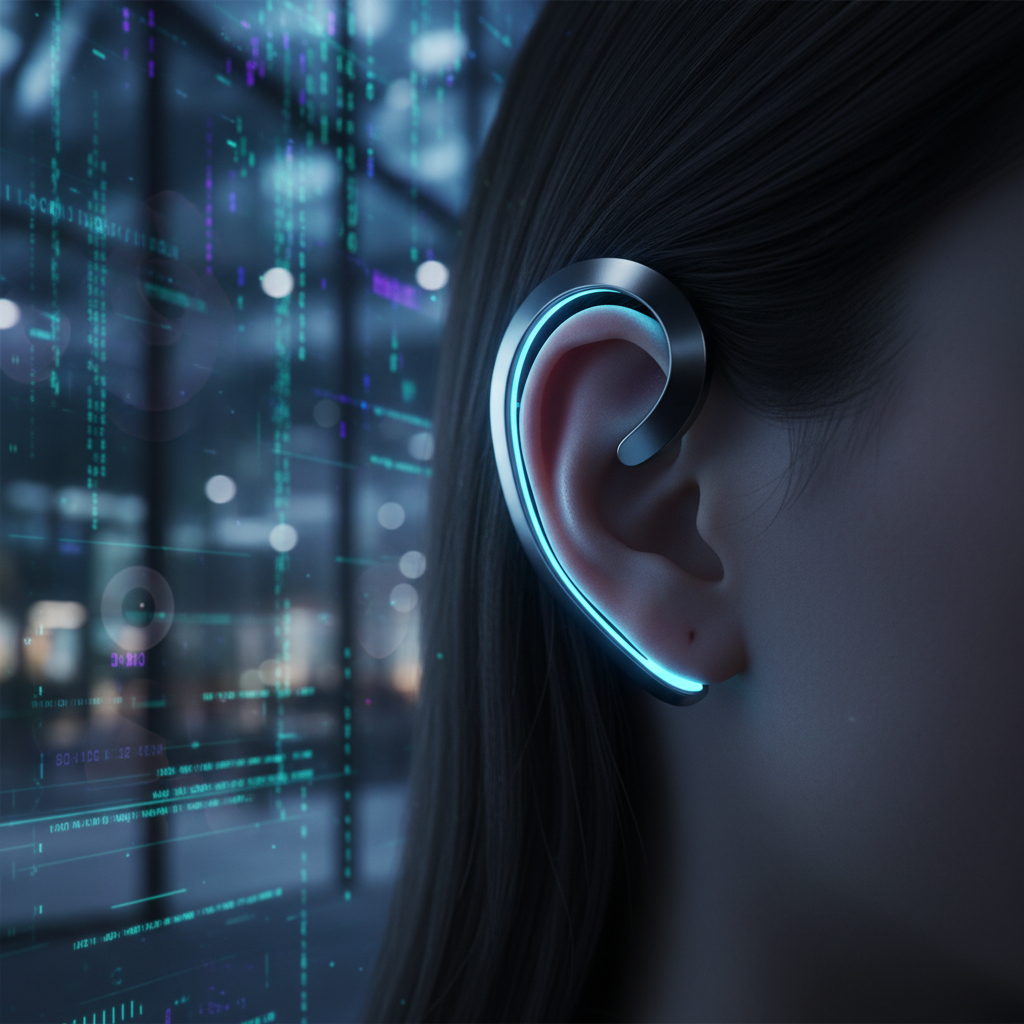
Amazon’s Bee wearable, an AI wrist gadget recently acquired and enhanced by the tech giant, promises to be your ultimate personal assistant. This innovative device records, transcribes, and summarizes your daily conversations, offering a novel solution for note-taking and organizational challenges. For those of us juggling busy schedules or prone to forgetfulness, the Bee presents an intriguing prospect.
My recent hands-on experience with the Bee left me both fascinated by its potential and, admittedly, a little unsettled. While its capabilities are undeniably impressive, the notion of a device constantly listening raises some significant questions about privacy in our increasingly connected world. It’s a classic tech conundrum: convenience versus personal space.
Unpacking the Bee: How It Works and My Initial Hesitations
Getting started with the Bee is straightforward: you power it up, slip it onto your wrist, and sync it with the dedicated mobile app after entering some basic personal information. The device features a discreet button that allows you to activate or deactivate its built-in recorder, indicated by a flashing green light. Once a conversation is captured, the app processes it into both an easy-to-read summary and a complete transcription.
As someone who values digital privacy, the idea of wearing an “eavesdropping gizmo” 24/7 wasn’t my immediate preference. In an era where digital surveillance feels ubiquitous, I typically seek opportunities to reduce, rather than increase, the amount of data collected about me. This inherent tension between the Bee’s function and my personal ethos was a constant undercurrent throughout my testing.
Professional Prowess: Bee in the Boardroom
Despite my initial reservations, the Bee truly shines in professional environments, particularly for individuals navigating a dense calendar of meetings and calls. If your day involves a constant flow of information and you struggle to retain every detail, this wearable could become a moderately competent assistant. It offers a practical solution to streamline your workflow and ensure no crucial detail slips through the cracks.
During a recent business call, I activated the Bee after confirming with the other party that recording was acceptable. Afterward, the app meticulously summarized our discussion, breaking it down into digestible segments that were incredibly useful for review. While this functionality is similar to offerings from other transcription services like Otter and Granola, having it integrated into a sleek wrist wearable offers a unique, always-on convenience.
Imagine a scenario where a professional attends multiple back-to-back meetings: the Bee could continuously capture and process these interactions throughout the day. Later, you could simply review the automatically generated summaries, quickly clarifying any points or actions without needing to re-listen to hours of audio. This hands-free, integrated approach is where the Amazon Bee wearable’s professional utility truly stands out.
However, it’s worth noting that the raw transcripts generated by the Bee aren’t always perfect. Critics have pointed out that you often need to manually input speaker names, as the AI doesn’t consistently differentiate voices. I also observed minor omissions in my own test transcript, though nothing critically important was missed.
The Personal Data Dilemma: Privacy and Permissions
While the Bee shows early promise as a robust professional tool, its integration into personal life raises significant privacy questions. Ironically, Amazon has largely marketed the Bee for personal use, which requires users to be exceptionally comfortable with a device that records a vast amount of their offline and digital interactions. This level of constant monitoring could feel overly intrusive for many.
For the Bee to operate at its full potential, it demands extensive mobile permissions. This includes access to your location, photos, phone contacts, calendar, and even mobile notifications. Furthermore, you have the option to share sensitive health data, such as sleep patterns or resting heart rate, if you choose. This vast accumulation of personal information is a core part of its functionality.
All this collected data is stored in the cloud, which presents further concerns for privacy advocates. There was a glimmer of hope when Bee reportedly unveiled a demo of a locally running device to tech YouTuber Becca Farsace, hinting at a future where data might remain on-device. However, Amazon has yet to provide any updates on these plans, leaving the cloud as the primary storage solution.
Regarding privacy protections, Bee states it employs encryption for data both at rest and in-transit, alongside “technical and organizational security measures” to safeguard personal information. The company also claims to undergo “rigorous third-party security audits” and utilizes continuous security monitoring. While these assurances sound robust, it’s important to remember that even large tech companies like Amazon have faced data security challenges in the past, a common hurdle in managing vast cloud environments.
Final Thoughts: A Promising but Invasive AI Assistant
Ultimately, the Amazon Bee wearable is a fascinating piece of hardware that, with further refinement, holds significant potential for professional applications. Its ability to effortlessly capture, transcribe, and summarize conversations could be a game-changer for business productivity and organization. The convenience of an always-on, hands-free assistant is undeniable in a fast-paced work environment.
However, when considered for personal use, the Bee’s extensive data collection and constant recording capabilities might prove too invasive for many users. The trade-off between convenience and comprehensive digital privacy is a personal decision, and for those who prioritize their private space, the Bee in its current iteration may cross a line. It’s a compelling device, but its true impact will depend on how users weigh its utility against their comfort with continuous surveillance.
Source: TechCrunch – AI
