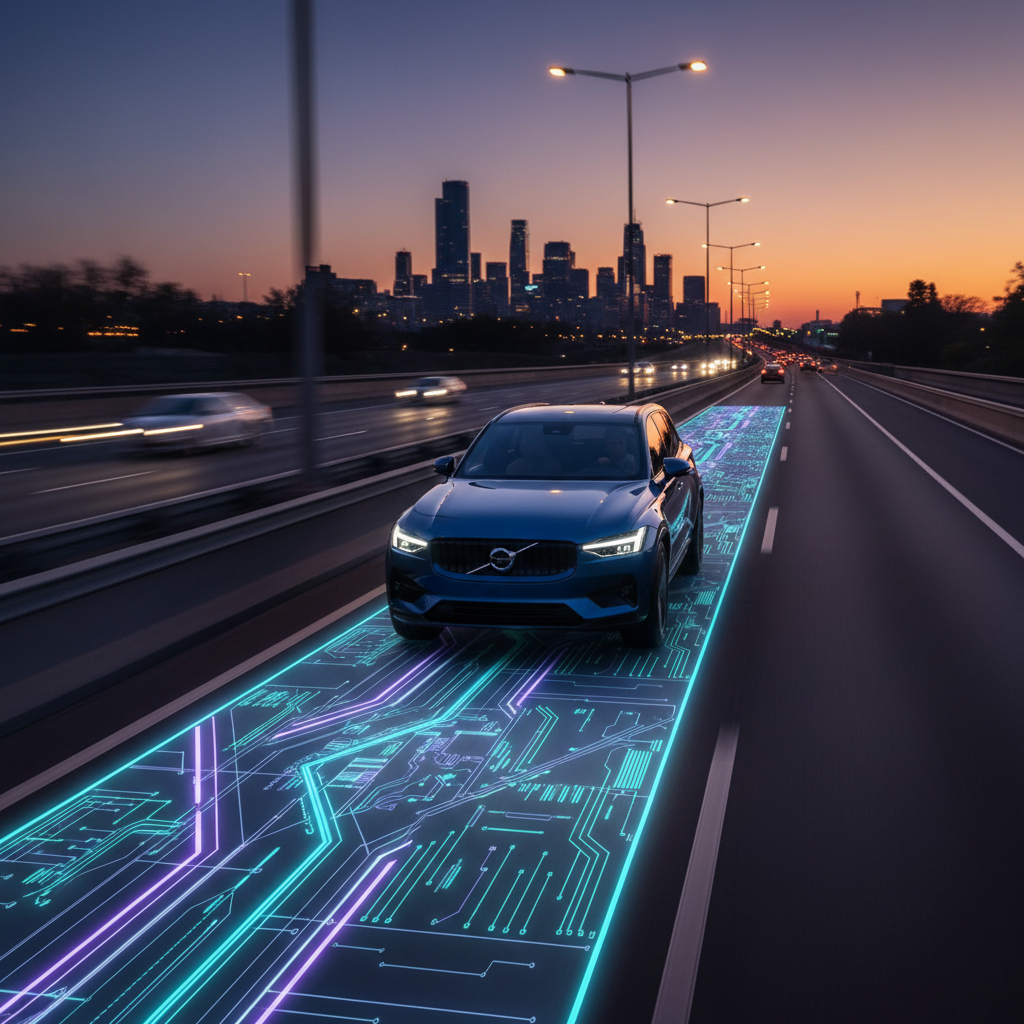
A significant stride is being made in automotive intelligence as Google AI is set to integrate its powerful capabilities into Volvo cars, promising a revolutionary leap in how vehicles perceive and interact with their surroundings. This collaboration isn’t just about adding smart features; it’s about fundamentally enhancing a car’s ability to “understand the road.” By leveraging cutting-edge artificial intelligence, Volvo aims to push the boundaries of vehicle safety and autonomous driving, making every journey smarter and more secure.
This partnership signifies a pivotal moment for both companies, combining Google’s unparalleled expertise in AI and machine learning with Volvo’s decades-long commitment to automotive safety and innovation. The goal is clear: to equip Volvo vehicles with an even more sophisticated “brain” that can process complex real-time data from various sensors. This advanced intelligence will enable cars to react more intelligently to dynamic road conditions, ultimately contributing to a safer driving experience for everyone.
Unlocking Advanced Road Perception
So, what exactly does “better understanding the road” entail for a car? It means moving beyond basic sensor readings to a deeper, more contextual comprehension of the driving environment. Imagine a vehicle that can not only detect an object but also understand its trajectory, predict potential hazards, and even interpret the subtle cues of human road users, all in milliseconds.
At its core, this enhancement is driven by advanced machine learning algorithms and sophisticated computer vision systems provided by Google AI. These technologies are designed to process massive amounts of data from a car’s cameras, radar, lidar, and ultrasonic sensors simultaneously. The result is a richer, more accurate, and constantly learning perception model that adapts to an endless array of driving scenarios.
Crucially, this AI will help Volvo cars make more informed decisions, whether it’s during routine highway driving or in challenging urban environments. From recognizing unusual road construction to anticipating the unpredictable movements of pedestrians or cyclists, the system aims to provide an unparalleled level of situational awareness. This proactive understanding is paramount for improving both active safety features and the foundations of future autonomous driving.
Google’s AI Prowess Meets Volvo’s Safety Legacy
The choice of Google AI as a partner for this ambitious endeavor is a testament to its industry-leading capabilities in artificial intelligence and data processing. Google’s extensive experience in developing complex AI models, particularly in areas like image recognition and predictive analytics, makes it an ideal collaborator for advancing automotive intelligence. Their algorithms are already powering countless applications globally, demonstrating robust performance in diverse and challenging data environments.
For Volvo, this collaboration is a natural evolution of its unwavering dedication to safety, a cornerstone of its brand identity. By integrating Google’s sophisticated AI, Volvo is not just adding technology; it’s elevating its safety standards to an entirely new level, preparing for a future where vehicles can mitigate risks even more effectively. This synergy promises to combine raw computing power with a humanitarian focus on protecting occupants and other road users.
This isn’t the first time Volvo and Google have teamed up; their partnership previously brought the Android Automotive OS to Volvo cars, revolutionizing in-car infotainment. Expanding this collaboration to critical safety and perception systems demonstrates a deep, trust-based relationship aimed at redefining the driving experience. It signifies a shared vision for intelligent mobility where technology seamlessly enhances both convenience and protection.
The Path to Smarter and Safer Journeys
The immediate impact of Google AI’s integration will be felt in the refinement of Volvo’s Advanced Driver-Assistance Systems (ADAS). Features like automatic emergency braking, lane-keeping assist, and adaptive cruise control will become even more precise, reliable, and intelligent. The enhanced road understanding will allow these systems to operate with greater confidence and accuracy, intervening more effectively when necessary.
Looking further ahead, this partnership lays crucial groundwork for the widespread adoption of autonomous driving technologies. For self-driving cars to become a reality, they must possess an unassailable ability to interpret the world around them, making split-second decisions with human-like, or even superhuman, perception. Google AI’s capabilities are vital in building this robust foundation for truly hands-free driving.
Ultimately, this technological leap promises a future where driving is not only safer but also more intuitive and less stressful. Vehicles will be better equipped to assist drivers in complex situations, reduce the likelihood of accidents, and contribute to a smoother traffic flow. This collaboration between Google AI and Volvo cars is set to transform everyday commutes into a more serene and secure experience.
Driving Towards Tomorrow
The integration of Google AI into Volvo cars represents more than just a technological upgrade; it’s a paradigm shift in how we conceive vehicle intelligence and road safety. By equipping cars with an advanced ability to perceive and interpret their surroundings, both companies are setting new benchmarks for automotive innovation. This collaboration is a powerful testament to the transformative potential of artificial intelligence in shaping the future of transportation.
As these smarter Volvo cars begin to grace our roads, they will embody a future where cutting-edge AI works in harmony with human-centric design. The vision of a truly intuitive, highly protective, and increasingly autonomous driving experience is moving closer to reality. This alliance promises a future where every journey is backed by unparalleled intelligence, making our roads safer and our travels more confident than ever before.
Source: Google News – AI Search
