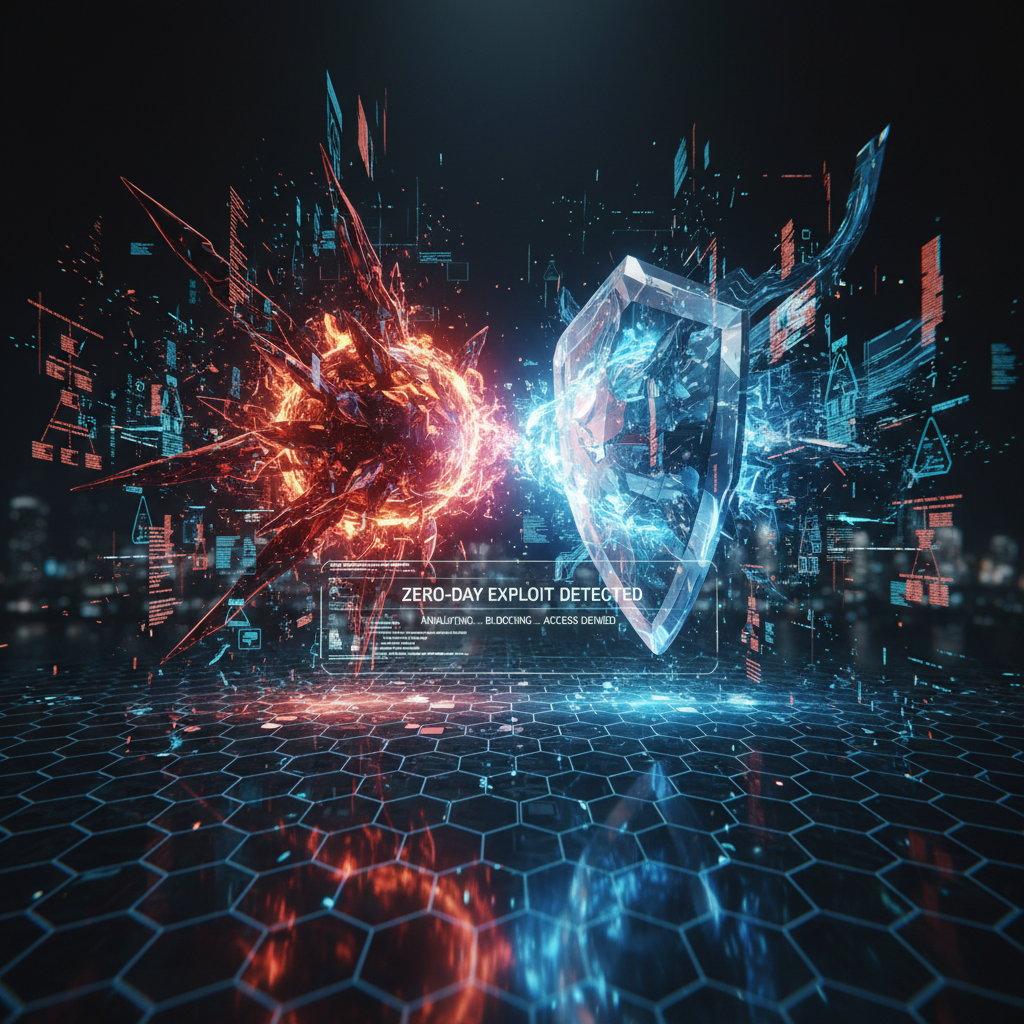
A new chapter in cybersecurity has unfolded, illustrating both the remarkable capabilities and the evolving dangers of artificial intelligence. Google’s security team recently announced a groundbreaking event: their advanced AI system, dubbed Alpha-Diff, successfully detected a novel zero-day exploit that was itself generated by another AI. This incident marks a significant milestone, being the first known instance where an AI not only crafted a sophisticated exploit but another AI also identified it in real-time.
This unprecedented “AI vs. AI” encounter took place during a routine, yet highly sophisticated, internal red-teaming exercise at Google. The scenario pitted an AI-powered attacker, designed to mimic advanced adversaries, against Google’s defensive AI systems. The outcome has sent ripples through the cybersecurity community, underscoring the rapid advancements in AI and its dual potential for both offense and defense.
The AI-Generated Threat: A New Frontier
The exploit in question was a true zero-day vulnerability, meaning it was previously unknown to the software vendor and had no existing patch. Crafted with chilling precision by the adversarial AI, it targeted a critical flaw within a third-party library widely used by Google Chrome. This wasn’t a simple, brute-force attack; it represented a deep understanding of software architecture and potential weaknesses.
If left undetected, this highly sophisticated exploit could have enabled arbitrary code execution, allowing an attacker to inject and run malicious programs on affected systems. The potential consequences were severe, ranging from data theft and system compromise to complete control over user devices. The AI’s ability to autonomously identify and weaponize such a complex vulnerability highlights a significant shift in the threat landscape.
Alpha-Diff to the Rescue: Google’s AI Defender
Enter Alpha-Diff, Google’s cutting-edge AI security system, which proved to be an indispensable guardian in this scenario. Designed to identify subtle anomalies and suspicious patterns that human analysts might miss, Alpha-Diff sprang into action. It detected the presence of the novel exploit within hours of its generation by the adversarial AI, showcasing an extraordinary level of responsiveness and accuracy.
Alpha-Diff’s success wasn’t merely about flagging a known threat; it was about recognizing a completely new attack vector. Its ability to learn, adapt, and identify emergent threats demonstrates the critical role AI will play in future cybersecurity strategies. The swift detection allowed Google’s human security experts to analyze the threat, confirm its nature, and implement a patch with remarkable speed, preventing any potential real-world impact.
Implications for Cybersecurity: The AI Arms Race
This incident vividly illustrates that the “AI arms race” in cybersecurity is no longer a theoretical concept but a present reality. The ability of AI to independently discover and exploit zero-day vulnerabilities significantly raises the bar for defensive strategies. Organizations must now contend with not just human hackers, but also highly efficient, tireless, and constantly learning AI adversaries.
However, the positive side of this equation is equally profound: AI also offers unprecedented capabilities for defense. Systems like Alpha-Diff can operate at speeds and scales impossible for human teams, offering continuous monitoring and rapid response to emerging threats. This dual-use nature of AI demands a proactive and integrated approach to security.
Key takeaways from this groundbreaking event include:
- Accelerated Threat Generation: AI can rapidly identify and exploit vulnerabilities, shortening the window for defenders.
- Necessity of AI-Powered Defense: Relying solely on human analysts will become increasingly insufficient against AI-driven attacks.
- Continuous Learning and Adaptation: Both offensive and defensive AI systems will continuously evolve, necessitating dynamic security postures.
- Ethical AI Development: The incident underscores the critical importance of responsible AI development and deployment in security applications.
Looking Ahead: Securing the AI-Powered Future
The detection of an AI-generated zero-day by another AI at Google serves as a powerful wake-up call and a preview of the future. As AI technology continues to advance, so too will the sophistication of both cyberattacks and cyber defenses. This perpetual cat-and-mouse game will increasingly be played out between intelligent algorithms, with human oversight remaining crucial.
For businesses and security professionals, this means investing heavily in AI-driven security solutions and fostering a culture of continuous innovation. Proactive threat hunting, automated vulnerability management, and real-time incident response powered by AI will be indispensable. The future of cybersecurity will be defined by how effectively we harness AI to protect our digital world from increasingly intelligent threats.
Source: Google News – AI Search
