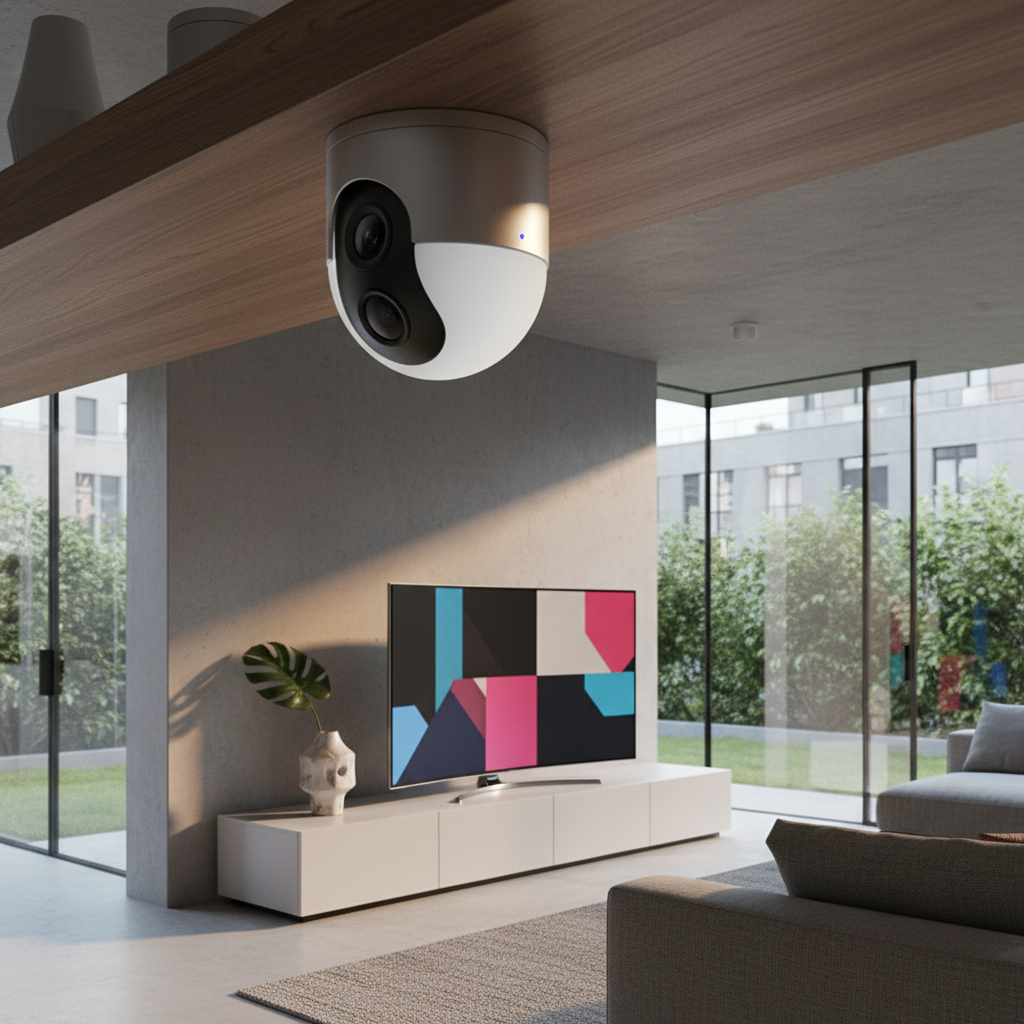
In today’s ever-evolving world of home security, choosing the right cameras can feel like a daunting task. Gone are the days of expensive, complex “walled-garden” systems; now, a wealth of innovative and affordable DIY solutions are available. For years, wired security cameras were the unquestioned standard, while their battery-powered wireless counterparts were often viewed as a less reliable alternative.
However, technology has rapidly advanced, and a well-chosen wireless camera can now meet, and often exceed, most homeowners’ surveillance needs. As experts in smart home technology, we’ve observed a significant shift towards wireless solutions, even in comprehensive setups. We’re here to guide you through the essential considerations, helping you determine whether wired or wireless is the best fit for your home security strategy.
Choosing Your Security Camera: Wired vs. Wireless
When selecting a security camera, it’s easy to get sidetracked by flashy features like ultra-high resolution or advanced AI notifications. While these certainly matter, a more fundamental set of questions should guide your initial search. Before diving deep into technical specifications, consider the practical aspects of where and why you need surveillance.
One of the primary benefits of battery-powered wireless cameras is their unparalleled flexibility in placement. Unlike wired cameras that are restricted by power outlets and cable runs, wireless options can be installed virtually anywhere you need them. This freedom allows for strategic positioning that maximizes coverage and effectiveness, whether it’s monitoring a distant corner of your property or complementing a smart video doorbell.
For outdoor use, leveraging solar power with wireless cameras can significantly reduce maintenance. Many models now come with integrated or optional solar panels, ensuring your cameras stay charged year-round with minimal intervention. This setup is ideal for areas that receive ample sunlight, eliminating the need for frequent battery changes and providing continuous protection.
Where Do You Need Surveillance? Placement is Key
Before you even begin to compare camera models, visualize the exact locations you wish to monitor. Do you need eyes on your front porch, a sprawling backyard, or a dimly lit garage? The chosen spot will immediately narrow down your options, as different cameras excel in various environments and lighting conditions.
Wireless cameras without solar panels are perfect for shaded areas or spots that don’t receive direct sunlight. Their independence from electrical wiring means you’re not limited by cable length, allowing you to secure areas like a far-off fence line or even observe wildlife at the edge of your property. This adaptability makes them a versatile choice for a wide range of monitoring scenarios.
Here are some of our top picks for versatile wireless cameras that don’t require constant direct sunlight or integrated solar panels:
- Ring Stick Up Cam Battery: A popular choice for indoor/outdoor flexibility.
- Arlo Essential Spotlight Camera: Offers excellent video quality and an integrated spotlight for color night vision.
- Google Nest Cam (battery): Smart detection features and Google ecosystem integration.
- Wyze Cam Outdoor v2: A budget-friendly option with solid performance.
What Problem Are You Trying to Solve?
The single most important question to ask yourself is, “What specific problem am I trying to solve with this camera?” Your answer will directly dictate the type of camera you should purchase, as a one-size-fits-all solution rarely exists. A camera designed to deter package thieves, for instance, will have different requirements than one used to check on a sleeping pet.
To make an informed decision, prioritize your security needs and consider the unique challenges each scenario presents. Do you want to deter porch pirates, keep an eye on your driveway, gather evidence after an incident, monitor a garage, know when visitors arrive, or simply check on your pets? Each of these objectives calls for a specialized approach.
- Deterring porch pirates: Look for cameras with two-way audio, bright spotlights, and reliable motion detection focused on your immediate porch area.
- Watching over a driveway: A wide-angle camera with excellent night vision and long-range motion detection is essential.
- Recording evidence: Prioritize cameras with high resolution, local storage, and continuous recording capabilities or robust event-based recording.
- Monitoring a garage: Consider indoor cameras with privacy shutters and easy installation.
- Finding out when someone’s at your door: A video doorbell with quick notifications and clear two-way talk is critical.
- Watching over your pets: Indoor cameras with pan and tilt functions, two-way audio, and activity zones are ideal.
Understanding Storage, Subscriptions, and Resolution
How and where your security camera stores recorded footage is a critical factor that can significantly impact your long-term costs and user experience. While some cameras are initially inexpensive, they often rely on mandatory monthly cloud subscriptions for accessing stored video. These subscriptions can feature various tiers, locking essential features behind paywalls and sometimes charging per camera.
Conversely, many cameras offer robust local storage solutions, providing options like on-camera microSD cards, network-attached storage (NAS) support, or in-home hubs with SSDs. These systems often come with no mandatory subscription fees, offering a one-time purchase solution. Our favorite subscription-free security system is Eufy Security, which offers a versatile mix of wired, battery-powered, and solar-powered cameras compatible with their HomeBase for local storage.
Finally, let’s address resolution: while impressive, it’s often overrated for security cameras. A well-placed 1080p camera with good sensor quality and dynamic range can be far more effective than a poorly positioned 4K camera. Focus on factors like the camera’s ability to deliver a clear, detailed image day and night, even in challenging lighting conditions.
Look for cameras with strong HDR performance and reliable motion recording, as these contribute significantly more to usable footage than raw pixel count alone. Always remember that proper placement is paramount; a camera mounted too high might capture the top of a hat but miss crucial facial features or license plate details. By prioritizing placement, purpose, storage, and practical image quality, you can build a security system that truly protects what matters most.
Source: ZDNet – AI
