Rob Williams, a seasoned executive from Amazon’s elite “S-team” and a driving force behind products like Alexa, understood the unique language of pitching Jeff Bezos. The formula was clear: craft a press release detailing a product as if it already existed, then await Bezos’s decisive thumbs-up or down. Williams navigated this process countless times, but a particular pitch he made in December 2025 would be different, marking a pivotal moment in the quest to redefine artificial intelligence.
This time, Williams wasn’t approaching Bezos as an employee, but as a co-founder of a bold new venture called Flourish, alongside neuroscientist and serial entrepreneur Thomas Reardon. Bezos, from the comfort of his yacht, reviewed their ambitious proposal via Zoom. What he read described Flourish as a neuro AI company tackling two of AI’s most formidable challenges: power efficiency and continuous learning.
The AI Conundrum: Too Hungry, Too Static
According to Reardon, modern AI, particularly large language models (LLMs), has cornered itself. While undeniably powerful, these frontier models are insatiable consumers of computational power and data. The human brain, in stark contrast, processes information on a mere 20 watts of energy, while a single AI training chip demands over 30 times that amount.
Hyperscale AI operations rely on thousands of such chips, drawing gigawatts of energy—enough to power entire cities. Moreover, current LLMs require vast quantities of human-generated data, constantly needing more with each new iteration. Despite this massive input, Reardon highlights a fundamental flaw: once trained, these models are largely static; they don’t truly “learn” and adapt in the dynamic way a human mind does.
Flourish’s Audacious Vision: Rethinking AI from the Ground Up
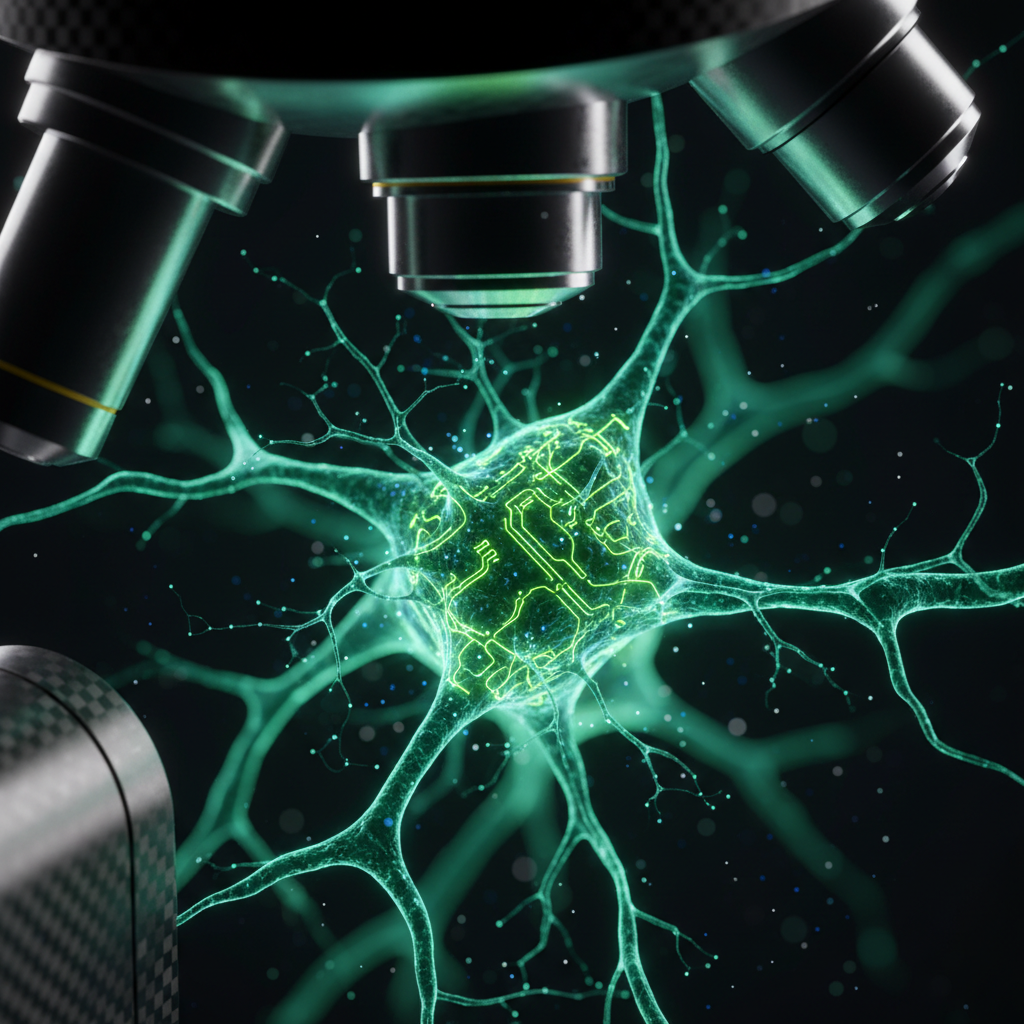
Flourish aims to construct Cortex AI, a synthetic intelligence system designed to mirror the computational capacity, learning efficiency, and power budget of the human brain. Their ultimate goal is to build an artificial brain that operates on 50 watts or less, capable of continuous adaptation and nimble processing, consuming a mere fraction of the power and data required by traditional LLMs. Reardon emphasizes the disconnect: “A human baby does it with a couple hundred thousand utterances,” not by consuming every book ever written multiple times over.
This vision resonated with Jeff Bezos, who, after reviewing Williams’s concise two-pager, promptly invested $50 million. Other significant backing came from Lux Capital and Google Ventures. Bezos later nearly doubled his initial stake, regretting only that Flourish hadn’t asked for more. With a formidable war chest of $500 million and a reported valuation of $2.5 billion, Flourish is now poised to invent a groundbreaking new paradigm for AI.
A Team of Visionaries and a War Chest to Match
The team at Flourish is as impressive as its funding. Thomas “Reardon” Reardon, as he’s known, boasts an extraordinary background: a teenage programming prodigy, he helped build Microsoft’s first web browser, founded and sold a wireless tech company, and later earned a doctorate in neuroscience from Columbia. His journey also included developing a mind-control wristband that was acquired by Meta, showcasing his unique blend of technical and biological expertise.
He convinced Rob Williams, his former colleague from Microsoft, to join this ambitious endeavor. Another key recruit is Greg Wayne, a distinguished researcher from DeepMind and the head of Google’s Project Astra. Wayne, who now dedicates 20 percent of his time to Flourish, believes that even if the ultimate goal seems distant, the pursuit itself will yield invaluable discoveries. The advisory board also includes UC Berkeley computer scientist Ben Recht, who notes that while neuromorphic approaches were explored decades ago, LLMs largely eclipsed them.
From Wet Labs to Silicon: How Flourish is Building Brain-Inspired AI
Flourish’s distinctive edge lies in its integrated approach, fostering a close collaboration between leading AI researchers and neuroscientists. By the end of March, Reardon had assembled approximately two dozen top minds in neuroscience and AI, establishing a New York City office equipped with a built-in data center and awaiting advanced lab equipment like electron microscopes. The neuroscientists will conduct original “wet lab” experiments, hunting for architectural insights within the brain, while the AI team develops models informed by these biological discoveries.
The team is currently focused on structures like cortical columns, considered the brain’s “canonical computational unit.” Co-founder Joshua Vogelstein, along with his brother Jacob (an investor), initiated the ambitious Open Connectome Project, which seeks to map brain circuits through extensive imaging. Joshua’s recent work on a fruit fly’s neural network revealed it to be ten times more efficient than the transformer architecture common in LLMs. This cross-pollination of biological and computational research is central to Flourish’s strategy.
Flourish is also developing near-term products, including a hippocampus-inspired memory system that allows models to learn effectively without vast training data. They are engineering continuously learning models for “the kinds of devices you carry in your pocket” and are already negotiating with a major chip manufacturer to integrate these models onto silicon. This blend of fundamental research and practical application is critical as they work towards their long-range goal of fundamentally reinventing AI.
The company acknowledges that its mission is a significant, long-term undertaking. Bezos explicitly sought assurance of the founders’ multi-year commitment, understanding that truly transformative work requires a horizon of seven to ten years. While the ultimate success remains to be seen, as adviser Ben Recht aptly puts it, “if it does, it would be amazing.” Such a breakthrough could render many current data centers obsolete and irrevocably alter the landscape of artificial intelligence.
Source: Wired – AI
