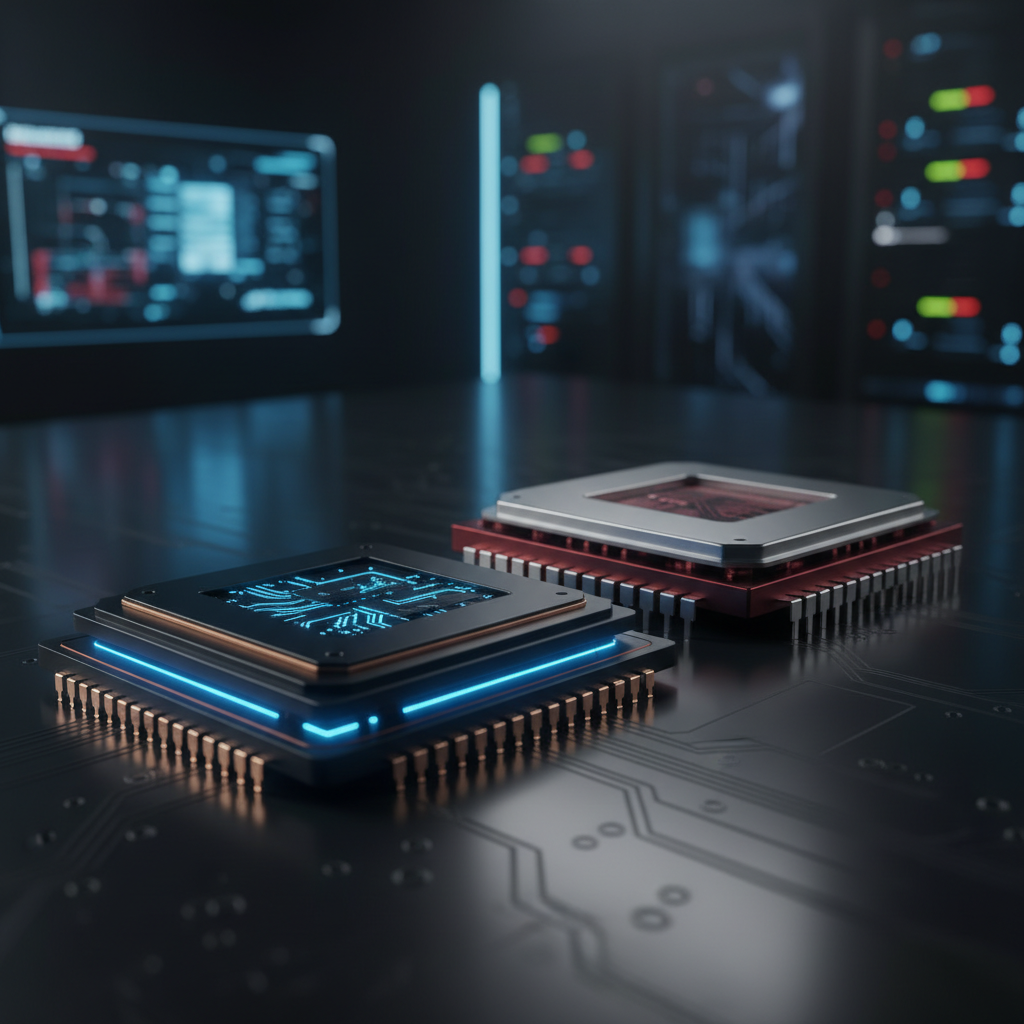
Google Cloud is making a significant stride into the competitive world of artificial intelligence hardware, unveiling two powerful new custom-designed chips. This strategic move aims to bolster its position as a leading cloud provider for AI workloads, directly challenging the current dominance of industry giants like Nvidia. With the burgeoning demand for AI infrastructure, these innovations promise to offer Google Cloud customers enhanced performance, flexibility, and cost efficiency for a wide spectrum of AI and general computing tasks.
The introduction of these chips underscores Google’s long-standing commitment to developing specialized hardware, a strategy that has previously seen success in areas like their Pixel smartphones and internal data center operations. By offering its own silicon, Google can create a highly optimized stack from hardware to software, ensuring seamless integration and superior performance for its cloud services. This vertical integration is key to delivering cutting-edge solutions as AI models grow ever more complex and demanding.
Introducing Google’s Custom Silicon Powerhouses
Leading the charge is the TPU v5p, Google’s latest and most potent Tensor Processing Unit to date. This fifth-generation custom AI accelerator is meticulously engineered for the most intensive AI training workloads, particularly the development of large language models (LLMs) and complex generative AI applications. The TPU v5p offers a substantial leap in performance and scalability, allowing developers to train larger models faster and with greater efficiency than ever before.
Each TPU v5p pod can scale up to an impressive 8,960 chips, making it a formidable solution for enterprises tackling massive AI projects. This enhanced scalability is critical for the intricate computations required by today’s advanced AI, reducing training times from months to mere weeks or even days. Its availability in Google Cloud empowers researchers and businesses to push the boundaries of AI innovation without the overhead of managing complex on-premise hardware.
Alongside the specialized TPU v5p, Google Cloud also introduced Axion, its very first custom Arm-based CPU designed for general-purpose workloads. While not exclusively an AI chip, Axion is highly optimized for efficiency and performance across a broad range of cloud computing tasks, including critical AI inference processes. This marks a strategic expansion of Google’s custom silicon portfolio, providing a versatile alternative to traditional x86-based processors.
Axion processors are designed to deliver exceptional performance per watt, translating into significant energy and cost savings for customers. They are ideal for a variety of demanding applications, from data analytics and web servers to media encoding and, crucially, efficient AI inference at scale. By leveraging the Arm architecture, Google aims to provide a highly competitive and sustainable option for businesses looking to optimize their cloud expenditures and improve their carbon footprint.
Why Custom Chips? The Drive to Innovate and Compete
Google’s strategic investment in custom silicon is a direct response to the escalating demand for high-performance, cost-effective infrastructure capable of powering the AI revolution. Nvidia has largely dominated the market for AI GPUs, creating bottlenecks and often leading to higher costs for developers. By offering its own alternatives, Google aims to provide a more diverse and competitive landscape for AI hardware.
The benefits for Google Cloud customers are manifold: they gain access to highly optimized hardware tailored specifically for Google’s cloud environment, ensuring maximum performance and seamless integration with existing services. This choice allows businesses to select the most appropriate and cost-efficient processing units for their specific needs, whether it’s intensive AI model training with TPUs or efficient inference and general computing with Axion. Google’s approach emphasizes giving developers more power and flexibility.
Furthermore, developing custom chips allows Google to maintain greater control over its supply chain and product roadmap, enabling faster innovation and quicker deployment of new capabilities. This strategic autonomy is vital in a rapidly evolving field like AI, where hardware advancements can significantly impact software development and deployment. It reinforces Google’s position as a vertically integrated tech powerhouse, capable of delivering end-to-end solutions.
What This Means for the AI Ecosystem
The launch of the TPU v5p and Axion processors signifies a pivotal moment for the AI industry, signaling increased competition and innovation in the hardware space. As more major players enter the custom chip arena, developers and businesses stand to benefit from a wider array of specialized and optimized solutions. This competitive pressure can drive down costs and accelerate the pace of technological advancement across the board.
These new chips cater to distinct, yet complementary, segments of the AI workflow. The TPU v5p addresses the crucial, resource-intensive training phase, enabling the creation of more sophisticated and powerful AI models. Meanwhile, Axion offers an efficient, scalable solution for deploying these models in real-world applications, handling the inference tasks that power everyday AI experiences.
Ultimately, Google Cloud’s commitment to custom silicon, from the specialized TPU v5p to the versatile Axion CPU, strengthens its offering as a comprehensive platform for every stage of the AI lifecycle. Businesses seeking to leverage the full potential of AI, from groundbreaking research to widespread deployment, now have even more powerful and cost-effective tools at their disposal. This move solidifies Google’s dedication to leading the charge in the AI era.
Source: Google News – AI Search
