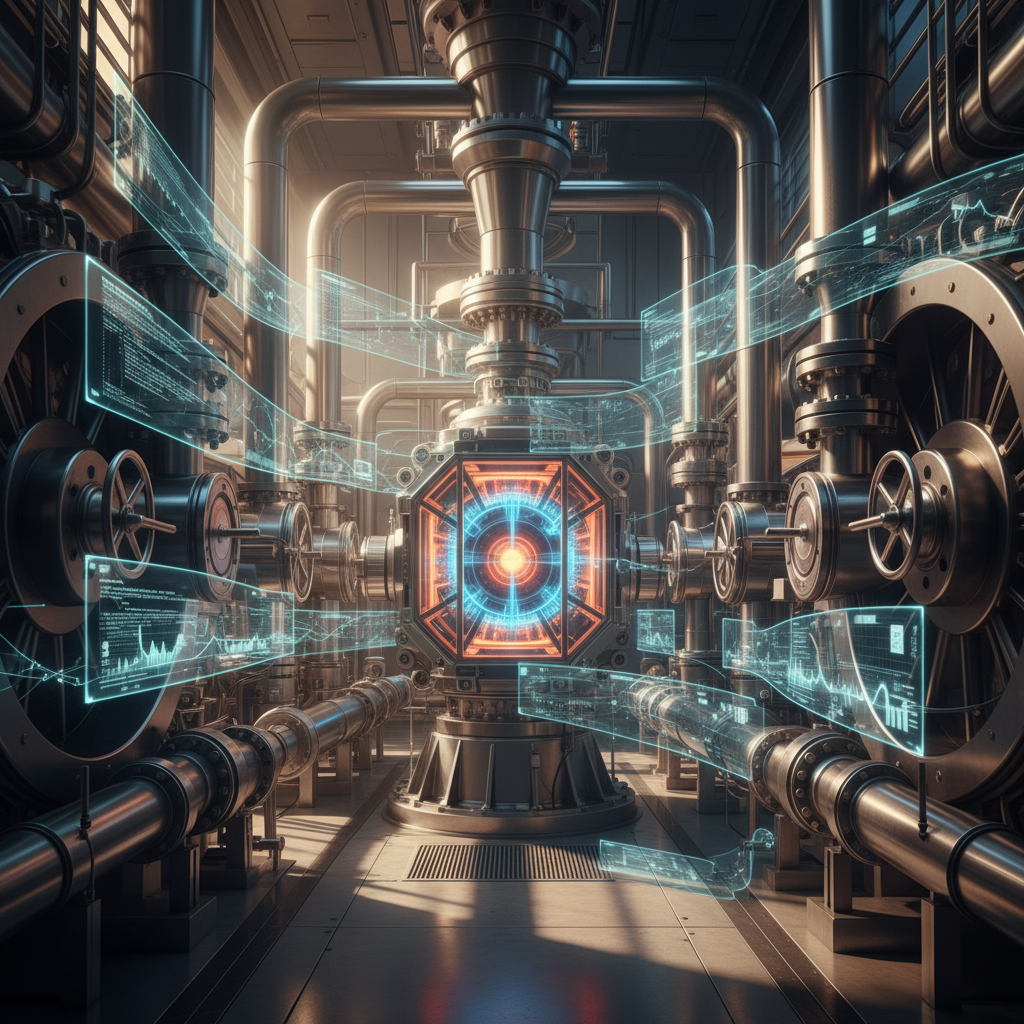
Energy giant Shell is taking a significant leap forward in its operational efficiency, transitioning from basic anomaly detection to fully-automated predictive maintenance. This ambitious shift is powered by an expanded partnership with C3 AI, leveraging advanced AI agents to revolutionize how equipment is monitored and maintained across its vast global operations.
Currently, Shell already utilizes the C3 AI Reliability Suite to oversee more than 30,000 critical pieces of equipment across both upstream and downstream sectors. The new initiative focuses on empowering autonomous AI agents to manage the entire maintenance lifecycle, from the first alert to a completed repair. This holistic approach promises to dramatically reduce the need for constant human intervention, ensuring resources are precisely directed where they’re needed most.
Stephen Ehikian, President of C3 AI, highlighted the impact of this collaboration. “This expanded partnership with Shell proves what’s possible when enterprise AI is fully operationalized at global scale for predictive maintenance—reducing unplanned downtime and delivering hundreds of millions of dollars in economic value,” he stated.
He added, “Shell has built mature AI predictive maintenance programs on our platform, and together we’re now pushing into agentic AI, advancing how this technology can further transform reliability, safety, efficiency, and operational performance.” This sentiment underscores the profound potential of this advanced technological integration.
From Early Warnings to Autonomous Action
Shell’s journey with AI in maintenance began by using machine learning to identify unusual patterns in sensor data, providing engineers with an early heads-up before equipment failures occurred. This initial phase involved ingesting massive amounts of real-time operational technology (OT) data, seamlessly integrating it with crucial business context from ERP platforms like SAP.
The latest evolution introduces intelligent AI agents capable of independent reasoning and action. While previous systems merely flagged potential issues for human review, this next-generation framework empowers agents to independently investigate the root cause behind an alert. They don’t just report a problem; they strive to understand it.
Once an agent pinpoints the underlying issue, it springs into action. This includes drafting precise work orders, meticulously confirming part availability within the inventory system, and even generating the necessary procurement requests. This level of autonomy streamlines the entire process, drastically cutting down on response times.
The foundational strength comes from C3 AI’s platform, which provides a robust, model-driven environment. This allows for the effortless integration of high-frequency sensor feeds with structured financial and maintenance logs, creating a comprehensive data picture. These powerful AI capabilities are specifically trained to learn the normal operating baselines for various critical assets, such as pumps, turbines, and compressors.
Sitting atop this strong data foundation is the agentic layer, where human operators configure individual agents for specific pieces of equipment. They define the agent’s objectives and the range of permitted responses. If the core machine learning models detect any deviation from normal operations, the agent activates, gathering extensive contextual data like recent maintenance history, environmental conditions, and upstream process variables to build a complete situational understanding.
Solving the “Last Mile” Problem in Predictive Maintenance
The introduction of agentic AI at such a scale directly addresses the perennial “last mile” challenge in predictive maintenance. Many industrial companies excel at predicting potential failures, but converting those insights into swift, effective action has often remained a significant hurdle. Typically, engineers still have to manually sift through alerts, conduct investigations, and draft work orders themselves.
Shell aims to shrink this timeline dramatically. By entrusting AI with root cause analysis and the creation of work orders, the delay between a predicted failure and its actual resolution is minimized. This directly translates into improved equipment uptime and enhanced production reliability, safeguarding crucial operational flows.
Moving to a condition-based maintenance model, where repairs are only performed when equipment truly requires them, yields substantial financial benefits. It eliminates unnecessary interventions on perfectly functional machinery, saving costs associated with labor, parts, and downtime. Furthermore, leaving healthy hardware untouched naturally extends its operational lifespan.
Beyond the impressive cost savings, proactive intervention before a catastrophic failure significantly enhances overall operational safety and reduces environmental risks. This is a paramount concern for any major player in the energy sector, underscoring the multi-faceted value proposition of this advanced AI implementation.
A Blueprint for Industrial AI in Production
The success of Shell and C3 AI’s collaboration is also recognized by key technology partners. Sandy Gupta, VP GISV, Software Development Companies at Microsoft, commented, “What Shell and C3 AI have built on Azure over the past several years is exactly what enterprise AI should look like—real applications, running in production, delivering measurable value at global scale.”
This expanded rollout signifies a crucial shift from theoretical algorithms to practical industrial AI production workflows. The true value lies not just in the prediction itself, but in the system’s groundbreaking ability to act on that prediction with minimal human oversight. This showcases a clear path for other heavy industries looking to harness the power of autonomous AI for unprecedented efficiency and reliability.
Source: AI News
