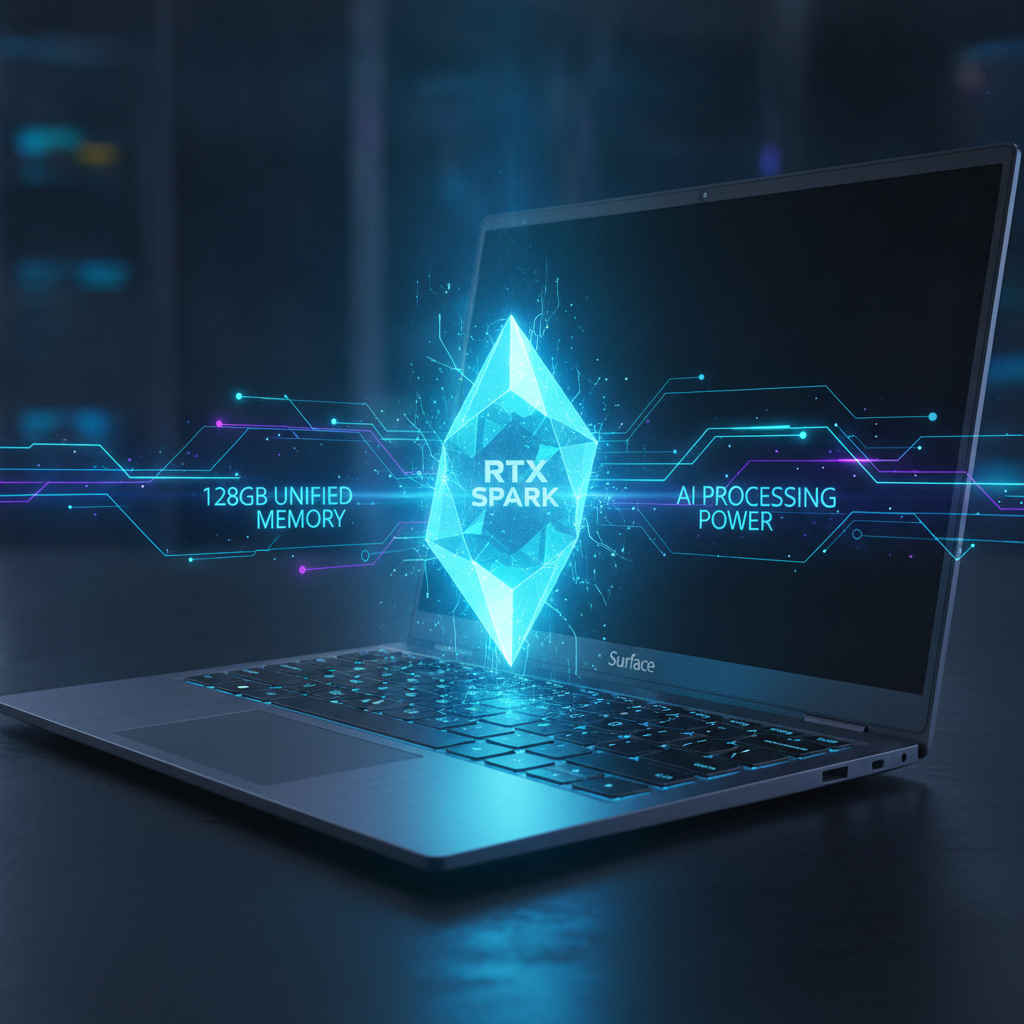
Computex 2026 delivered a clear message from Microsoft: they’re entering “beastmode” with their latest hardware. The tech giant unveiled the Surface Laptop Ultra, a flagship device set to redefine premium ultrabooks and AI-powered computing. It’s built around Nvidia’s groundbreaking RTX Spark processor, an ARM-based chip boasting incredible performance: up to 1 petaflop of AI performance, a 20-core CPU, and a colossal 128GB of unified memory, offering creative power akin to an Nvidia GeForce RTX 5070 GPU.
The new Surface Laptop Ultra is more than just a machine; it’s a statement. With aggressive branding, it clearly targets demanding developers, professional creators, and power users deeply entrenched in AI workflows. Microsoft even boldly showcased only the Surface Ultra powered on for demonstrations at Computex, solidifying its flagship status for the RTX Spark chip.
A Premium Build & Hands-On Experience
Getting hands-on with the Surface Ultra in Taipei confirmed its “beastmode” reputation. Gaming felt incredibly smooth, and video editing performance was remarkably impressive, even in a controlled demo environment. While real-world benchmarking is still pending, the initial experience was undeniably captivating.
The physical build of the Surface Laptop Ultra feels incredibly solid and premium, with familiar Surface aesthetics. Its standout feature is the stunning 15-inch mini-LED PixelSense Ultra touchscreen, offering 262ppi, a 3:2 aspect ratio, and up to 2000 nits of peak HDR brightness for exceptionally vibrant visuals. Its design, featuring recessed black chiclet keys, a robust aluminum body, and edge-to-edge glass, gives it a modern appeal, complemented by a responsive and precise haptic touchpad.
For professionals, the laptop comes equipped with a comprehensive suite of creator-friendly ports, including two USB-C, one USB-A, HDMI, an SD card reader, and a headphone jack. The RTX Spark chip is what makes the Ultra shine, hailed by Microsoft as a “new class of GPU for AI.” Its massive 128GB of unified memory is engineered to tackle demanding AI tasks, including running large language models locally and efficiently accessing vast datasets.
This immense compute power empowers creators with features like seamless video upscaling and intelligent masking, handling billions of AI model parameters directly on the device. It pushes computing boundaries far beyond previous generations, offering unprecedented speed and capability for creative professionals.
Engineered for Sustained Performance & Repairability
With such powerful hardware, effective thermal management is crucial, and Microsoft completely redesigned its cooling infrastructure. Subtly raised for airflow, it features internally a sophisticated dual-fan, dual heat pipe setup that efficiently draws cool air in through the sides and expels hot air out the back, ensuring optimal performance under heavy loads. During demos running graphically intensive games for hours, the laptops maintained impressive stability, and the fans, even at max power, were surprisingly quiet.
In a refreshing commitment to longevity, Microsoft also prioritized device repairability. The Surface Laptop Ultra features a removable backplate, providing easy access to both the SSD and battery. Internal components are thoughtfully tagged with QR codes, simplifying individual part replacement and making future servicing more straightforward.
The Unanswered Questions: Price, Performance & Availability
While Computex showcased dazzling hardware, critical questions regarding configuration and pricing remain. While RTX Spark supports up to 128GB of unified memory, minimum RAM configurations are key; 16GB is unlikely given its power and AI focus. A more probable estimate places the minimum at 32GB or even 64GB, positioning the Surface Laptop Ultra in the $2,500-plus range at the low end, with high-end models potentially exceeding $4,000.
Beyond pricing, comprehensive benchmarking results and actual battery efficiency are major unknowns. A 2000-nit mini-LED display inherently demands power, raising questions about real-world battery life regardless of SoC efficiency. Finally, official availability details are still pending, though we hope for pre-orders in late summer or early fall, followed by shipping soon after.
Source: ZDNet – AI
