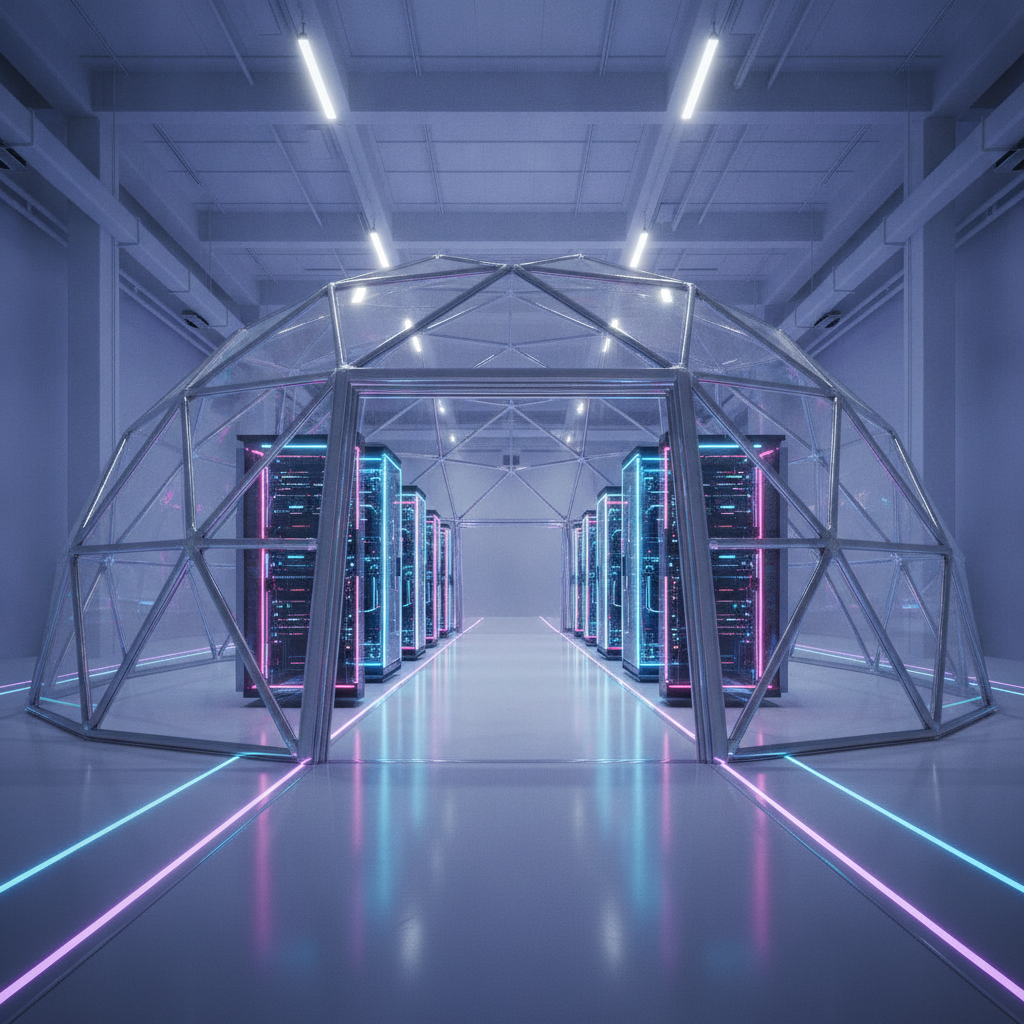
In a surprising twist in the accelerating AI race, tech giant Meta is deploying a truly unconventional strategy to expand its data center infrastructure: building them in tents. This bold move, reminiscent of past rapid-deployment tactics seen at companies like Tesla, signals just how intense and fast-paced the demand for AI processing power has become. It’s a clear indication that traditional construction timelines are simply no longer sufficient to keep pace with the insatiable appetite for artificial intelligence capabilities.
The company is reportedly constructing these “rapid deployment structures,” as Meta calls them, outside of New Albany, Ohio. This innovative approach aims to dramatically cut down construction time, potentially by half, allowing Meta to bring critical AI capacity online much faster. The sheer scale and speed of this undertaking underscore the urgency driving Meta’s multi-billion dollar investment in AI infrastructure.
A Novel Approach to Data Center Deployment
According to Michael Thomas, founder of Cleanview, a firm specializing in tracking data center deployments, Meta has erected at least six of these tent-like structures. His observations, including satellite imagery and reviews of local permits, reveal the extraordinary pace of this construction. Between April and June, Meta reportedly began work on five massive 125,000-square-foot tents, all of which are now visible in satellite images, highlighting an unprecedented speed of deployment.
The concept of using weatherproof tents for multi-gigawatt data centers isn’t entirely new; Meta CEO Mark Zuckerberg previously hinted at such plans last year. However, Thomas’s detailed findings provide the first concrete evidence and visual confirmation of this ambitious project coming to fruition. Inside these colossal tents, billions of dollars’ worth of cutting-edge AI chips will soon be hard at work, processing the vast computations required for Meta’s ambitious AI models.
Echoes of Tech Giants: Tesla and xAI’s Influence
Meta’s strategy bears a striking resemblance to tactics previously employed by other innovative tech companies facing immense pressure. The use of large, temporary structures immediately brings to mind Tesla’s frantic efforts during its Model 3 production ramp-up. Back then, Tesla famously built similar tents in the parking lot of its Fremont, California factory to accelerate vehicle assembly and meet demand.
Furthermore, Meta appears to be borrowing another page from a competitor’s playbook, specifically xAI. The New Albany site is reportedly powered by 200 megawatts of modular gas turbines located nearby. This particular method of providing rapid, scalable energy has been popularized by xAI, showcasing how companies are adapting creative solutions not just for housing hardware, but also for energizing it in an era of unprecedented power demands for AI.
The Stakes Are High: Billions in AI and Beyond
This aggressive infrastructure push comes at a critical time for Meta, as the company faces pressure to deliver on its ambitious AI initiatives. A recent report indicated that while Meta’s latest AI model, Muse Spark, is complete, the crucial APIs that developers rely on to access it have faced repeated delays. Boosting compute capacity quickly could be a strategic move to overcome such bottlenecks and accelerate product launches.
Meta has signaled its intent to spend a staggering up to $145 billion on data centers and other capital expenditures, a figure that has made Wall Street nervous, contributing to a 5% dip in Meta’s stock this year. Building AI chip housing in rapid deployment tents could be a cost-effective and time-saving measure, offering a way to deploy vast compute resources without the prolonged construction cycles and expenses associated with traditional data centers. It’s a pragmatic approach to manage immense investment while striving for market leadership.
The AI race is truly heating up, and Meta’s decision to house its AI brains in massive tents powered by off-grid turbines highlights the extraordinary measures companies are willing to take. This “Mad Max phase” of AI infrastructure development underscores a paradigm shift in how computing power is delivered and scaled. As the demand for generative AI capabilities continues to explode, we can expect to see even more innovative, and perhaps unconventional, solutions emerge from tech titans vying for dominance.
Source: TechCrunch – AI
