The world of renewable energy, particularly solar power, can often feel like a minefield of conflicting information and outright myths. Everyone seems to have a strong opinion, and it’s easy for homeowners to get lost in the noise. At ZDNET, our goal is to cut through that confusion, offering clear, reliable guidance.
Our expert team dedicates countless hours to rigorously testing, researching, and comparing products, ensuring our recommendations are based on solid evidence. We pull data from a wide array of sources, including vendor specifications, retailer insights, and independent reviews. Most importantly, we delve into real customer feedback to understand what truly matters to people using these products and services every day.
When you click through our site to a retailer and make a purchase, we may earn a small affiliate commission. This support helps fund our independent journalism, but it never influences our coverage, editorial decisions, or the price you pay. Our content is crafted for you, our reader, with strict guidelines to prevent any advertiser influence, guaranteeing impartial and accurate advice for smarter buying decisions.
I’ve spent years immersed in solar technology, from setting up small 100W portable units to managing large arrays and simple plug-in systems. This hands-on experience has given me a grounded perspective on what works and what doesn’t, allowing me to separate fact from fiction. Let’s tackle some of the most persistent myths surrounding solar energy head-on.
Unpacking Your Solar Investment: Real Savings & ROI
One of the most prevalent myths about solar power revolves around its financial returns. Some claim it will generate hundreds or even thousands of dollars, while others argue it’s a complete waste of money that will never pay for itself. The truth, as often happens, lies somewhere in the middle and depends on a few key factors.
To accurately estimate the financial benefits of a solar system, you need three pieces of information: the size of your solar panel array, your region’s peak sunlight hours (PSH), and your local electricity price per kilowatt-hour (kWh). Understanding these elements is crucial for realistic expectations.
Let’s consider Utah as an example, where plug-in solar systems up to 1,200W can be legally connected directly to standard outlets without permits. Assuming you install a 1,200W system, properly oriented south and unshaded, we can crunch some numbers. Utah averages around 6 peak sunlight hours per day annually, and residents pay about $0.14 per kWh.
Factoring in a 23% derate for inefficiencies, shading, and panel cleanliness, your 1,200W system would generate approximately 5.5 kWh per day. At $0.14/kWh, that translates to about $0.77 a day, or roughly $281 saved per year. An EcoFlow STREAM system, including panels and a battery for excess power, costs around $1,600, suggesting a payback period of about five and a half years in this scenario.
These figures can vary significantly by location. For instance, California, with 7.5 PSH and electricity costs up to $0.36/kWh, could see annual savings of around $910 with a similar system. Conversely, Alaska, with just 2 PSH and $0.27/kWh, might only save about $182 annually. Clearly, more sun and higher electricity costs accelerate your return on investment.
Prioritizing Safety: Navigating Electrical Risks with Solar
Before diving too deep into solar, it’s absolutely critical to understand the inherent dangers of electricity. Misinformation abounds, and phrases like “it’s not the volts but the amps” are dangerously incorrect and can lead to serious accidents. Any voltage of 50 volts (AC or DC) or higher is widely recognized by OSHA as a threshold for hazardous electric shock.
Solar panels present a unique challenge because they generate electricity any time they are exposed to daylight. Even foldable panels, like the Bluetti 350W, can have an open-circuit voltage of 46.5 volts, just shy of the danger threshold. When you start daisy-chaining panels together in series, even portable units can quickly exceed hazardous voltage levels, and larger rooftop installations can reach hundreds of volts.
Direct current (DC) voltages can inflict particularly nasty injuries, including severe burns, painful entry and exit wounds, and tissue necrosis. I once suffered a minor DC burn from malfunctioning equipment, and it was incredibly painful, became infected, and took weeks to heal. It’s a stark reminder of the power involved.
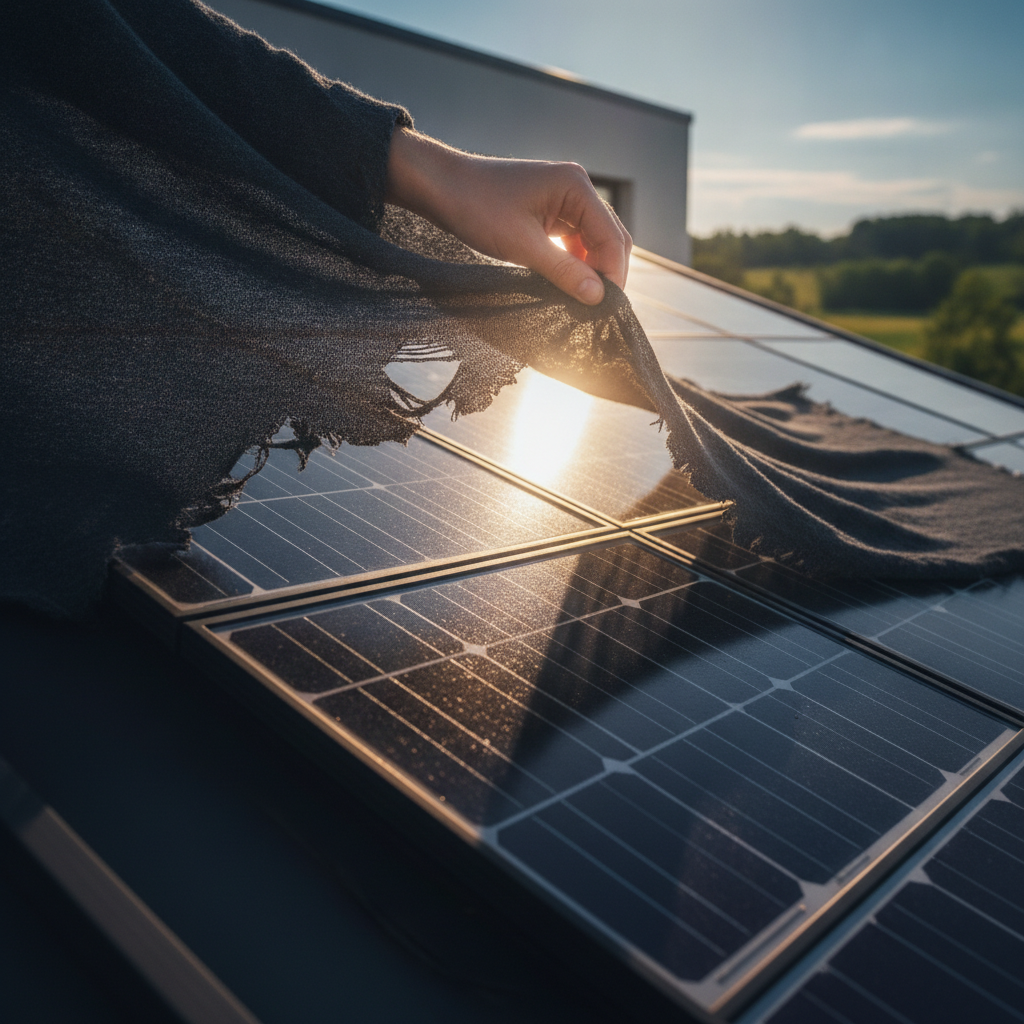
I’ve also experienced a startling shock from disconnecting damp MC4 connectors on a solar panel. While I was safely on the ground, such an incident could be far more dangerous if you’re on a ladder or in a precarious position. The biggest risks often come from damaged panels, wiring, or connectors; however, to be safe, I always recommend covering or flipping even small panels, or performing any maintenance during the early morning, evening, or nighttime hours.
Busting More Solar Myths: Performance, Legality & Lifespan
A common concern is the lifespan of solar equipment. My oldest solar generator, a Jackery system, is about eight years old, and both the unit and its panels are still functioning perfectly, despite using older lithium-ion batteries. Modern solar generators like the Bluetti Elite 400 or EcoFlow Delta Pro Ultra come with generous warranties and utilize more durable LiFePO4 batteries, designed for a decade or more of daily charge/discharge cycles.
Solar panels themselves, whether rigid or portable, are remarkably robust and typically come with warranties of 10 years or more, providing 20 to 25 years of service with proper care. While rigid panels can be vulnerable to large hailstones and flexible ones shouldn’t be bent excessively, they generally require minimal upkeep. The most important maintenance is simply keeping them clean; a light layer of dust can reduce output by 5%, and sticky pollen can cut it by 15%.
Many wonder about solar panel performance in less-than-ideal conditions. While production does drop dramatically on cloudy days, it doesn’t stop entirely—you’re still harvesting some power. Similarly, while south-facing panels are ideal for optimal efficiency in the Northern Hemisphere, east- or west-facing panels, and even north-facing ones, will still generate electricity, albeit less efficiently. In areas with high peak sunlight hours, non-south facing panels can still be a worthwhile investment.
The legality of plug-in solar systems varies significantly. In the US, five states—Utah, Colorado, Maine, Maryland, and Virginia—currently allow permitted systems between 1,200W and 1,920W to connect to a home’s power system without permits. Other states are in various stages of legislative review, so it’s essential to check local regulations before installing.
Finally, it’s crucial to understand what plug-in solar can and cannot do. Unless your system includes a battery for storage, grid-tied plug-in solar systems will power down during an outage for safety reasons. These systems are typically designed to offset your “base load” – the continuous power consumed by essentials like refrigerators and routers – rather than powering your entire home, especially overnight. To eliminate your electricity bills completely or achieve full energy independence, a robust battery storage system is necessary to cover nighttime and cloudy periods.
Source: ZDNet – AI
