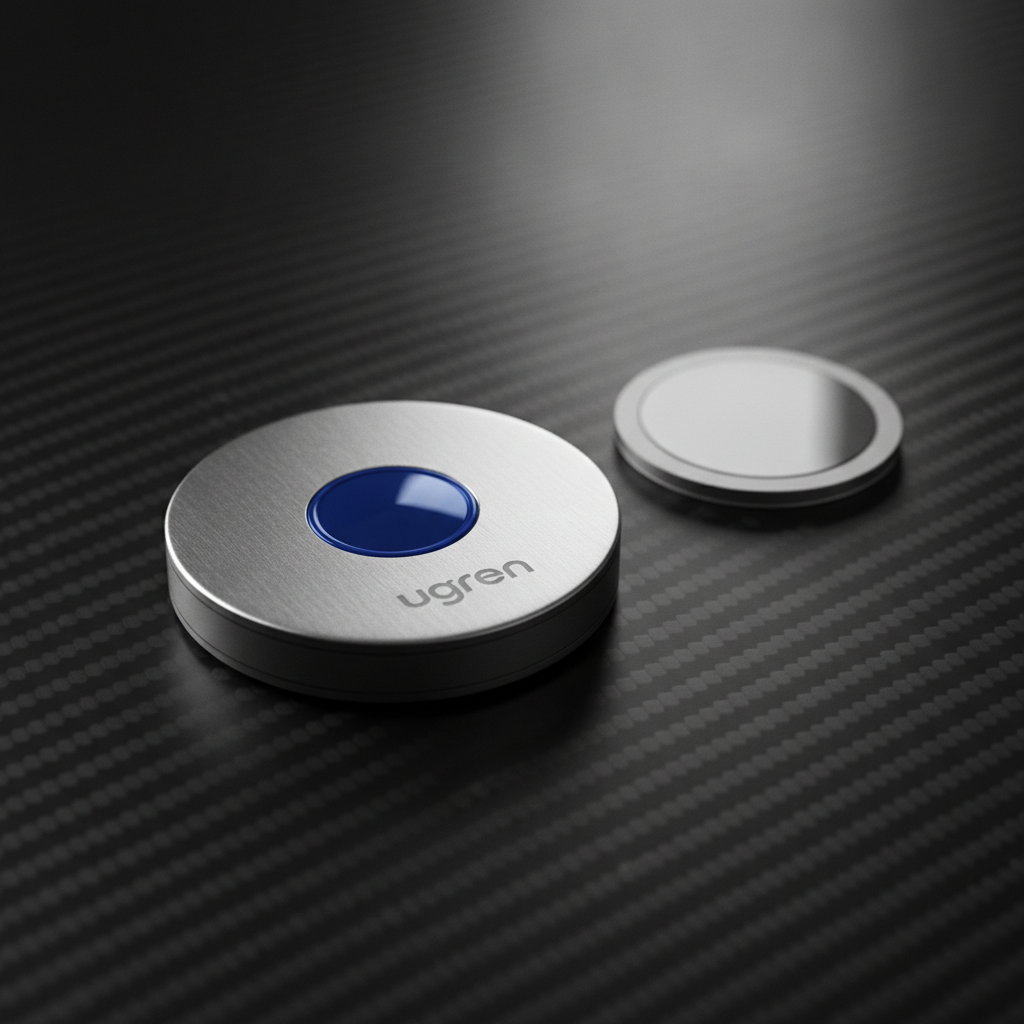
In our fast-paced world, misplacing essentials like keys, wallets, or even luggage is a common frustration. While countless Bluetooth trackers promise peace of mind, finding one that truly delivers on performance, durability, and value can be a challenge. We’re always on the lookout for innovative solutions, and a new contender has caught our attention, aiming to shake up a market often dominated by familiar names.
This article delves into the Ugreen FineTrack 2, an item finder that offers a compelling alternative to more established brands. We’ll explore its unique features, compare it to popular options like Apple AirTags, and see if it truly lives up to its promise of helping you keep track of your most important belongings.
How ZDNET Delivers Trusted Tech Recommendations
At ZDNET, our commitment is to provide you with honest, thoroughly researched, and practical advice. We believe you deserve to make informed purchasing decisions, which is why we invest countless hours in independent testing, research, and meticulous comparison shopping. Our “ZDNET Recommends” badge signifies that a product has met our rigorous standards, born from hands-on evaluation and comprehensive analysis.
Our process involves gathering data from a wide array of reliable sources. We scrutinize vendor specifications, retailer listings, and insights from other respected, independent review sites to form a complete picture. Crucially, we also pore over countless customer reviews, understanding what truly matters to real people who are already using these products and services in their daily lives.
Transparency is key to our editorial integrity. When you click through our site to a retailer and make a purchase, we may earn an affiliate commission. This system helps support our dedicated work, but it never influences our editorial coverage, how we review products, or the price you pay. Neither ZDNET nor our authors receive direct compensation for these independent reviews, and we adhere to strict guidelines that ensure our content remains unbiased and advertiser-agnostic.
Our editorial team writes for you, our valued reader, striving to deliver the most accurate information and knowledgeable advice possible. Every article undergoes thorough review and fact-checking to ensure it meets our highest standards of quality and precision. Should we ever make an error or publish misleading information, we are committed to promptly correcting or clarifying the content, and we encourage you to report any inaccuracies you might find.
My Love-Hate Relationship with Apple AirTags
As a long-time iPhone user, I confess to having a genuine affection for Apple AirTags. They were my first foray into the world of item trackers, and it was pretty much love at first sight. Their seamless integration with the Apple ecosystem and user-friendly design initially made them indispensable for keeping tabs on my frequently misplaced items.
However, years of real-world use have opened my eyes to their limitations. While it might sound like heresy for an Apple enthusiast, AirTags are far from perfect. It’s important to acknowledge these drawbacks when considering any item tracker, especially when comparing them to emerging alternatives.
One significant hurdle is the price. At $29 each, AirTags represent a considerable investment, especially if you need to track multiple items. While that cost pales in comparison to losing something valuable, it’s still a steep price for such a tiny piece of tech.
Beyond the cost, AirTags are undeniably distinctive. Their iconic white, plastic “UFO” shape instantly identifies them as an Apple product, which can be a double-edged sword. While some might appreciate the brand recognition, it also means they aren’t exactly discreet, potentially signaling the presence of valuables if attached to a bag or suitcase.
Then there’s the buzzer. While second-gen AirTags boast a speaker that’s 50% louder, their sound still falls within the 85 to 100-decibel range. For a company renowned for its thoughtful design, the AirTag’s buzzer, which cycles from soft to loud to soft, can be surprisingly difficult to hear, especially when competing with ambient noise or when an item is buried deep within a couch or backpack.
Ugreen FineTrack 2: A Fresh Take on Item Tracking
This is where the Ugreen FineTrack 2 steps in, bringing a refreshing dose of innovation to a market that often feels a bit stagnant. This isn’t just another tracker; it’s a device that challenges the norms and offers some compelling advantages, especially for those looking for a robust and affordable alternative.
Let’s talk about the price: Amazon Prime members can snag the FineTrack 2 for just $15 (or $20 for everyone else). That’s roughly half the cost of a single AirTag, making it an incredibly accessible option. While it lacks the “Precision Finding” feature found in AirTags, I’ve found that feature less critical for larger items like backpacks or suitcases, where general proximity is usually sufficient.
The FineTrack 2 certainly has an unusual look, shaped like a small soccer ball, about 1.4 inches in diameter. This unique design, complete with a subtle soccer ball pattern, doesn’t scream “item tracker,” making it far more discreet than its Apple counterpart. It includes a hole for a lanyard (two are supplied), a single button, an LED indicator, and two reflective glints to aid visibility in low light, though they aren’t glow-in-the-dark as some might expect.
Here’s a quick rundown of the Ugreen FineTrack 2’s compelling features:
- Affordable Price: At just $15, it’s about half the cost of an AirTag, offering exceptional value.
- Loud 110dB Buzzer: Significantly louder than an AirTag, making it far easier to locate in noisy environments.
- Superior IP68 Durability: Offers full dustproofing and continuous submersion protection, outperforming AirTag’s IP67 rating.
- Non-Replaceable Battery with 5-7 Year Lifespan: A unique design choice that enhances durability and security, eliminating the need for battery changes for years.
- Discreet & Unique Design: Its soccer ball shape is less identifiable than an AirTag, offering a low-key tracking solution.
The buzzer on the FineTrack 2 is a game-changer. At a powerful 110 dB, it’s remarkably louder than an AirTag’s 85-100 dB. Thanks to how human hearing perceives decibels, this means the FineTrack 2 sounds roughly twice as loud as a 100 dB AirTag. This extra auditory punch makes a huge difference when your item is hidden under a car seat, buried in a couch, or otherwise obscured by ambient noise.
Another area where the FineTrack 2 shines is its ruggedness. It boasts an IP68 rating, meaning it’s completely dustproof and can withstand continuous submersion in water. This surpasses the AirTag’s IP67 rating, which only handles immersion down to three feet for 30 minutes. This enhanced waterproofing can be crucial if you lose an item outdoors, in the rain, or submerged in a puddle, significantly increasing your chances of recovery where an AirTag might fail due to water ingress, especially after a battery replacement compromises its seal.
The FineTrack 2’s one-piece design also contributes to its toughness and security. Unlike AirTags, which can be quickly disabled by removing the battery (unless secured in a specialized mount), the FineTrack 2 is designed to be much harder for a would-be thief to render useless. This is partly due to its unique battery strategy: it doesn’t have a replaceable battery.
While a non-replaceable battery might sound counterintuitive in today’s tech landscape, Ugreen has equipped the FineTrack 2 with a power source designed to last an impressive five to seven years. This approach not only eliminates the environmental impact and serious safety risks associated with small, ingestible batteries but also removes a major ingress point for dirt, water, and other contaminants. For a $15 device that lasts for half a decade or more without needing battery maintenance, it represents excellent long-term value and reduced hassle.
Why the FineTrack 2 Stands Out (and Where It Could Improve)
No gadget is without its quirks, and the Ugreen FineTrack 2 has a couple of minor points worth noting. Firstly, it’s an iOS-only device, which is a curious limitation given many trackers now offer cross-platform compatibility. Android users will, unfortunately, need to look elsewhere for their tracking needs.
Secondly, for such a small and straightforward device, the amount of documentation included in the box is surprisingly substantial. You’ll find a large roll of paper containing an instruction booklet laden with regulatory information and a separate battery safety booklet, which feels like overkill for a product designed for simplicity.
Despite these minor drawbacks, I wholeheartedly recommend the Ugreen FineTrack 2, giving it a strong 4 out of 5, “Very Good” rating. It delivers on all the essential fronts you’d expect from a modern finder tag, including excellent Bluetooth range, reliable accuracy, and robust performance. More importantly, it brings fresh, innovative ideas to the table with its discreet design, impressive battery life, and incredibly powerful buzzer.
Considering its price point, I genuinely believe there isn’t another tracker on the market that comes close to the value and performance offered by the FineTrack 2. Ugreen has consistently produced great accessories, but this item finder truly elevates their game, setting a new benchmark for what we can expect from affordable, reliable item tracking.
Source: ZDNet – AI
