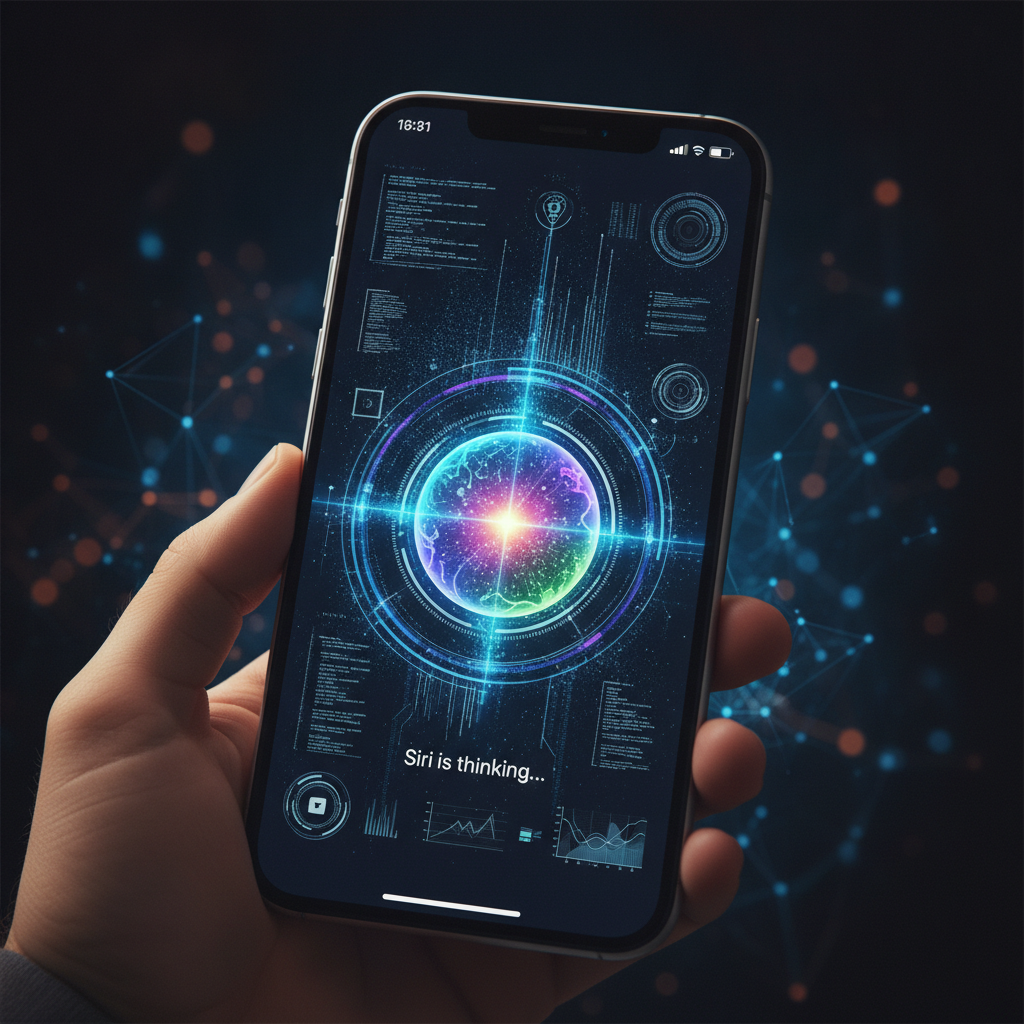
Siri, Apple’s ubiquitous voice assistant, has become an integral part of the iPhone experience and the broader Apple ecosystem. From setting alarms to answering complex queries, Siri embodies Apple’s commitment to intuitive, intelligent technology. However, while Siri’s identity is undeniably Apple through and through, its journey to becoming the sophisticated assistant we know today carries a fascinating undercurrent of influence from another tech giant: Google.
This isn’t to say Siri isn’t an original Apple creation; it absolutely is, born from an acquisition and meticulously developed within Cupertino’s walls. Yet, the rapid advancements in artificial intelligence are often a collaborative dance, where breakthroughs by one company can set new paradigms for the entire industry. Understanding this dynamic helps us appreciate the complex evolution of Apple AI and how it continually adapts to the cutting edge of machine learning.
Siri’s Distinct Apple Identity
When Apple acquired Siri Inc. in 2010, it wasn’t just buying a voice assistant; it was investing in a vision for how users would interact with their devices. Launched on the iPhone 4S in 2011, Siri instantly became a defining feature, showcasing Apple’s ambition to put powerful AI into the hands of millions. Initially, Siri often relied on a hybrid approach, sending queries to Apple’s servers for processing while maintaining a distinct user experience.
Over the years, Apple has poured immense resources into enhancing Siri’s capabilities, striving for greater accuracy, natural language understanding, and deeper integration across iOS, iPadOS, watchOS, and macOS. A significant part of this effort has focused on moving more processing on-device, a cornerstone of Apple’s unwavering commitment to user privacy. This strategy ensures that much of your personal data and voice commands are processed directly on your device, rather than being sent to external servers.
The Foundational Influence of AI Research
The field of artificial intelligence, particularly in areas like natural language processing and speech recognition, has seen explosive growth thanks to pioneering research from multiple players. Google, with its vast resources and early investment in AI, has been at the forefront of many fundamental breakthroughs that have shaped the modern AI landscape. Innovations like neural networks, deep learning architectures, and later, transformer models that underpin large language models (LLMs), often had significant early development and evangelism from Google’s research divisions.
While Apple develops its own proprietary AI models and infrastructure, it operates within an industry where common underlying principles and research advancements are shared and built upon. The techniques that allow a voice assistant to understand nuances, context, and even perform complex inferences are often rooted in these broader, shared advancements in machine learning. Therefore, in a sense, the evolution of foundational AI research by companies like Google provided an essential technological bedrock, pushing the entire industry, including Apple, towards more sophisticated solutions for its own Siri AI.
Evolving Siri with Cutting-Edge Intelligence
Today’s Siri is far more sophisticated than its early iterations, capable of understanding more complex commands and engaging in more natural conversations. Apple continues to refine Siri’s intelligence using advanced machine learning techniques, including those that bear a conceptual resemblance to the broader trends in AI that Google helped pioneer. The goal is always to make Siri more proactive, more personal, and ultimately, more helpful, all while upholding Apple’s stringent privacy standards.
Apple’s strategic shift to enhance Siri’s capabilities, especially its transition towards more on-device processing and the use of sophisticated neural engines, showcases its dedication to independent AI development. However, the intellectual currents of artificial intelligence flow across the tech world. Just as Google has drawn inspiration from academic research and other companies, Apple, while crafting its unique user experience, benefits from and contributes to the collective progress in digital assistant technology.
Siri’s Future: A Hybrid AI Landscape
The future of Siri likely involves an even deeper integration of advanced AI, leveraging increasingly powerful on-device capabilities while strategically utilizing cloud-based intelligence where appropriate. Apple’s ongoing investment in machine learning research and dedicated AI chips, like those found in its A-series and M-series processors, underscores its commitment to pushing Siri’s boundaries.
Ultimately, Siri stands as a testament to Apple’s engineering prowess and design philosophy. Yet, its story also serves as a reminder that even in the highly competitive world of tech, innovation is often a layered process. It’s a journey where proprietary development meets foundational research, creating an incredibly rich ecosystem where powerful technologies, like voice assistants, continue to evolve and surprise us with their intelligence.
Source: Google News – AI Search
