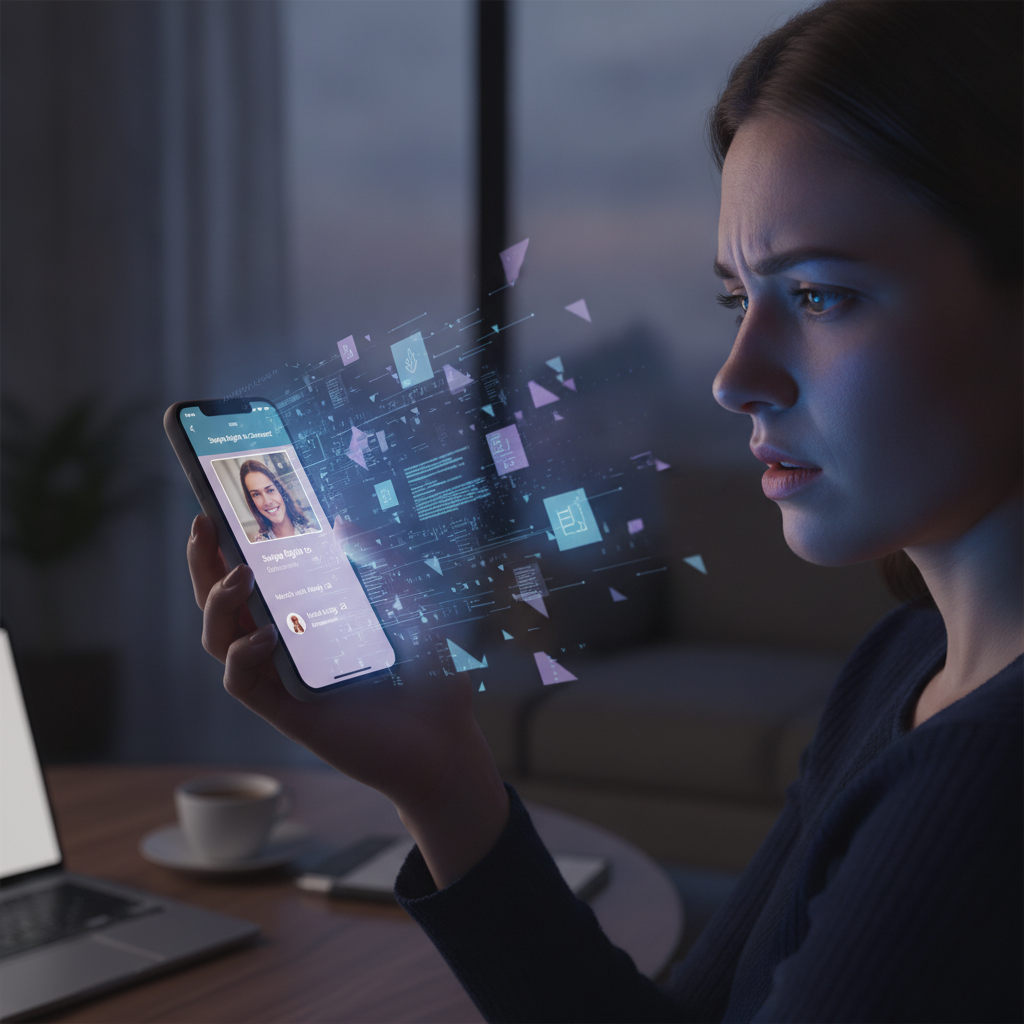
The world of online dating is constantly evolving, and the latest frontier attracting significant attention is artificial intelligence. While dating apps across the industry are rapidly integrating AI features, a recent study from dating app giant Match Group reveals a surprising sentiment among U.S. singles: nearly half feel negatively about AI’s growing presence in their romantic lives. This finding, based on a survey of 1,000 individuals aged 18 to 39, suggests a clear line in the sand when it comes to technology and genuine human connection.
Match Group, the powerhouse behind popular platforms like Tinder, Hinge, and OkCupid, conducted this research to understand how singles truly perceive the intertwining of AI and dating. Their findings highlight a prevalent desire to keep AI from fully permeating every intimate aspect of human existence. It seems that while AI offers undeniable conveniences, its role in love remains a contentious topic.
The Rise of AI in Romance: A Double-Edged Sword?
Across the dating app landscape, companies are enthusiastically experimenting with AI-driven innovations. Bumble, for instance, has introduced “Bee,” an AI dating assistant designed to help users navigate their romantic journeys. Meanwhile, Tinder is pouring significant resources into AI tools, an investment so substantial it has reportedly slowed their hiring processes, signaling a major strategic shift.
Even more telling, Hinge’s former CEO stepped down last year to launch an entirely new dating app focused heavily on AI integration. These developments paint a picture of an industry eager to leverage cutting-edge technology. However, the Match Group study serves as a crucial reality check, indicating that user readiness might not be keeping pace with technological ambition.
What Singles Really Think: Help, Not Headaches
The survey’s headline statistic reveals that a significant 47% of singles hold a negative view of AI’s use in romantic contexts. This sentiment is not uniform across all AI applications, though it solidifies a general apprehension. For instance, approximately 40% of singles stated they would refuse to date someone who uses an AI companion app, a figure that jumps to 51% among women aged 18 to 24.
Interestingly, despite these strong opinions, only 12% of 18- to 24-year-olds reported using a companion app in the past three months. Furthermore, only about a third of those users were genuinely seeking romantic connections with these chatbots. This suggests a disconnect between the industry’s push for AI companions and the actual desire among users for such relationships.
While there’s “near-universal” disapproval of actually dating an AI, reminiscent of the movie “Her,” the picture isn’t entirely black and white. The study found that 64% of respondents could see how AI might offer beneficial assistance in their dating journey. This crucial distinction highlights that singles are not entirely closed off to AI; they simply prefer it to augment, rather than replace, human interaction.
Navigating the Future of Dating Tech
The key takeaway for dating app developers is clear: users want AI to help with the practical, often challenging aspects of dating, but they want it to steer clear of the emotional and personal “human parts.” As Match Group articulated in their blog post, singles are looking for AI to “help with the hard parts, but hands off for the human parts.” This means assistance with crafting compelling profiles, selecting flattering photos, and even suggesting conversation starters when things go quiet.
These practical applications are seen as valuable tools to overcome common dating hurdles. However, the “actual connection is still theirs to create,” emphasizing the irreplaceable nature of human authenticity. This message should resonate strongly with innovators, especially those contemplating more extreme AI integrations.
Consider the notion put forth by Bumble founder Whitney Wolfe Herd, who once suggested a future where personal bots might date other users’ bots. While meeting a partner online has become normalized, the idea of “his bot asked my bot out, and our bots hit it off” is unlikely to ever become a socially acceptable meet-cute. The Match Group study firmly underlines that singles desire genuine, human-led romantic experiences, with AI serving as a helpful sidekick, not the main player.
Source: TechCrunch – AI
