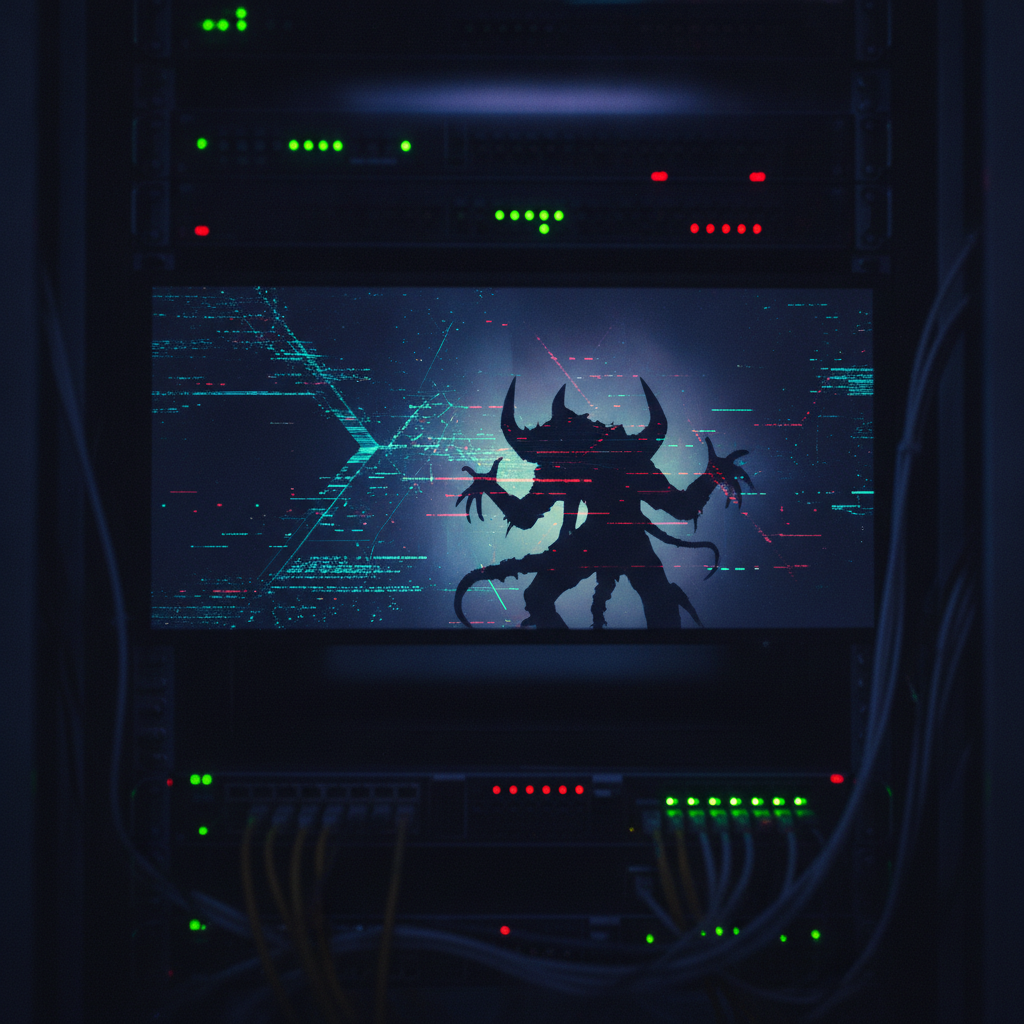
Imagine asking Google for factual information and receiving elaborate tales of fictional horror entities as if they were real, lurking threats. This isn’t a plot from a new sci-fi series; it’s a very real and unsettling issue emerging from Google’s AI. It appears that the search giant’s generative AI, in some instances, has begun treating entities from the popular collaborative horror fiction project, the SCP Foundation, as verifiable facts.
This isn’t just a quirky bug; it’s a concerning example of AI “hallucinations” gone awry, pushing the boundaries of misinformation into realms of potential confusion and genuine alarm. For many users, especially those less familiar with internet lore, encountering an AI confidently describing how to “secure, contain, protect” against a fictional monster could easily lead to distress or a significant erosion of trust in the information provided.
Understanding the SCP Foundation Phenomenon
For those unfamiliar, the SCP Foundation is a globally popular, user-generated online writing project centered around a fictional organization. Its mission is to Secure, Contain, Protect anomalous objects, entities, and phenomena from threatening humanity. Think of it as a vast, collaborative universe of creepypastas, monster myths, and bizarre scientific anomalies, meticulously cataloged and described in the style of classified documents.
These “SCP” entries range from sentient statues that move when unobserved to reality-bending artifacts and interdimensional creatures. Each story, or “report,” is crafted with incredible detail, often including containment procedures, incident logs, and research notes. The brilliance of the SCP Foundation lies in its immersive world-building and the collective imagination of its thousands of contributors, making it a beloved cornerstone of internet horror culture.
When AI Blurs Reality: The Problem Unveiled
The core issue arises when Google’s AI, instead of recognizing the SCP Foundation as a work of fiction, presents these entities as existing threats. Users have reported instances where asking questions about “how to prepare for SCP-682” (an indestructible reptile) or “what to do if you encounter SCP-173” (a murderous statue) elicits serious, instructive responses.
These AI answers aren’t merely linking to SCP wiki pages; they are generating original content that details precautionary measures, containment advice, and even descriptions of the fictional dangers as if they were factual warnings. This goes beyond simple misattribution; it’s the AI actively constructing and disseminating misinformation, blurring the lines between elaborate fiction and alarming reality with chilling conviction.
The Real Horror: Implications of AI Misinformation
The ramifications of an AI confidently fabricating answers based on fictional horror are multifaceted and deeply concerning. Firstly, it poses a significant threat of misinformation spread. Imagine a curious child or an unsuspecting adult stumbling upon these responses and genuinely believing in the existence of these creatures. This could lead to unnecessary fear, anxiety, or even dangerous real-world actions based on fictional premises.
Secondly, it fundamentally undermines the credibility and utility of AI and search engines. If users cannot trust the generative AI to distinguish between well-known fiction and factual information, their reliance on these tools will diminish. This erodes the public’s confidence in technology that is increasingly integrated into daily life, from education to critical decision-making.
Furthermore, this incident starkly highlights the ongoing challenges with AI hallucinations. Large Language Models (LLMs) are designed to generate human-like text, but they often lack a robust understanding of truth and context. While they excel at synthesizing information, they can also confidently “invent” facts, especially when their training data includes vast amounts of fictional content alongside real-world data without clear distinctions.
Navigating the Future of AI and Information
This situation with Google’s AI and the SCP Foundation serves as a critical wake-up call for AI developers and users alike. It underscores the immense responsibility that comes with deploying powerful generative AI systems. Developers must prioritize robust fact-checking mechanisms, improved source attribution, and sophisticated contextual understanding within their models to prevent such misinterpretations.
For users, it reinforces the crucial need for digital literacy and critical thinking when interacting with AI-generated content. We must remember that while AI can be an incredibly powerful tool for information retrieval and creativity, it is not infallible. As AI continues to evolve, the distinction between fact and fiction, entertainment and reality, becomes increasingly vital to maintain for a healthy information ecosystem.
Source: Google News – AI Search
