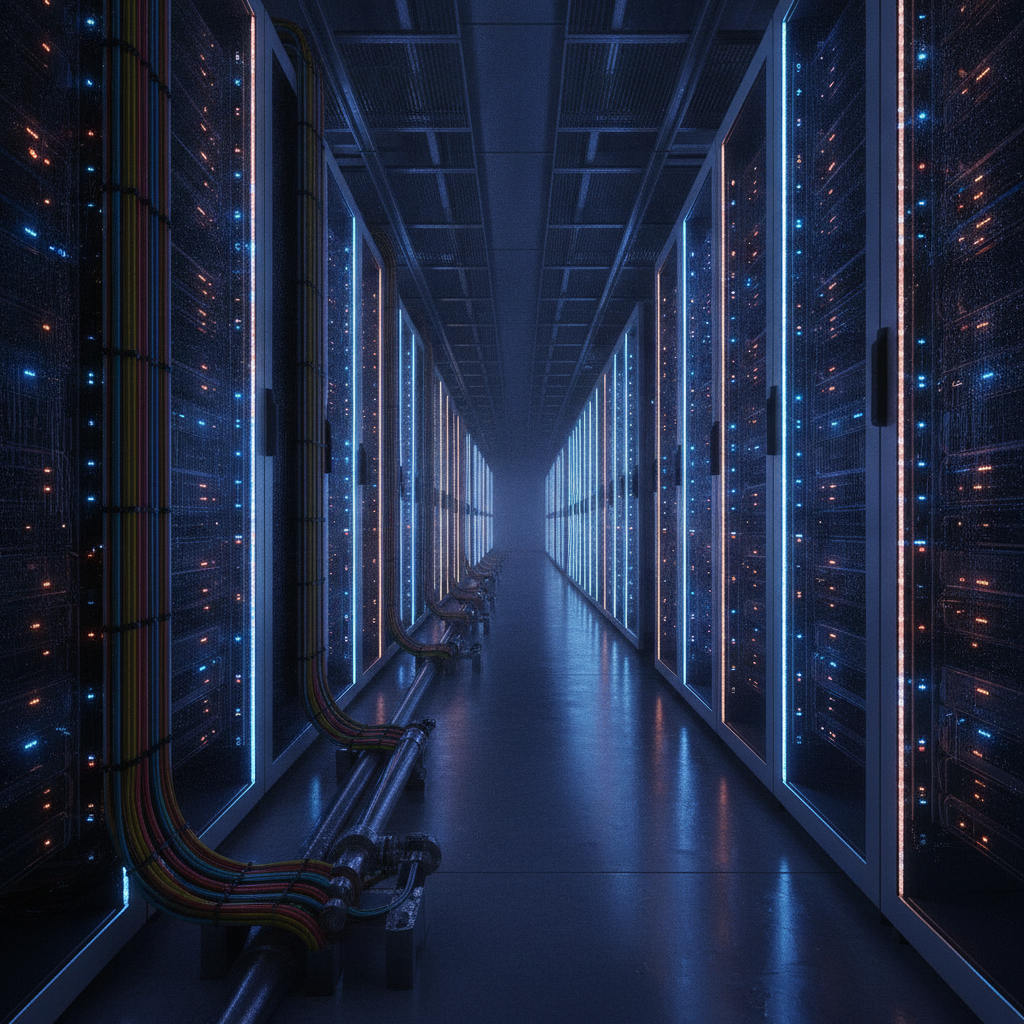
Behind every seamless AI interaction, every intelligent search result, and every groundbreaking machine learning model lies a vast, intricate physical infrastructure. For a company like Google, which stands at the forefront of artificial intelligence innovation, these aren’t just server farms; they are the beating heart of the digital age. Welcome to a peek inside the highly advanced, often secretive, world of Google’s AI data centers, the unseen powerhouses driving our AI-powered future.
These colossal facilities are far more than just warehouses filled with computers. They are carefully engineered ecosystems designed to handle the immense computational demands of artificial intelligence, from training complex neural networks to delivering real-time AI services globally. They represent a massive investment in hardware, software, and human ingenuity, constantly evolving to meet the ever-increasing appetite for AI.
The Unseen Giants: Powering the AI Revolution
Google’s global network of data centers spans continents, forming the backbone of its entire operation, including its formidable AI capabilities. Each location is strategically chosen for factors like reliable power access, fiber optic connectivity, and security. These facilities are designed for maximum efficiency and redundancy, ensuring that services remain uninterrupted even in the face of challenges.
The scale of these operations is truly staggering. Imagine facilities the size of multiple football fields, packed floor-to-ceiling with servers, networking equipment, and specialized AI accelerators. This massive infrastructure processes petabytes of data daily, fueling everything from Google Search and YouTube recommendations to groundbreaking AI research and enterprise-level Google Cloud AI services.
Beyond CPUs: The Rise of Specialized AI Hardware
Traditional CPUs, while powerful, are not ideally suited for the highly parallel computations inherent in machine learning and deep learning. This limitation spurred the industry’s shift towards GPUs (Graphics Processing Units), which excel at parallel processing. Google, however, took innovation a step further by designing its own custom silicon: the Tensor Processing Unit (TPU).
The TPU is a groundbreaking ASIC (Application-Specific Integrated Circuit) specifically optimized for TensorFlow, Google’s open-source machine learning framework, and other AI workloads. These custom chips offer superior performance and energy efficiency for AI computations compared to general-purpose processors, allowing Google to train massive AI models faster and deploy them more cost-effectively. From powering the AI behind Google Search to accelerating the research of DeepMind, TPUs are indispensable.
Over several generations, TPUs have continually evolved, offering incredible leaps in processing power. The latest generations, like the TPU v4, deliver tremendous floating-point operations per second (FLOPS) and are designed to work in massive, interconnected pods, creating supercomputing-level performance for the most demanding AI tasks. This proprietary hardware gives Google a significant edge in the AI race, enabling innovations that might otherwise be impossible.
Keeping It Cool: Overcoming the Heat Challenge
The intense computational activity within AI data centers generates an enormous amount of heat. Managing this heat is one of the most critical and complex challenges. Without efficient cooling, hardware would overheat, leading to performance degradation and system failures. Google employs sophisticated cooling strategies to maintain optimal operating temperatures, ensuring reliability and maximizing energy efficiency.
While traditional air cooling is still utilized, Google increasingly leverages advanced techniques like liquid cooling, where specialized fluids directly dissipate heat from components. This method is far more efficient than air cooling and allows for higher power densities within server racks. Furthermore, Google uses AI itself to optimize cooling systems, predicting hot spots and adjusting airflow and liquid flow dynamically to save energy.
Their approach often involves capturing the generated heat and, where possible, reusing it to warm adjacent offices or facilities, further reducing their overall energy footprint. This closed-loop system highlights Google’s commitment not only to performance but also to environmental stewardship. The battle against heat is a constant, innovative endeavor at the heart of their operations.
Sustainability and Security: Building for Tomorrow
Operating data centers at this scale comes with significant environmental considerations. Google has been a pioneer in striving for sustainability within the tech industry, announcing that it has achieved 100% renewable energy for its global operations. This commitment means they purchase enough renewable energy to match their electricity consumption, striving for a carbon-free future.
They are actively investing in wind and solar projects worldwide, aiming to operate on 24/7 carbon-free energy by 2030. These efforts are not just about public image; they are deeply integrated into their infrastructure planning and design. By optimizing hardware, software, and cooling systems, Google continuously seeks to reduce the energy demands of its AI infrastructure, lessening its environmental impact.
Security is another paramount concern. Google’s data centers are fortified with multiple layers of physical security, including biometric access controls, laser detection systems, and dedicated security personnel. Digitally, robust encryption, network isolation, and sophisticated threat detection systems protect the vast amounts of sensitive data and intellectual property housed within these facilities. This comprehensive security posture is vital for maintaining trust and protecting the integrity of their AI systems.
Google’s AI data centers are more than just buildings; they are dynamic, intelligent ecosystems vital to our increasingly AI-driven world. From custom-designed TPUs to advanced cooling and unwavering commitment to sustainability and security, these facilities represent the cutting edge of technological infrastructure. They are the silent, powerful engines driving the innovations that continue to reshape industries and our daily lives, ensuring that Google remains at the forefront of artificial intelligence for years to come.
Source: Google News – AI Search
