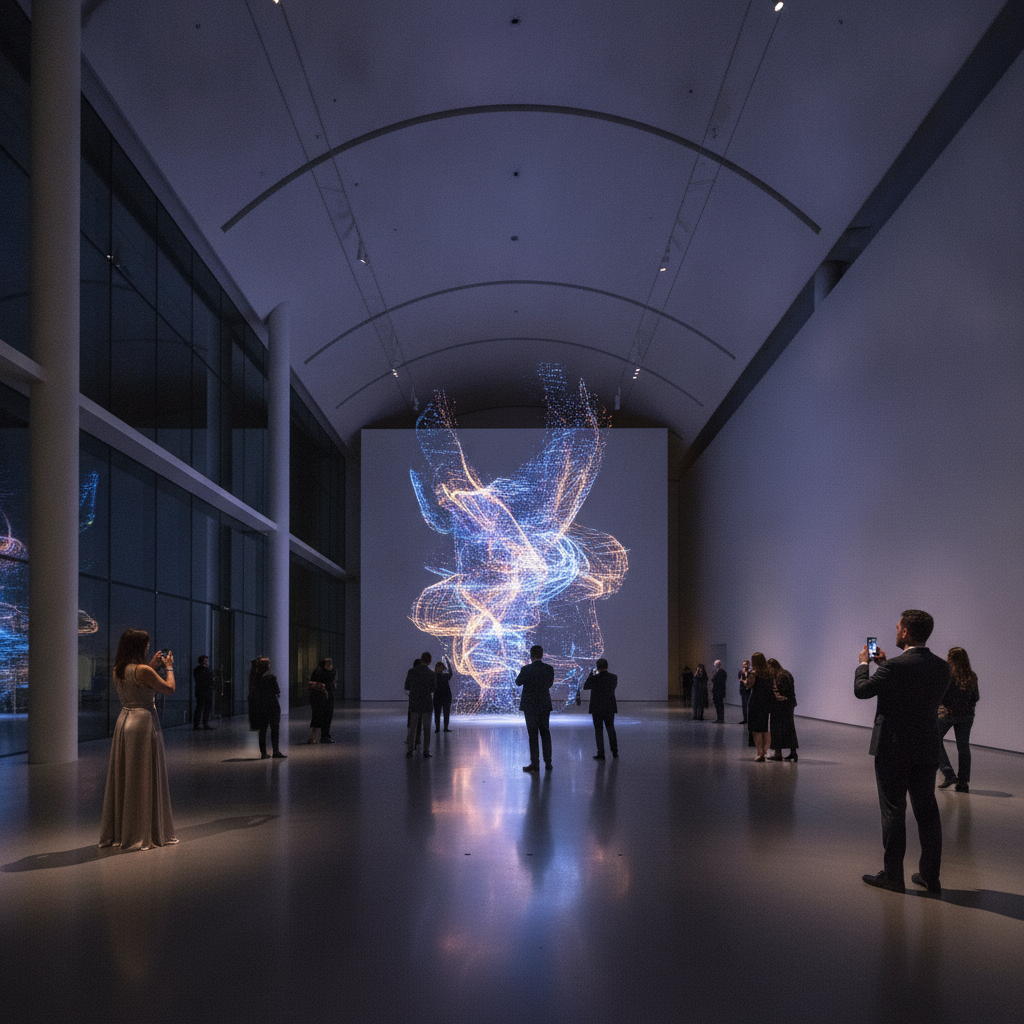
The art world is abuzz with a groundbreaking development as Google and visionary artist Refik Anadol jointly unveil the world’s first AI Art Museum in Los Angeles. This pioneering institution marks a significant milestone, merging cutting-edge artificial intelligence with immersive artistic expression.
Nestled in the vibrant heart of LA, this museum isn’t just another gallery; it’s a dynamic canvas where algorithms dream, interpret, and create. It promises visitors an unparalleled journey into the future of creativity, challenging traditional notions of art and authorship.
A New Era for Art: The World’s First AI Museum
Imagine art that constantly evolves, drawing inspiration from vast datasets and responding to its environment in real-time. This is the promise of the new AI Art Museum, a collaborative masterpiece born from the technological prowess of Google’s artificial intelligence research and the artistic genius of Refik Anadol.
Anadol, renowned for his mesmerizing “data sculptures” and immersive media installations, has long explored the intersection of technology and art. His partnership with Google elevates this exploration to an institutional level, providing a dedicated space for AI-generated visuals and experiences.
The museum showcases an array of installations where artificial intelligence is not merely a tool but an active co-creator. These pieces are not static; they are living, breathing entities that invite viewers to witness the incredible potential when machine learning meets human imagination.
This initiative represents a pivotal moment, ushering in an era where AI becomes an integral part of artistic creation and exhibition. It opens up new dialogues about what art can be, who can create it, and how we experience it in the digital age.
Refik Anadol: Blending Data and Dreams
At the core of this ambitious project is Refik Anadol’s unique artistic philosophy, which posits that data can be a medium for poetic expression. He transforms abstract datasets – from nature photographs to historical archives – into stunning, fluid, and often dream-like visual narratives.
Google’s advanced AI and machine learning platforms are the engines powering Anadol’s artistic vision within the museum. These technologies enable the processing of immense quantities of information, allowing the AI to discern patterns, generate novel imagery, and even “hallucinate” new forms of art.
The collaboration leverages Google’s expertise in developing sophisticated algorithms capable of learning and generating complex patterns. This technological backbone provides Anadol with an unprecedented palette and brush, allowing him to push the boundaries of digital art beyond traditional limits.
Through this partnership, Anadol and Google demonstrate a powerful synergy: the artist provides the conceptual framework and aesthetic direction, while Google supplies the computational muscle to bring these intricate, data-driven dreams to life on an monumental scale.
An Immersive Journey: What to Expect
Visiting the AI Art Museum is designed to be an utterly immersive and transformative experience. Forget passive viewing; here, you are invited to step into dynamic environments where light, sound, and generative visuals envelop your senses.
Expect to encounter vast, ever-shifting digital tapestries that unfurl across walls and ceilings, reacting subtly to the presence of visitors. These installations are often accompanied by spatial audio, creating a holistic sensory journey that is both contemplative and awe-inspiring.
Key installations might include:
- Data Paintings: Gigantic, algorithmic canvases that continuously reinterpret massive datasets into fluid, abstract compositions.
- Machine Hallucinations: Visualizations generated by AI algorithms as they “dream” or process information, leading to surreal and beautiful imagery.
- Interactive Environments: Spaces where visitor movements or even physiological data can subtly influence the unfolding artwork, making each experience unique.
The museum provides a compelling glimpse into how technology can amplify human creativity and create entirely new forms of aesthetic engagement. Each visit promises a fresh perspective, as the AI continues to learn and evolve its artistic output.
Redefining Creativity: The Future of AI Art
The launch of the world’s first AI Art Museum in Los Angeles is more than just an exhibition; it’s a profound statement about the evolving nature of creativity. It challenges us to reconsider the role of the artist, the definition of art, and the potential of non-human intelligence in creative endeavors.
This institution sparks important conversations about authorship, originality, and the impact of AI on human artistic practice. Is AI a competitor, a tool, or a collaborator? The museum boldly suggests it can be all three, paving the way for hybrid creative processes.
By making AI-generated art accessible and engaging, Google and Refik Anadol are democratizing a cutting-edge field and inspiring future generations of artists and technologists. This museum serves as a beacon, highlighting the boundless possibilities that emerge when human ingenuity collaborates with advanced artificial intelligence.
Ultimately, the AI Art Museum in Los Angeles represents a daring leap into the future, offering a visionary space where art and technology not only coexist but flourish in breathtaking, unprecedented ways. It promises to be a major cultural landmark, shaping our understanding of art for years to come.
Source: Google News – AI Search
