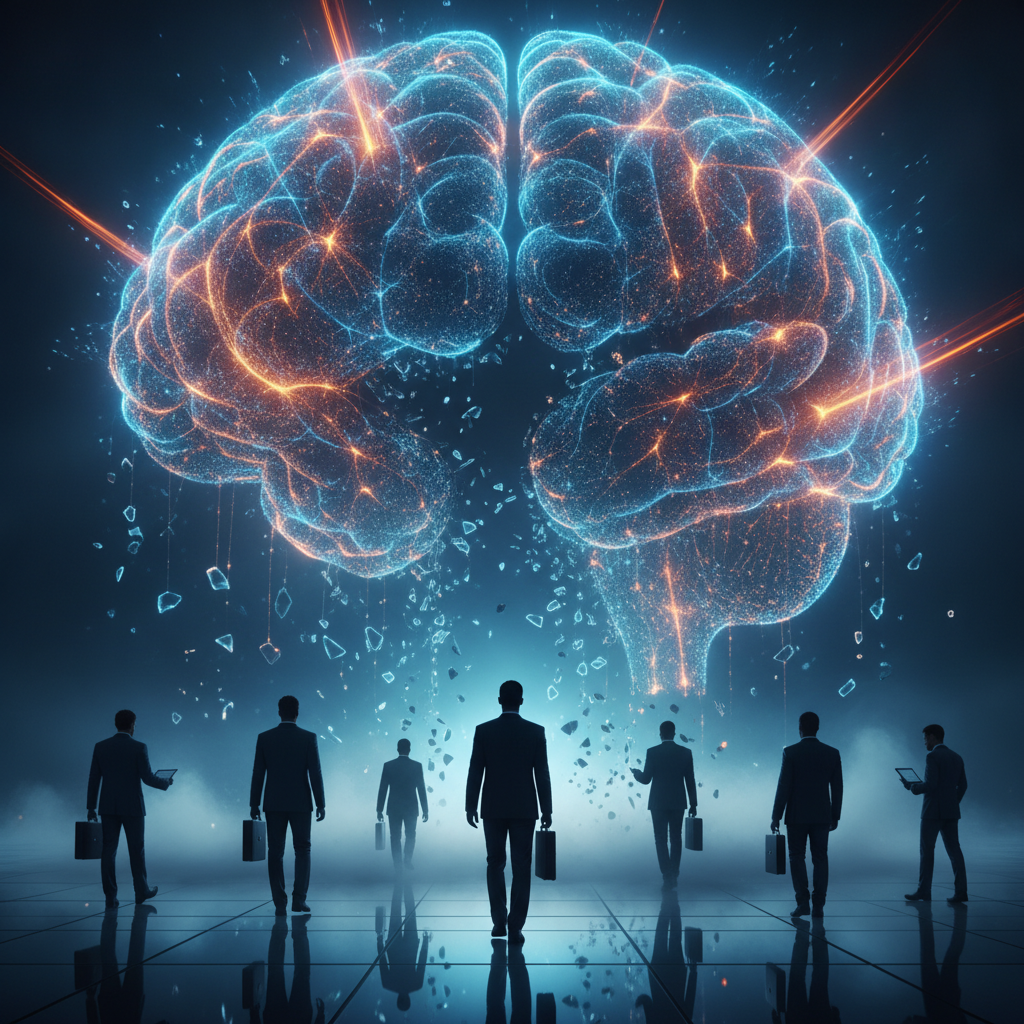
Google has long been at the forefront of artificial intelligence, a titan whose innovations have shaped the modern digital landscape. From groundbreaking research out of Google Brain to the world-changing advancements by DeepMind, the company’s influence in AI is undeniable. However, a significant question has been circulating through the tech world: is Google experiencing a temporary “stress test” of its AI capabilities, or are the recent talent departures a more ominous sign of deeper challenges?
The continuous exodus of top AI researchers and engineers from Google has sparked considerable debate. While some view it as a natural ebb and flow within a highly competitive industry, others suggest it might indicate a shift in the AI power dynamic. This situation compels us to examine the forces at play and consider what the future might hold for Google’s once-unrivaled AI dominance.
The Shifting Sands of AI Talent
Over the past few years, a noticeable trend has emerged: a growing number of highly respected AI professionals are leaving Google. These departures include individuals who have played pivotal roles in developing key AI technologies and advancing the company’s research agenda. Their decisions to move on are often multifaceted, reflecting a complex interplay of personal ambition, professional opportunity, and evolving industry dynamics.
Many departing talents are drawn to the allure of burgeoning AI startups, which offer the promise of greater autonomy, faster product cycles, and often, more direct impact. The potential for lucrative equity in a rapidly scaling new venture is also a powerful motivator. This entrepreneurial spirit, combined with the exciting pace of innovation outside established corporate structures, presents a compelling alternative for top-tier researchers.
Furthermore, some former Google employees have cited frustration with internal bureaucracy, the challenges of commercializing research, or even ethical concerns as reasons for their exits. While Google boasts immense resources, its sheer size can sometimes lead to slower decision-making processes. This can be a deterrent for individuals passionate about rapid iteration and seeing their work come to fruition quickly.
What Does This Mean for Google’s Innovation Engine?
The loss of key individuals, particularly in highly specialized fields like AI, inevitably raises questions about a company’s capacity for sustained innovation. Each departure takes away not just a brilliant mind but also institutional knowledge, project momentum, and established team dynamics. While Google possesses an incredibly deep bench of talent, a consistent brain drain can erode its competitive edge over time.
This trend can significantly impact Google’s ability to maintain its lead in critical areas such as generative AI, large language models, and advanced machine learning techniques. Competitors, notably Microsoft, OpenAI, and a new wave of well-funded AI startups, are actively recruiting these top-tier experts. As these talents move to rival organizations, they often bring their insights and experience, directly strengthening Google’s challengers.
The pace of AI development is breathtakingly fast, and staying ahead requires not just resources but also a continuous influx of novel ideas and visionary leadership. A reduction in pioneering talent could mean Google might be slower to identify and capitalize on the next big breakthroughs. This could potentially allow other companies to leapfrog ahead in crucial technological domains, threatening Google’s long-term market position.
Is Google Too Big to Fail in AI?
Despite the challenges, it’s crucial to acknowledge Google’s formidable strengths and its strategic responses to the evolving AI landscape. The company still invests billions annually in research and development, maintaining a vast ecosystem of AI tools, platforms, and infrastructure. This immense scale and financial muscle provide a significant buffer against talent attrition, allowing them to attract and develop new talent continuously.
One notable strategic move was the merger of Google Brain and DeepMind in 2023, forming Google DeepMind. This consolidation aimed to streamline research efforts, reduce internal competition, and accelerate the deployment of cutting-edge AI. By uniting these two powerhouse divisions, Google sought to create a more cohesive and impactful AI development unit, hoping to foster a more appealing environment for researchers.
Moreover, Google’s influence extends far beyond its internal research labs. Its omnipresent products, from Search to Android, provide unparalleled access to data and real-world applications for AI. This integration allows for continuous feedback loops and immediate large-scale deployment opportunities, which can be a powerful draw for engineers eager to see their work impact billions of users globally. Such advantages are difficult for smaller players to replicate.
Ultimately, whether the continuous loss of AI talent represents a mere stress test or a prelude to an “obituary” for Google’s AI dominance remains to be seen. The company is clearly facing a significant challenge in retaining its most brilliant minds, a common struggle in such a high-demand field. However, its foundational strengths, strategic realignments, and vast resources suggest a company well-equipped to weather the storm.
Google’s ability to innovate and adapt, coupled with its immense market presence, means it’s far too early to write its AI obituary. Instead, the current situation serves as a critical test of its resilience, its leadership’s vision, and its capacity to evolve within an intensely competitive and rapidly changing technological landscape. The coming years will reveal whether Google can reignite its internal appeal and continue to lead the AI revolution.
Source: Google News – AI Search
