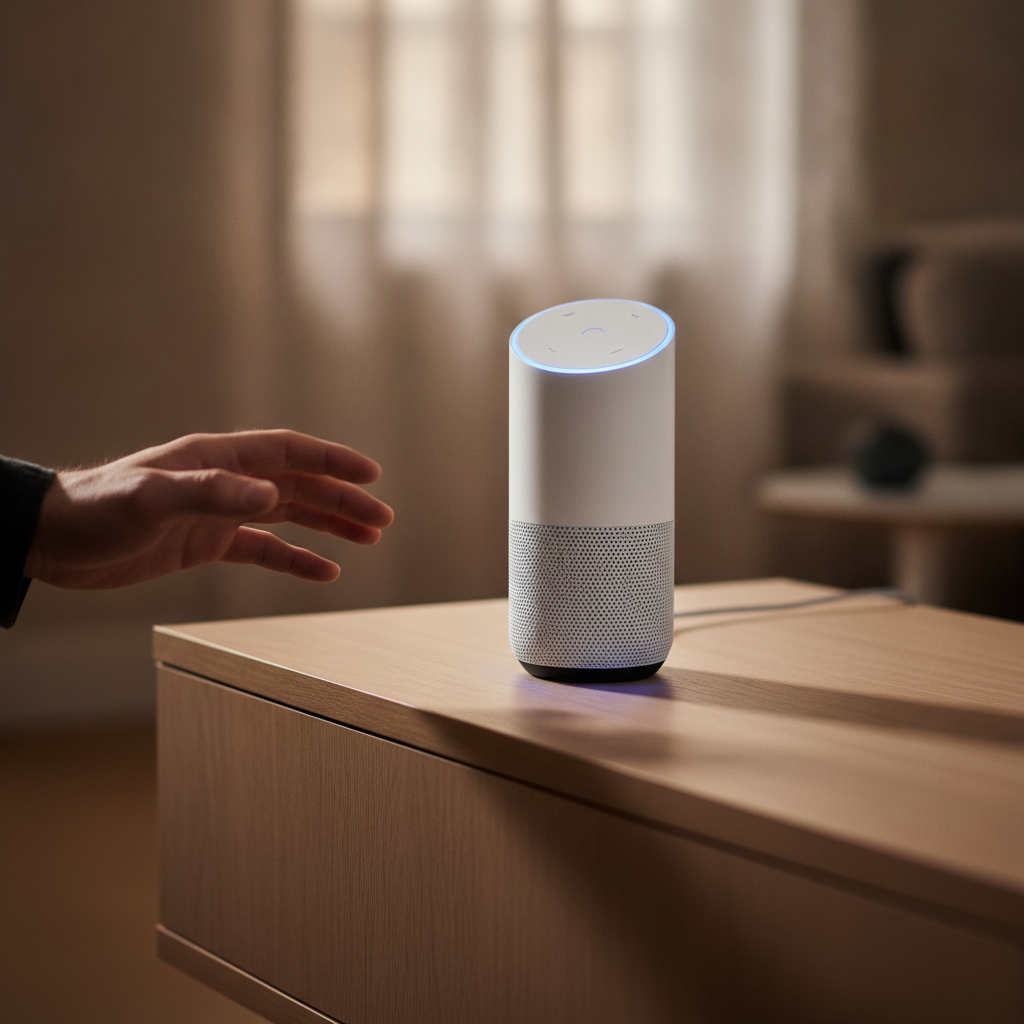
The smart speaker market has exploded, and Google certainly threw its hat into the ring with the Google Home. Designed to be both a helpful assistant and a stylish addition to any room, it promised seamless integration into our connected lives. But does this promise fully deliver, or are there a few bumps in the road to smart home nirvana?
From the moment you unbox it, the Google Home certainly makes a strong impression with its clean aesthetics and robust audio. Yet, beneath its polished exterior lies a device that, while brimming with potential, sometimes struggles with the very user experience it aims to simplify. Let’s delve into what makes Google’s flagship smart speaker a fascinating, albeit occasionally frustrating, piece of technology.
Unveiling Google Home: A First Impression
Google Home’s design is undeniably one of its strongest selling points. Its sleek, minimalist profile, resembling an air freshener or a stylish vase, ensures it blends effortlessly into virtually any home decor. You can even personalize its look with interchangeable magnetic bases available in various colors and fabric textures, adding a touch of bespoke style.
When it comes to audio, the Google Home punches above its weight for a speaker of its size. While it won’t replace a high-end stereo system, it delivers clear highs and surprisingly decent bass for casual listening, podcasts, and background music. Whether you’re streaming your favorite playlist or catching up on the news, the sound quality is more than adequate for everyday use.
Design, Sound, and the Google Assistant Experience
At the heart of Google Home is the powerful Google Assistant, bringing the company’s vast knowledge graph and artificial intelligence into your living space. This intelligent assistant excels at answering a wide array of questions, from complex factual queries to simple unit conversions. Its natural language processing is often remarkably intuitive, understanding conversational commands rather than rigid keywords.
Integration with Google’s own services is, predictably, where the Home truly shines. You can effortlessly manage your Google Calendar, get real-time traffic updates via Google Maps, and even cast content to Chromecast-enabled devices with simple voice commands. This makes it an invaluable hub for those already deeply embedded in the Google ecosystem.
Beyond information and entertainment, Google Home aims to be the central brain of your smart home. It readily connects with popular smart devices like Philips Hue lights, Nest thermostats, and various smart plugs. Turning off the lights or adjusting the temperature becomes as simple as uttering a quick command, adding a layer of convenience to daily routines.
The “Finicky” Factor: Where Google Home Stumbles
However, the Google Home isn’t without its quirks, and these can occasionally detract from an otherwise smooth experience. Voice recognition, while generally good, can sometimes be surprisingly finicky. It might struggle with distinguishing voices in a noisy room or misinterpret commands if you have a strong accent or mumble slightly.
While the Assistant is smart, it often requires quite specific phrasing to get the desired result. Asking for “my” calendar might not work if it doesn’t recognize your individual voice profile (a feature that came later). This occasional reliance on precise wording could be frustrating for households with diverse needs.
Another area where Google Home initially lagged was its broader third-party app integration compared to competitors like the Amazon Echo. While it supported essential services, the sheer breadth of “skills” or integrations available on Alexa felt more extensive at the time. This meant some niche smart home devices or services might not have been controllable, limiting its versatility.
Occasionally, users reported minor connectivity issues, such as dropped Wi-Fi connections or momentary pauses during music playback. While not constant, these intermittent glitches could interrupt the flow of an otherwise hands-free experience. For a device designed to be seamless, these small inconsistencies sometimes highlighted its early-generation nature.
Is Google Home the Right Smart Speaker for You?
Despite these occasional hiccups, the Google Home remains a compelling device, especially for those already invested in Google’s ecosystem. If you frequently use Google Search, Calendar, or Chromecast, the convenience it offers is substantial. It acts as an excellent entry point into the world of voice-controlled smart homes.
In essence, the Google Home delivers a solid audio experience and looks fantastic on any shelf or countertop. Its powerful Google Assistant provides unparalleled access to information and a growing suite of smart home controls. Yet, its initial journey revealed a product that was both impressively intelligent and, at times, noticeably finicky.
As Google continues to refine its software and expand its capabilities, many of these initial challenges have been addressed through updates. The original Google Home was a testament to ambitious smart technology: brilliant in concept, strong in execution, but always with room to grow. It offered a promising glimpse into the future, even if that future occasionally required a little patience.
Source: Google News – AI Search
