Google’s innovative AI Overviews have been a hot topic since their rollout, promising to revolutionize how we interact with search results by providing instant, AI-generated summaries. However, recent research by Citelens has cast a spotlight on a significant challenge: a major language gap that could profoundly impact information consistency across different linguistic communities. This groundbreaking study reveals that AI Overviews are far from uniform, especially when comparing English and Turkish search results.
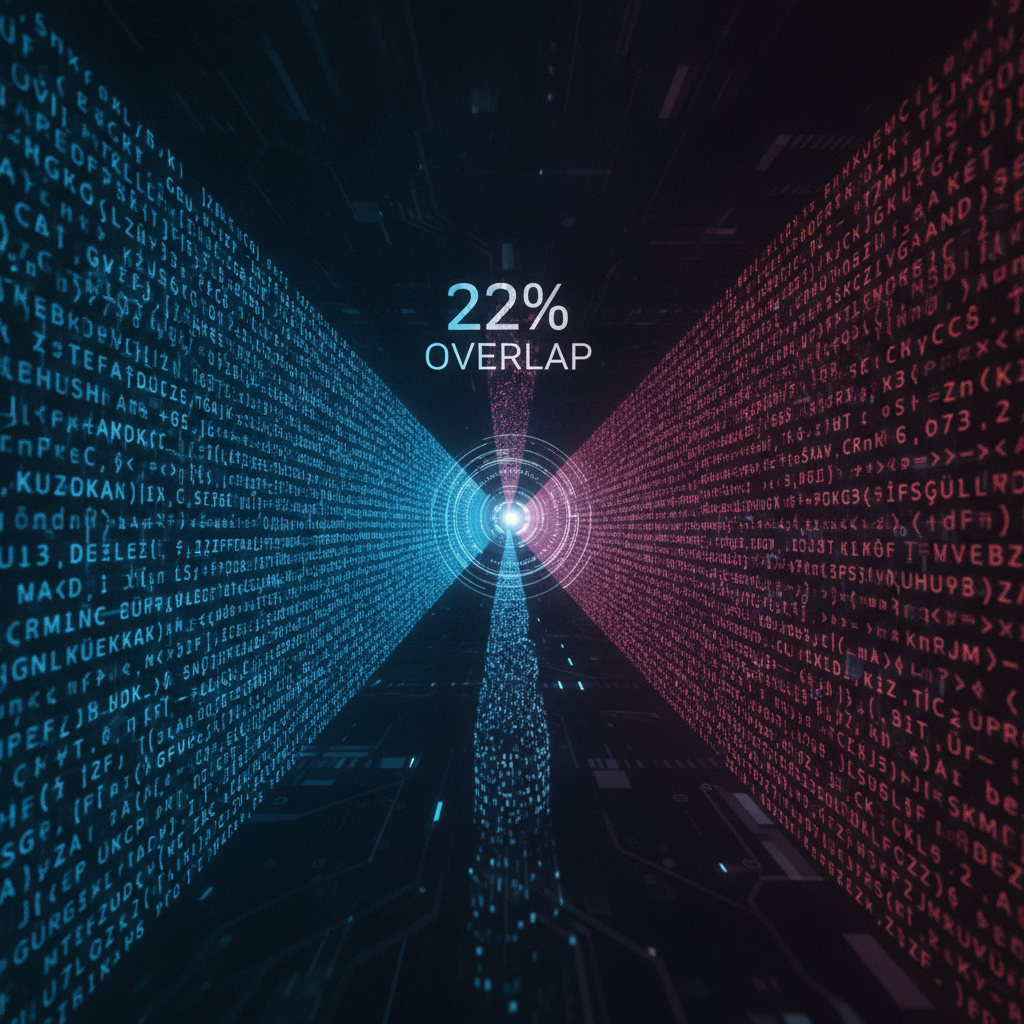
The core finding from Citelens’ detailed analysis is particularly striking. Their research indicates a stark 22% source overlap between AI Overviews generated for queries in English versus those in Turkish. This means that for nearly four out of five searches, the underlying information sources and the resulting AI summaries differ significantly depending on the language used, highlighting a substantial disparity in Google’s AI-driven information synthesis.
Unveiling the Discrepancy: English vs. Turkish AI Overviews
The Citelens study delved deep into how Google’s AI Overviews operate across languages, focusing on the critical comparison between English, a dominant language on the internet, and Turkish. What they discovered was not just a minor variation, but a profound divergence in the very foundation of these AI-generated summaries. This low overlap percentage suggests that the AI is drawing from fundamentally different sets of web content for each language, leading to potentially different answers.
This difference isn’t merely academic; it has tangible implications for users and businesses alike. If the sources used to generate an AI Overview are distinct, the nuances, emphasis, and even the core facts presented could vary significantly, creating a fragmented information landscape. For someone searching for travel information, health advice, or product reviews, the language they use might dictate the quality and completeness of the AI’s summary.
The research methodology likely involved issuing identical or semantically equivalent queries in both English and Turkish and then analyzing the websites cited by Google’s AI Overviews. By quantifying the commonalities between these cited sources, Citelens was able to pinpoint the startling lack of shared information. This meticulous approach provides robust evidence for the observed language gap, moving beyond anecdotal observations to concrete data.
Why This Language Gap Is More Than Just a Statistic
The 22% source overlap statistic isn’t just a number; it represents a fundamental challenge for the promise of universal, accessible AI-driven information. For global users, it means that the “definitive” answer provided by an AI Overview might change depending on their native language, leading to potential inconsistencies and even discrepancies in critical information. This poses questions about the reliability and equity of AI in search.
For businesses and content creators, especially those operating in international markets, this finding is a crucial wake-up call. It underscores the need for a highly localized content strategy that goes beyond simple translation, ensuring that content is not only available in multiple languages but is also optimized to be discoverable and authoritative for AI systems in each respective linguistic context. A “one size fits all” approach to SEO and content clearly won’t suffice in this new AI-driven era.
Consider the potential impact on industries like tourism, healthcare, or finance, where accurate and consistent information is paramount. If a tourist searching for visa requirements in Turkish receives different AI Overview information than a tourist searching in English, it could lead to confusion or even logistical problems. This highlights the deep responsibility Google and other AI providers have in ensuring global information parity.
Navigating the Future of Multilingual AI Search
The Citelens research compels us to reconsider our approach to multilingual digital presence in the age of AI Overviews. Businesses aiming for global reach must now think critically about how their content is perceived and consumed by AI models trained on various language datasets. It’s no longer enough to simply translate; content needs to be culturally relevant and structured in a way that AI in different languages can readily understand and synthesize.
Here’s what this research suggests for the future:
- Enhanced Localization Strategies: Move beyond direct translation to truly localized content that resonates with specific linguistic communities and their search behaviors.
- Diverse Content Sourcing: Recognize that AI Overviews in different languages may draw from distinct web ecosystems. Businesses should strive to be authoritative sources within each of these ecosystems.
- Monitoring AI Overview Performance: Actively monitor how AI Overviews present information related to your brand or industry across different languages to identify and address discrepancies.
- Investing in Multilingual SEO: Emphasize robust multilingual SEO strategies that account for varying search engine algorithms and AI model behaviors across different language contexts.
Ultimately, Citelens’ findings serve as a vital reminder that while AI Overviews represent a significant leap forward in information retrieval, they are still evolving. The journey toward truly universal, consistent, and accurate AI-driven search experiences across all languages is ongoing, and it requires continuous research, development, and a concerted effort from both technology providers and content creators worldwide.
Source: Google News – AI Search
