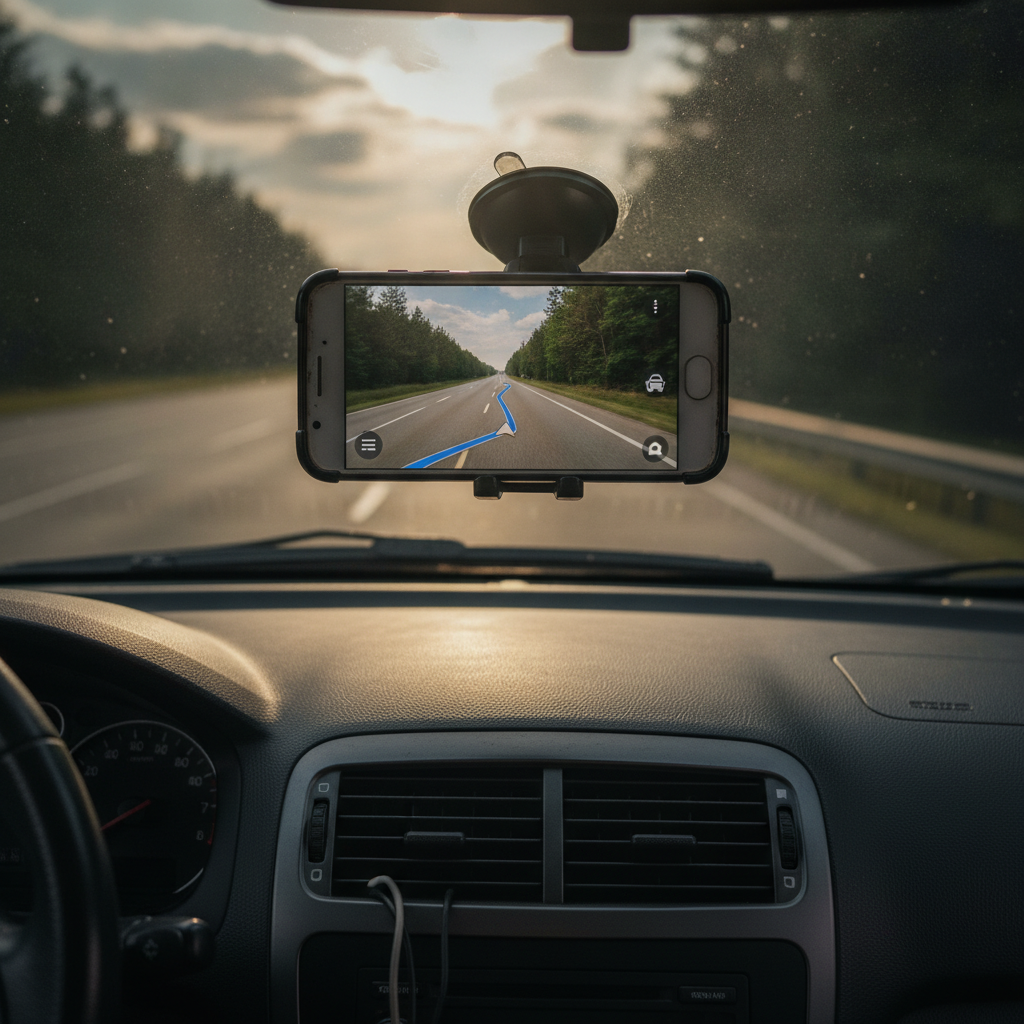
Ever found yourself staring at an old Android phone gathering dust in a drawer, wondering what ingenious new life you could give it? Many of us have a collection of retired devices, once cutting-edge, now seemingly obsolete. But what if we told you one of those phones could become a surprisingly effective, and mostly free, dashcam for your car?
Here at ZDNET, we’re always looking for smart tech solutions, and this project is a perfect example. Our recommendations stem from countless hours of independent testing, research, and comparison shopping, ensuring you receive only the most reliable advice. When you see a “ZDNET Recommends” badge or buy through our links, rest assured our commitment to unbiased, accurate information remains paramount, helping you make informed decisions without affecting the price you pay.
Reviving Your Old Phone: The Dashcam Transformation
Transforming your spare smartphone into a functional dashcam is a fantastic way to repurpose old tech and add a layer of security to your drives. While a dedicated dashcam offers a more integrated, long-term solution, this DIY approach is incredibly cost-effective and surprisingly capable for occasional or backup use. The key is to treat your old phone as a single-purpose device, eliminating distractions and optimizing it solely for recording.
To get started, here’s what you’ll typically need:
- An old Android phone (or iPhone, it works too!).
- A USB-C charging cable (or appropriate cable for your phone).
- A car charger to keep it powered.
- A sturdy windshield or dashboard phone mount.
- A free dashcam app from your phone’s app store – we used Droid Dashcam for Android.
The very first step is crucial: dedicate your phone. Back up any important data, then perform a factory reset. Once reset, install only the essential operating system updates, remove all unnecessary apps, turn off notifications, and enable “Do Not Disturb” mode. This ensures uninterrupted recording without pop-ups or battery drain from background processes.
Choosing and Configuring Your Dashcam App
A standard camera app won’t cut it for dashcam duty. You need an application specifically designed for the task, offering features like loop recording, local storage management, and data overlays. After some research, we found Droid Dashcam to be an excellent free option for Android users, providing robust functionality for our project.
Once installed, grant the app necessary permissions for the camera, microphone, location, and storage. Head into the app’s settings to optimize performance. For instance, we recommend setting the video quality to 1080p instead of 4K, which saves significant storage space and helps prevent your phone from overheating during longer drives, especially in direct sunlight.
One of the most critical features to enable is loop recording. Without it, your phone would simply fill up its storage and stop recording, defeating the purpose of a dashcam. In Droid Dashcam, you can find this under “Recording Settings,” allowing the app to automatically delete older clips as new footage is recorded, ensuring continuous coverage.
While in the recording settings, also adjust the video duration. We found that saving clips in shorter chunks, like 5 minutes, makes them much easier to manage, share with authorities, or upload if an incident occurs. This prevents you from dealing with one massive, unwieldy file.
Droid Dashcam also shines with its customizable informational overlays. You can enable displays for date, time, GPS coordinates, and speed, adding invaluable context to your footage. These details can be vital for insurance claims or legal purposes, providing concrete evidence beyond just visual data. Explore other settings like “Day/Night auto mode” for automatic light adjustment and the “G-shock sensor” to lock important video segments automatically after an impact, preventing them from being overwritten.
Finally, ensure you enable “Autostart recording.” This feature ensures Droid Dashcam begins recording automatically when you open the app, connect your phone to a charger, or link it to your car’s Bluetooth, making it incredibly convenient for daily use. Keep in mind that while many apps offer advanced features like parking mode for 24/7 surveillance, these often come with a subscription fee. For a completely free setup, plan to manually turn off your phone when parked to conserve battery.
Mounting, Power, and Real-World Performance
With your software sorted, the final piece of the puzzle is the hardware setup. A stable phone mount is non-negotiable; don’t skimp here. A shaky mount will result in unusable, blurry footage. Position it high on your windshield, ideally near the rearview mirror, to provide a centered view of the road without obstructing your line of sight. Angle the camera slightly downward to capture both the road ahead and a small portion of your car’s hood, providing crucial reference points.
Continuous recording, GPS usage, and an active screen will quickly drain your phone’s battery. Therefore, it’s absolutely essential to keep your phone plugged into a USB-C car charger at all times during operation. Most people likely have a spare USB-C cable, but you may need to purchase a car charger if you don’t already own one. Routing the cable neatly along your dash will keep your setup tidy and secure.
After a quick test drive with our Pixel phone running Droid Dashcam, the results were impressive. The video was smooth, GPS and timestamps were accurate, and the audio was clear. While it might not have the sleek integration of a dedicated dashcam, especially concerning parking mode or advanced battery management, this free setup performs admirably for occasional or backup use. It’s a rewarding way to give an old device a practical new purpose, providing peace of mind on the road.
Your Dashcam Questions Answered
Can I use an iPhone as a dashcam?
- Yes! iPhones work equally well as dashcams. You’ll need a suitable dashcam app from the Apple App Store (e.g., Driver, Smart Dash Cam), a sturdy car mount, and a charging cable.
Is Droid Dashcam truly free?
- Droid Dashcam is free to use, offering robust features without cost. There is an option to pay to remove ads, but it’s not required for core functionality.
Do I need cellular service for a phone dashcam?
- No. Recording video doesn’t require cellular service. GPS can still function independently without a data plan, though cloud backup features would be limited.
How much storage do I need for dashcam footage?
- We recommend at least 32GB of internal storage. More storage means more saved driving time. Remember, loop recording helps manage space, but always save important clips quickly after an incident to avoid losing them.
Source: ZDNet – AI
