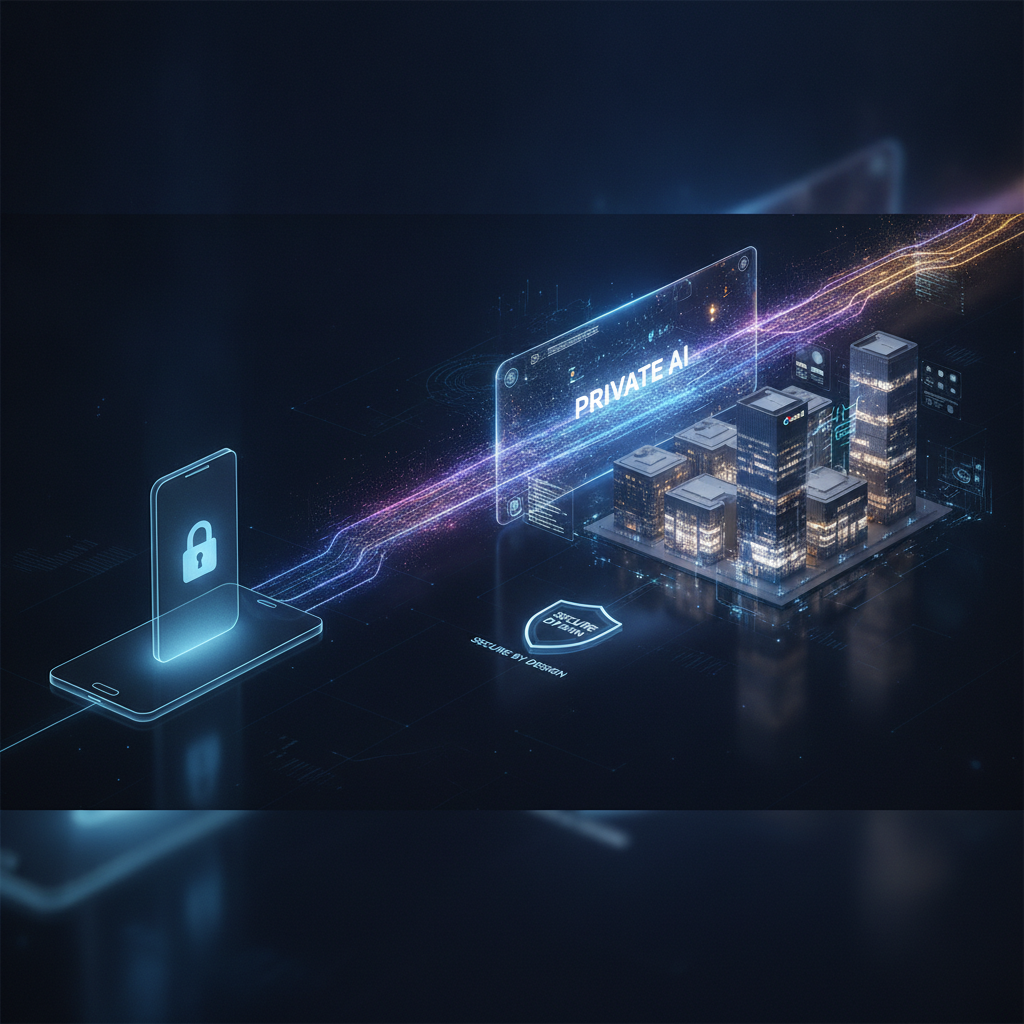
Apple has consistently championed user privacy as a cornerstone of its ecosystem, and its approach to Artificial Intelligence (AI) is no exception. At the heart of this strategy lies Private Cloud Compute (PCC), an innovative architecture designed to power sophisticated AI features without compromising sensitive user data. In a landmark development, Apple has now extended this privacy-preserving framework to Google Cloud, marking the first time PCC has been deployed outside Apple’s proprietary infrastructure.
This strategic expansion represents a pivotal moment for both Apple’s AI ambitions and the broader cloud computing landscape. By leveraging Google Cloud, Apple can scale its advanced machine learning capabilities globally while steadfastly adhering to its rigorous privacy standards. It underscores a creative solution to the ever-present challenge of balancing powerful AI with user trust and data security.
Understanding Apple’s Private Cloud Compute (PCC)
At its core, Private Cloud Compute is Apple’s specialized system engineered to process highly personal data for AI tasks in an extraordinarily secure and isolated environment. Think of it as a virtual fortress, where complex AI computations, like those powering Siri suggestions or advanced journaling features, can occur without exposing raw user information to Apple itself or any third-party cloud provider.
Apple developed PCC with a clear mission: to enable groundbreaking AI functionality while ensuring that user data remains private and beyond reach. Before PCC, many AI features required on-device processing to guarantee privacy, which limited their complexity and scale. PCC addresses this by creating a robust, verifiable privacy standard for cloud-based AI workloads.
The system is built on principles of cryptographic attestation and hardware isolation, ensuring that only approved, transparent Apple code can run on the servers. This strict control means that even Apple engineers or Google Cloud personnel cannot access or inspect the user data being processed within PCC enclaves. It’s a bold statement in an era where data privacy is increasingly under scrutiny.
A Strategic Expansion: Partnering with Google Cloud
The decision to deploy PCC on Google Cloud is a significant move, signaling Apple’s willingness to embrace external infrastructure while maintaining its stringent privacy controls. This partnership allows Apple to harness Google Cloud’s immense global scale, robust performance, and cutting-edge infrastructure to accelerate the development and deployment of its AI features. Rather than solely relying on its own data centers for these specific workloads, Apple can now dynamically expand its computational capacity.
This collaboration doesn’t mean Apple is simply “moving data to Google.” Instead, it involves Apple extending its unique, privacy-centric computing paradigm onto Google’s servers. Google Cloud provides the physical hardware and networking, but it’s Apple’s PCC architecture that dictates how user data is handled and secured within those environments. This partnership highlights how security and privacy can be architectural considerations rather than mere afterthoughts.
For users, this means enhanced AI features that are more responsive, sophisticated, and globally available, all without sacrificing their personal privacy. Apple maintains complete control over the software and cryptographic processes within PCC, ensuring that user data remains isolated and inaccessible. It’s a testament to Apple’s engineering prowess in designing a system that can leverage external resources while upholding its core values.
Deep Dive: How PCC Safeguards Your Data
The privacy protections within Private Cloud Compute are multi-layered and technologically advanced. Central to its design are secure enclaves, which are specialized hardware environments designed to isolate code and data from the rest of the system. Even if other parts of the server are compromised, the data within an enclave remains protected and inaccessible.
Another critical component is cryptographic attestation. This sophisticated process involves a verifiable proof, executed at a hardware level, that ensures only genuine Apple-signed software is running within the secure enclaves. Before any user data enters the PCC environment, cryptographic checks confirm that the software stack is untampered and conforms to Apple’s strict privacy specifications. This provides an ironclad guarantee of integrity and trust.
Furthermore, PCC operates under a strict zero logging policy concerning raw user data. Neither Apple nor the cloud provider can record or store the specific inputs or outputs related to individual users’ AI interactions. This design choice fundamentally prevents data harvesting and ensures that user information used for AI processing is ephemeral, existing only for the duration of the computation.
- Hardware-Based Isolation: Utilizes secure enclaves to create impenetrable processing environments.
- Cryptographic Verification: Employs cryptographic attestation to guarantee only authorized Apple code runs.
- Ephemeral Data Handling: Enforces a zero logging policy, preventing storage of raw user data.
- Auditable Code: PCC’s code is designed for auditability, allowing security researchers to verify its claims (though not necessarily open source).
The Future of AI and Privacy at Apple
The extension of Private Cloud Compute to Google Cloud signifies a bold step forward in Apple’s AI strategy. It demonstrates that privacy and powerful AI are not mutually exclusive but can be harmoniously integrated through thoughtful architectural design. This move will undoubtedly enable Apple to roll out more advanced, data-intensive AI features to its users without ever asking them to compromise their personal information.
This development also sets a higher bar for the entire tech industry, challenging other companies to re-evaluate how they approach AI development with respect to user data. Apple is showing that it’s possible to leverage the vast resources of external cloud providers for complex AI workloads while maintaining an unparalleled commitment to privacy, even at scale.
Ultimately, this expansion reinforces Apple’s long-standing dedication to placing user privacy at the forefront of its innovations. As AI continues to evolve and integrate deeper into our daily lives, architectures like PCC will be crucial in building user trust and ensuring that technological advancement goes hand-in-hand with robust data protection.
Source: Google News – AI Search
