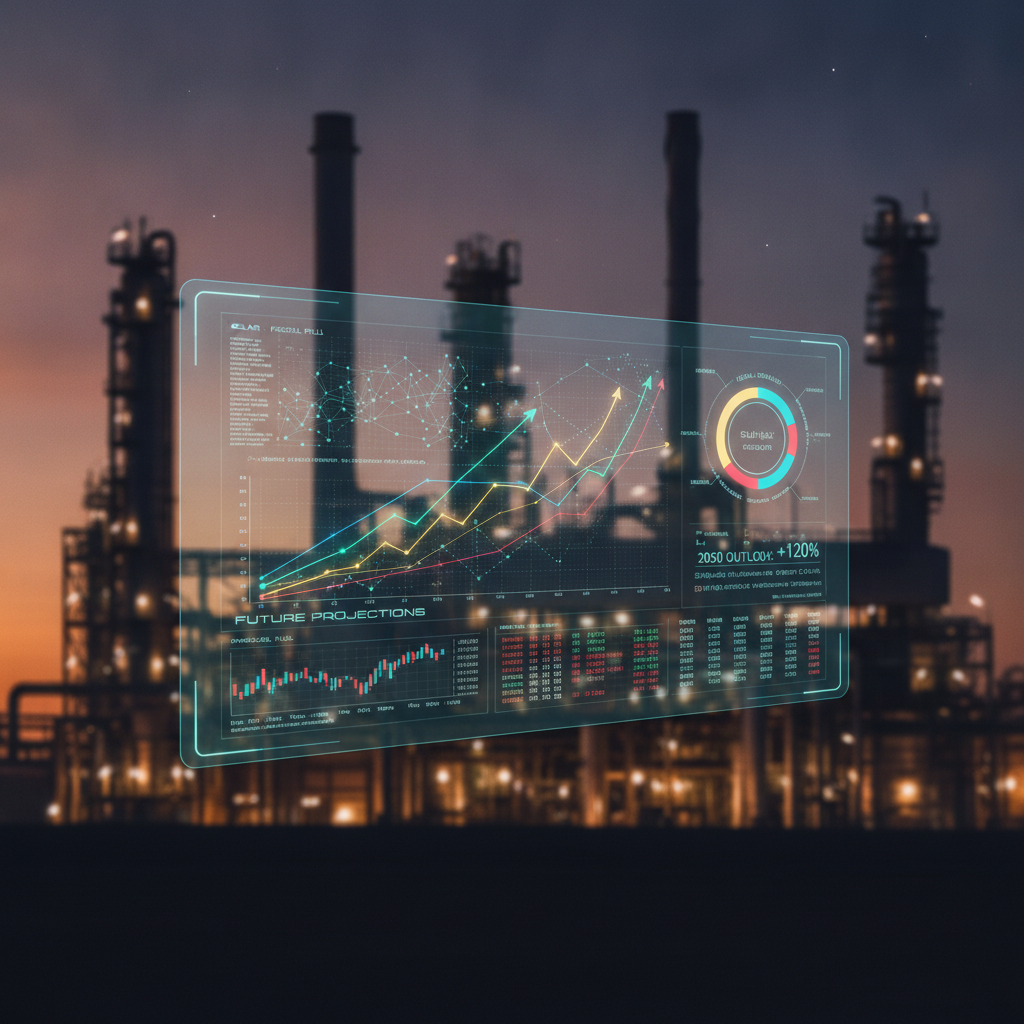
Imagine a future where advanced artificial intelligence systems, like a highly evolved “Google AI Mode,” can peer into the intricate web of global events and offer incredibly specific insights. This isn’t just about general market trends; we’re talking about precise predictions for major corporations on exact dates. On July 5, 2026, such an AI might have something remarkable to say about Royal Dutch Shell Plc, now simply known as Shell plc.
What insights could an AI offer about one of the world’s largest energy companies at such a specific future point? The very notion challenges us to consider the capabilities of AI and our own role in interpreting its pronouncements. As we delve into what an AI might project, remember that the final judgment, and indeed the future itself, remains firmly in human hands.
What Could Google AI Predict for Shell in 2026?
By 2026, Shell plc will likely be navigating a complex energy landscape, balancing traditional fossil fuel operations with an accelerating transition towards sustainable energy. An AI, analyzing petabytes of data from financial reports, geopolitical developments, climate science, and market sentiment, could offer a snapshot of the company’s standing. It wouldn’t just be a forecast; it would be a synthesized narrative of Shell’s trajectory.
Potential AI insights might revolve around several critical areas. These could include Shell’s progress towards its ambitious net-zero emissions targets, the performance of its burgeoning renewable energy portfolio, or even the impact of significant legal or regulatory shifts. The AI’s strength lies in its ability to connect disparate data points, revealing patterns and potential outcomes that might elude human analysis alone.
Consider the myriad factors at play: fluctuating oil and gas prices, the rapid scaling of offshore wind and solar projects, investments in hydrogen and biofuels, and evolving consumer and investor expectations. An AI could assess the efficacy of Shell’s capital allocation strategy, identifying whether investments in new energy solutions are genuinely moving the needle. It might also highlight the success or struggles of its electric vehicle charging networks or its carbon capture initiatives, providing a granular view of operational performance.
Shell’s Strategic Evolution: An AI Perspective
A sophisticated AI would undoubtedly focus on Shell’s ongoing strategic evolution. The company has made significant commitments to transform its business model, moving away from a purely oil and gas giant to an integrated energy provider. By July 5, 2026, an AI could pinpoint exactly where Shell stands on this journey, offering a detailed assessment of its progress and challenges.
The AI might report on specific metrics, such as:
- The percentage of Shell’s energy production derived from renewable sources.
- The market share of its low-carbon energy solutions across key geographies.
- The financial health of its upstream oil and gas division in the face of global demand shifts.
- The outcomes of any major mergers, acquisitions, or divestments undertaken between now and 2026, particularly those designed to reshape its portfolio.
- The company’s standing in ESG (Environmental, Social, and Governance) ratings, reflecting its perceived sustainability and ethical practices.
Such detailed analysis, presented without human bias, could provide a starkly objective view of Shell’s corporate health and future prospects. It would go beyond simple financial projections, delving into the very fabric of its operational and strategic shifts.
The AI’s Limitations and Our Role as “The Judge”
While an advanced Google AI Mode could offer unprecedented analytical depth, it’s crucial to acknowledge its inherent limitations. AI operates on historical and current data, identifying trends and probabilities. It struggles with truly unpredictable “black swan” events—sudden geopolitical upheavals, revolutionary technological breakthroughs, or unforeseen natural disasters. These events can dramatically alter even the most robust projections.
This is precisely where the human element, our role as “the judge,” becomes indispensable. An AI might predict a certain outcome, but it cannot fully grasp the nuances of human ingenuity, ethical considerations, or societal will. We must critically evaluate the AI’s output, asking questions about its underlying assumptions, the completeness of its data, and the broader context that only human experience can provide.
For instance, an AI might highlight a decline in fossil fuel revenue, but it might not fully contextualize the social and economic impact on communities reliant on those industries, or the strategic importance of energy security. Our judgment allows us to weigh the data against values, ethics, and the complex, often irrational, forces that shape the real world. We use AI as a powerful tool for insight, not a definitive oracle.
The prospect of a “Google AI Mode” forecasting the future of a global titan like Shell plc on a specific date like July 5, 2026 is both fascinating and a little humbling. It speaks to the incredible advancements in artificial intelligence and its potential to illuminate paths forward for complex organizations. Yet, it also underscores the enduring importance of human discernment.
As the world continues to evolve at an astonishing pace, driven by both technological innovation and urgent environmental challenges, companies like Shell will remain at the forefront of critical global conversations. Whether an AI’s predictions prove accurate or not, the exercise of contemplating them compels us to think more deeply about the future of energy, corporate responsibility, and the evolving partnership between human intelligence and machine insight. We remain the ultimate arbiters of truth and action.
Source: Google News – AI Search
