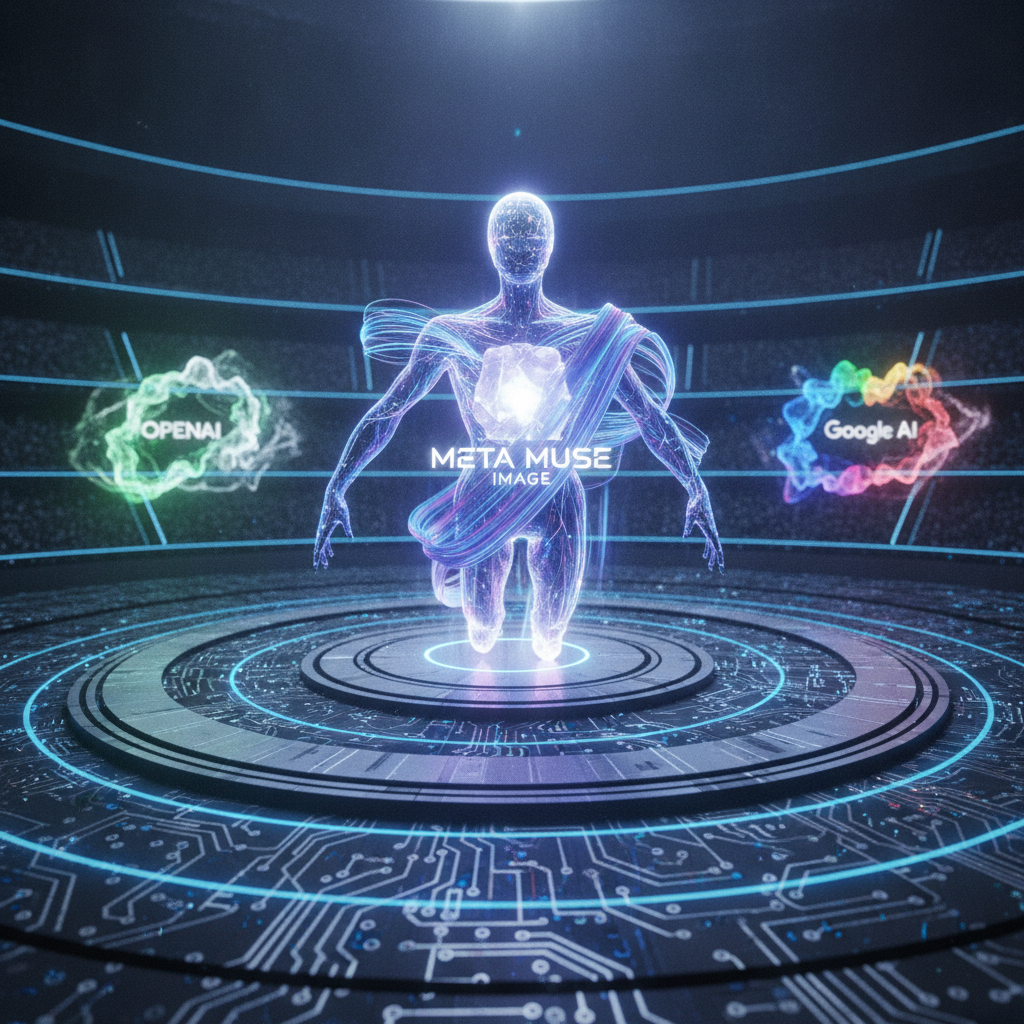
The landscape of artificial intelligence is heating up, and Meta is making a bold statement with the launch of Muse Image, its latest entry into the competitive world of AI image generation. This move signifies Meta’s serious intent to challenge established giants like OpenAI’s DALL-E and Google’s powerful AI models. Muse Image is poised to bring Meta’s unique technological approach to generative AI, promising exciting new possibilities for creators and developers alike.
For years, Meta has been a leader in AI research, and Muse Image represents a significant step in translating that research into tangible products. This advanced text-to-image model aims to empower users to create stunning visuals from simple text prompts, pushing the boundaries of what’s possible with artificial intelligence. Its introduction marks a crucial moment in the ongoing race for AI supremacy, where innovation and accessibility are key.
Unveiling Meta Muse Image: A New Contender in AI Art
At its core, Meta Muse Image is a sophisticated text-to-image generation model, engineered to produce high-quality, realistic, and artistic images based purely on textual descriptions. Unlike some generative models that rely on autoregressive architectures, Muse Image leverages a novel approach that could potentially offer significant advantages in terms of speed and efficiency. This could mean faster generation times without compromising on visual fidelity.
The technology behind Muse Image reportedly incorporates a masked generative transformer, a cutting-edge architecture designed for efficient generation and editing. This allows the model to “fill in the blanks” or generate images iteratively, leading to more coherent and contextually accurate outputs. Users can expect a more fluid and intuitive experience when bringing their creative visions to life.
Key features expected from Meta Muse Image include:
- High-Quality Image Generation: Producing detailed and aesthetically pleasing visuals from text prompts.
- Fast Processing Speeds: Potentially outperforming some competitors in generation time, thanks to its efficient architecture.
- In-painting and Out-painting Capabilities: Allowing users to modify specific parts of an image or expand its existing boundaries.
- Image Editing and Variation: The ability to refine generated images or create multiple variations based on an initial output.
- Contextual Understanding: A strong grasp of complex prompts to generate images that accurately reflect user intent.
Beyond Basic Generation: What Sets Muse Image Apart
One of the potential game-changers with Meta Muse Image lies in its rumored efficiency and control over the generation process. While many AI image generators excel at creating novel imagery, Muse Image is designed to give users more granular control over the output, including nuanced editing functionalities. This could translate into a more powerful tool for professional designers and artists who need precision.
The ability to perform in-painting and out-painting with high accuracy could be particularly valuable. Imagine correcting an unwanted detail in a generated image or seamlessly extending its background, all with simple text commands. Such features would significantly reduce the need for manual post-processing, streamlining creative workflows and making AI art more accessible to a broader audience.
Furthermore, Meta’s extensive research into multimodal AI suggests that Muse Image could eventually integrate seamlessly with other Meta platforms and tools. This potential synergy could offer unique advantages, creating a more integrated ecosystem for AI-powered creativity and communication. The focus on efficiency also hints at a model that could run on less powerful hardware, broadening its potential user base.
The High-Stakes Race: Meta vs. OpenAI and Google AI
Meta’s entry with Muse Image is a direct challenge to the current titans of generative AI, particularly OpenAI’s DALL-E 2 and Google’s Imagen and Midjourney. These models have set high benchmarks for quality and creativity, captivating the public imagination with their ability to transform words into stunning visuals. The competition is fierce, and innovation is happening at an unprecedented pace.
OpenAI’s DALL-E has been instrumental in popularizing text-to-image generation, showcasing incredible artistic range and semantic understanding. Google, with its Imagen model, has pushed the boundaries of photorealism and contextual accuracy. Meta’s Muse Image now seeks to carve out its own niche, potentially by focusing on superior efficiency, unique editing capabilities, or a distinctive aesthetic output.
This escalating competition is excellent news for end-users and the AI community as a whole. As tech giants vie for dominance, it drives further research, leads to more sophisticated models, and ultimately makes these powerful creative tools more refined and accessible. Meta’s significant resources and deep expertise in AI position Muse Image as a formidable contender, set to redefine expectations in the space.
The Future of Creative AI with Meta
The launch of Meta Muse Image is more than just another product release; it’s a clear signal of Meta’s long-term strategic investment in generative AI. By developing its own advanced models, Meta aims to maintain its competitive edge and integrate AI directly into its vision for the metaverse and its various social platforms. This could unlock new forms of user-generated content and interactive experiences.
For creators, developers, and businesses, Muse Image offers a new powerful tool to explore artistic boundaries, prototype ideas rapidly, and generate unique digital assets. As AI continues to democratize content creation, Meta’s contribution will undoubtedly play a significant role in shaping how we imagine and produce digital media in the coming years.
Ultimately, Meta Muse Image underscores the relentless pace of innovation in artificial intelligence. With its advanced architecture and focus on both speed and quality, Meta is not just participating in the AI image generation race; it’s actively helping to define its future, promising a new era of accessible and powerful creative AI tools for everyone.
Source: Google News – AI Search
