At ZDNET, our mission is to empower you with the most accurate information and knowledgeable advice, helping you make smarter buying decisions for all your tech needs. We understand that trust is paramount, which is why our recommendations are the result of extensive independent testing, meticulous research, and thorough comparison shopping. Our dedicated team pores over data from top vendors, retailers, and countless customer reviews to truly understand what matters to real people.
You might wonder how we sustain this in-depth work. When you click through our links to a retailer and make a purchase, we may earn an affiliate commission. Crucially, this revenue stream never influences our editorial coverage, testing methodology, or the price you pay, ensuring our reviews remain unbiased and truly independent.
Our Commitment to Independent Tech Reviews
Our editorial team writes for you, the reader, committed to delivering content that meets the highest standards of accuracy and integrity. Every article undergoes rigorous review and fact-checking before publication. Should we ever make an error or publish misleading information, we are dedicated to promptly correcting or clarifying the content, and we encourage you to report any inaccuracies you find.
This commitment means you can rely on us for objective insights, whether we’re evaluating a new smartphone or, in this case, the latest health tracker. We believe that informed decisions start with trusted information, and that’s precisely what ZDNET strives to provide with every recommendation.
Putting the Fitbit Air to the Test
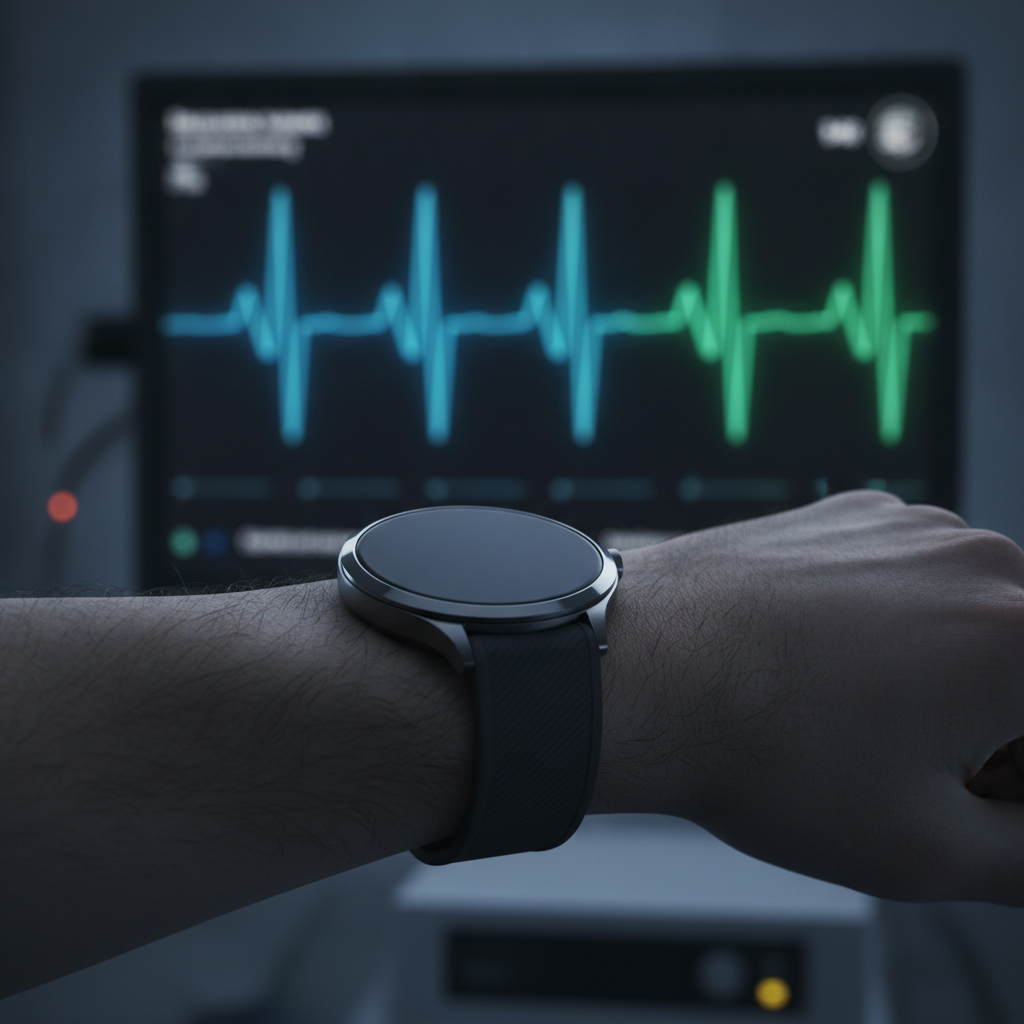
How accurate is that sleek health tracker around your wrist? While companies equip these devices with advanced sensors, they’re generally designed for recreational use, meaning some inaccuracies can occur. However, technological advancements are constantly bringing these consumer devices closer to the “gold standard” of heart rate and exercise monitoring.
To really see how a modern wearable performs, I put the Fitbit Air—one of the year’s significant fitness releases—through its paces. My control for this experiment was the Polar H10 chest strap, widely regarded as the consumer benchmark for heart rate accuracy. Studies have even shown its “almost perfect agreement” with medical-grade ECG systems, making it an excellent comparison point.
My workout routine mirrored my usual gym session: a blend of strength training and a treadmill session. I meticulously recorded data from both devices to directly compare their performance. This hands-on approach allowed me to observe real-world accuracy and identify any discrepancies.
Treadmill Performance: Heart Rate vs. Calories
Starting with a walk on the treadmill, I toggled between the real-time heart rate measurements on both the Polar H10 and the Google Health app, which connects to the Fitbit Air. Initially, the Fitbit Air consistently stayed within one or two beats per minute of the Polar chest strap, showing impressive consistency at a steady, lower intensity.
However, once I began running, a distinct lag in the Fitbit Air’s readings became apparent. For instance, as my heart rate spiked to 141 bpm on the Polar, the Fitbit Air only registered 109 bpm in that same minute. This difference narrowed over time, but the immediate response was clearly slower.
This momentary discrepancy makes perfect sense when you consider the technology. The Polar chest strap uses electrodes much closer to the heart, allowing it to capture immediate physiological changes. In contrast, the Fitbit Air, worn on the wrist, relies on optical sensors, requiring that heart rate change to propagate to the extremities, inevitably causing a slight delay.
Once my pace stabilized, the Fitbit Air quickly caught up, displaying heart rate data that closely matched the Polar chest strap. Overall, the heart rate metrics for the treadmill session performed exceptionally well, showing an error rate of under 2.5%. This indicates strong reliability for consistent cardio efforts.
Calorie tracking, however, told a different story. The Fitbit Air underestimated calories burned during my treadmill session by nearly 12%. Calorie estimation is a complex calculation involving various factors like heart rate, weight, age, sex, and activity intensity, making it more prone to larger errors than simple heart rate monitoring.
Strength Training & Maximum Heart Rate Insights
Next, I tracked a full-body strength training workout, including exercises like lat pulldowns, dumbbell squats to shoulder presses, and stability ball work. This session introduced more varied intensity and shorter bursts of exertion compared to the steady-state cardio.
In this second test, the minimum and average heart rate data points remained highly accurate for both devices. However, the maximum heart rate and calories burned showed a greater deviation from the chest strap’s readings. Specifically, the maximum heart rate was off by 11%.
This suggests that during the intermittent intensity of strength training, where my heart rate spiked and dipped between sets, the Fitbit Air struggled to capture those brief, sharp peaks. The second test revealed that maximum heart rate tracking can be less reliable in dynamic, fluctuating weight training sessions compared to steady cardio exercises.
The calorie burned inaccuracy also significantly increased during strength training, tripling its deviation from the treadmill session. This reinforces the idea that calorie tracking on consumer wearables is often more of a rough estimate than a precise measurement, especially across different activity types.
It’s important to remember that these were amateur tests conducted in a local gym, not a lab, and two tests aren’t enough for definitive conclusions. However, this experience provided valuable insights into how health trackers function in the real world. Wrist-worn devices, being farther from the heart, simply cannot capture the quickest fluctuations in heart rate as precisely as a chest strap.
Despite these limitations, the Fitbit Air largely recorded accurate heart rate data, matching the overall trends of the gold-standard chest strap. Even with the strength training’s 11% deviation for maximum heart rate, the device delivered remarkably low inaccuracy for general heart rate monitoring. For this reason, I would confidently recommend the Fitbit Air as a reliable health tracker for heart rate data.
However, when it comes to calorie tracking, it’s a different narrative. Given the Fitbit Air’s 11% to 30% discrepancy in burned calorie estimations, I strongly advise taking these figures as ballpark guesses rather than objective facts. If your primary goal is precise diet or weight management based on calories burned, you’ll need to account for these potential inaccuracies or consider alternative tracking methods.
Source: ZDNet – AI
