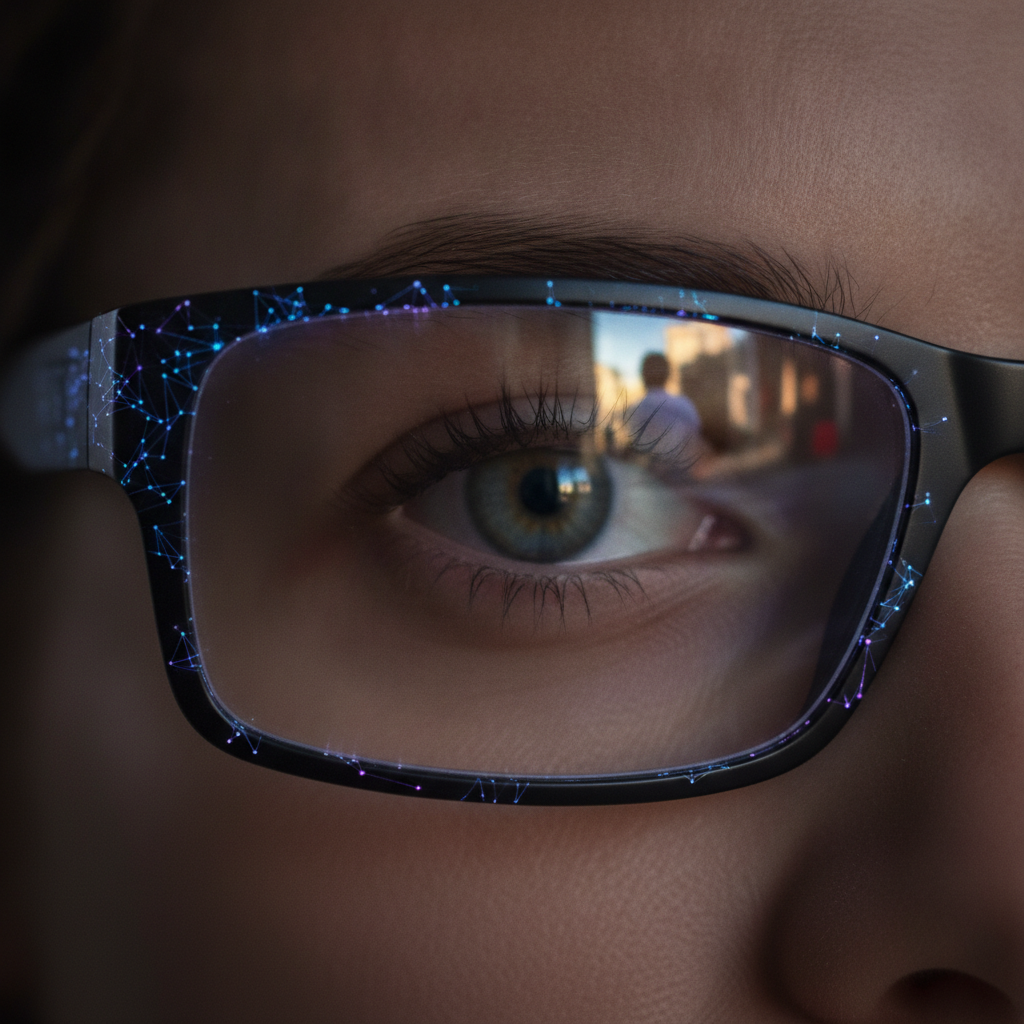
Smart glasses are often hailed as the next big leap in personal technology, promising a seamless blend of our digital and physical worlds. Yet, beneath the veneer of innovation lies a profound ethical quandary: privacy. This concern, long simmering, has now been brought to a boiling point by Google’s recent AI demonstrations, unequivocally proving that the fundamental privacy issues inherent to devices like Meta’s smart glasses remain stubbornly unfixable.
For years, tech companies have grappled with the public’s unease about wearable cameras. The promise of hands-free interaction and augmented reality is compelling, but the specter of constant, surreptitious recording looms large. Google AI’s latest showcase has not only amplified these fears but also illuminated the urgent need for our legal frameworks to evolve, finally catching up to the realities of digital age surveillance.
The AI’s Eye: Seeing More Than Just a View
Google’s recent Project Astra demo was nothing short of astonishing, showcasing an AI assistant that could process and interpret real-time video feed from a person’s perspective. Imagine an AI that not only sees what you see through your smart glasses but instantly understands context, identifies objects, and even deduces human emotions and intentions. This capability moves beyond simple recording into an entirely new realm of real-time cognitive processing.
During the demonstration, the AI successfully identified everything from the contents of a cluttered desk to the purpose of a diagram and even helped locate a misplaced object. While impressive, this profound ability to analyze and comprehend a user’s entire visual world, often unnoticed by those nearby, presents an unprecedented challenge to traditional notions of personal space and privacy. It’s a powerful tool, but its potential for misuse is equally immense, raising alarm bells about what information is being gathered and how it might be used.
Meta’s Dilemma: Privacy by Design Falls Short
Meta, with its Ray-Ban Meta smart glasses, has attempted to address privacy concerns through design choices, primarily incorporating a small, outward-facing LED indicator light. This light is intended to signal when the glasses are recording video or taking photos, offering a visual cue to those nearby. However, as the Google AI demo underscores, such a solution is woefully inadequate for the complex privacy challenges at hand.
These tiny indicator lights are easily missed, often ignored, or simply not understood by the general public. More importantly, they fail to communicate the deeper implications of a device that isn’t just recording but potentially processing, analyzing, and even sharing highly personal data in real-time. The issue isn’t merely the act of capturing an image, but the subsequent AI-driven interpretation and potential storage of that information without explicit, informed consent from everyone in view.
The inherent design of smart glasses allows for discreet, first-person perspective capture, which fundamentally differs from a smartphone. People typically know when a phone camera is pointed at them; with smart glasses, the recording can be far more subtle, making true informed consent a practical impossibility in many public or semi-public settings. This critical distinction highlights why a simple LED light cannot bridge the vast gap between technological capability and ethical responsibility.
Beyond Recording: The “Digital Peeping Tom” Age
Historically, laws designed to protect personal privacy, often referred to as “peeping tom” statutes, focused on physical intrusion or surveillance into private spaces. These laws were formulated in an era where observation required physical proximity or overt actions. However, smart glasses, especially when powered by advanced AI like Google’s Astra, redefine what constitutes “peeping” by enabling intelligent, detailed surveillance of individuals in public or semi-public spaces without their knowledge or consent.
The problem is no longer just about someone recording a video; it’s about a device that can instantly analyze facial expressions, body language, social interactions, and even personal belongings. This real-time, AI-driven insight transcends mere observation, becoming a form of data extraction that current legal frameworks are ill-equipped to handle. We’re moving into an age where digital proxies can perform sophisticated reconnaissance, making our existing privacy protections feel antiquated and inadequate.
Forging New Laws for a Connected World
It’s clear that relying solely on tech companies for ethical guidelines or minor design tweaks isn’t sufficient. The privacy challenges posed by smart glasses and powerful AI demand a proactive and comprehensive legal response. We need new legislation that specifically addresses digital surveillance, real-time data processing, and the explicit requirement for consent in an increasingly augmented world. This legislation must define what constitutes a reasonable expectation of privacy when a device is continuously observing and interpreting our environment.
Such laws would need to consider several key aspects: robust consent mechanisms that go beyond simple indicator lights, clear guidelines on data retention and usage, and accountability for both the developers of these technologies and the users who deploy them. The aim isn’t to stifle innovation but to ensure that technological progress aligns with fundamental human rights and societal values. Without updated legal frameworks, we risk normalizing an era of pervasive, unconsented digital observation, eroding public trust in technology and diminishing our collective sense of personal security.
The revelations from Google AI’s demonstration serve as a stark reminder: the privacy issue with smart glasses is not a bug to be patched, but a fundamental feature requiring systemic change. It is time for legislators, technologists, and the public to engage in a serious, collaborative effort to update our laws for the digital age, safeguarding our privacy before these powerful devices become ubiquitous and the cost to our personal liberty becomes irreversible.
Source: Google News – AI Search
